
Machined manifold block
Cast PMMA · ±0.05 mm

Precision parts CNC-milled from cast PMMA — jigs, fixtures, sight glasses, fluidic manifolds and optical windows to ±0.05 mm, polished to full transparency.
Reply within 12 hours · free DFM feedback
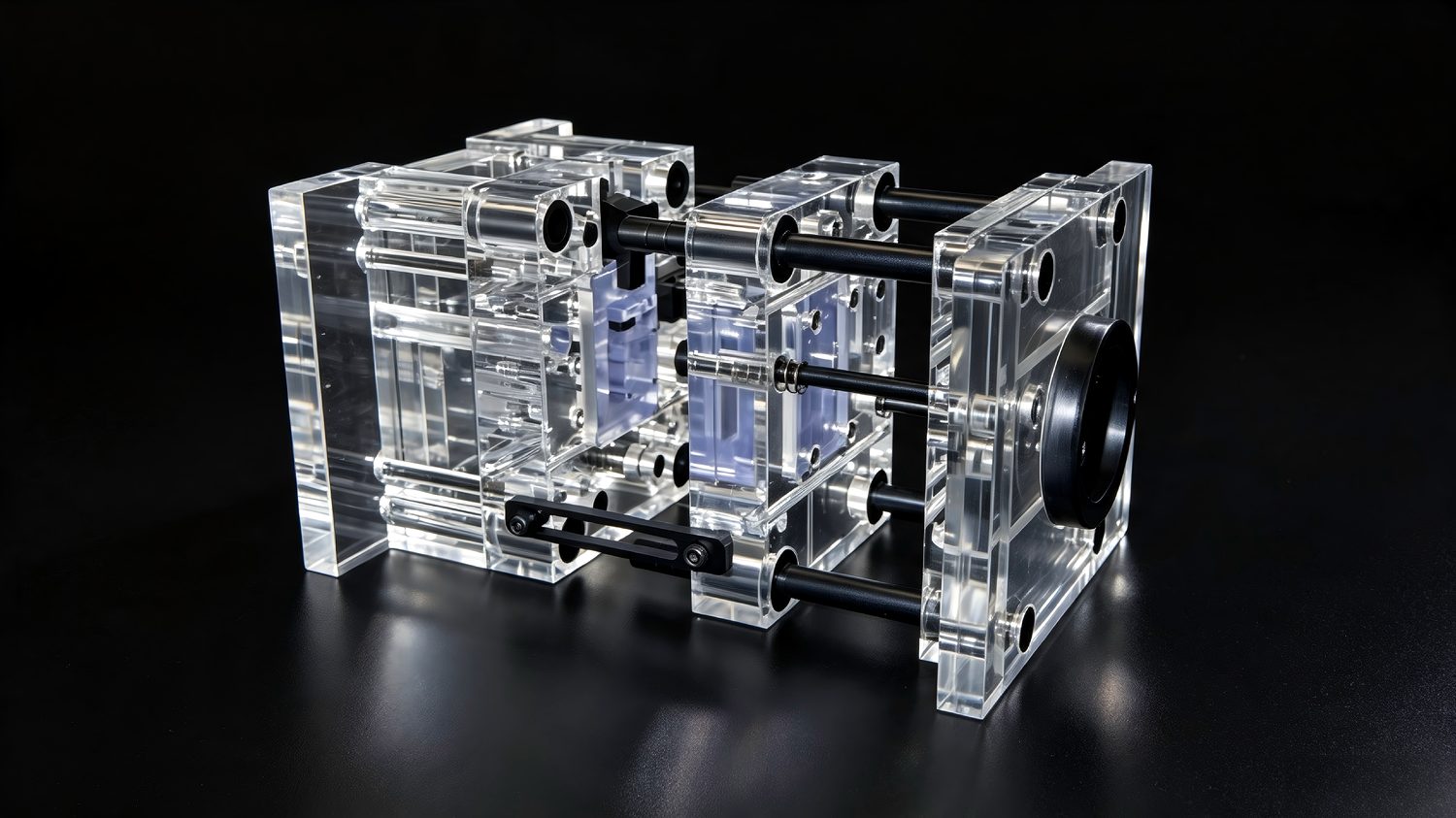
Machined acrylic components are precision parts CNC-milled from cast PMMA block or sheet — jigs, fixtures, sight glasses, fluidic manifolds and optical windows. Cast acrylic machines to tolerances of ±0.05 mm, polishes to full transparency and resists many aqueous chemicals, making it the default clear material for functional industrial parts.
Cast PMMA · ±0.05 mm
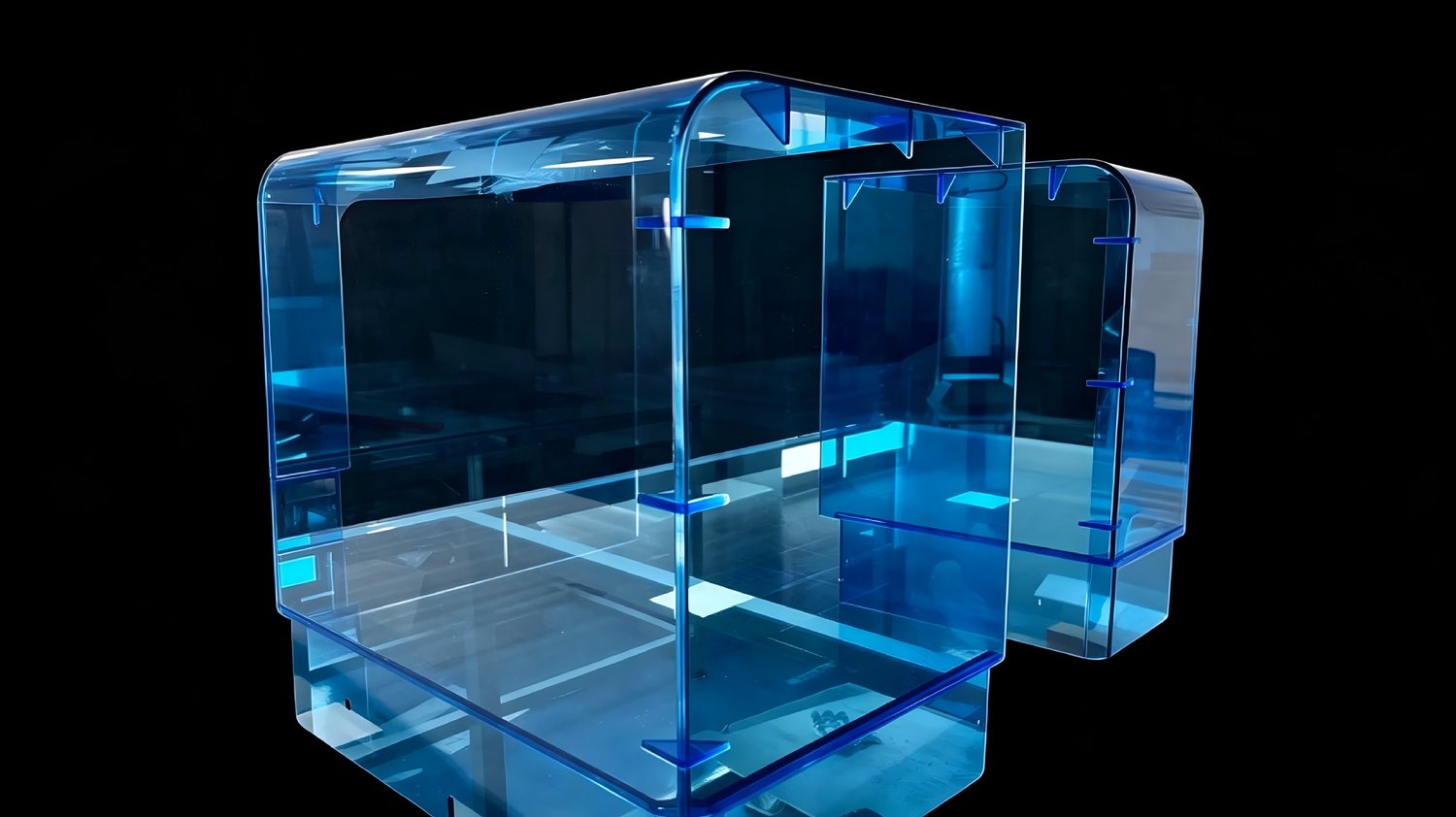
Internal channels · flow-visible
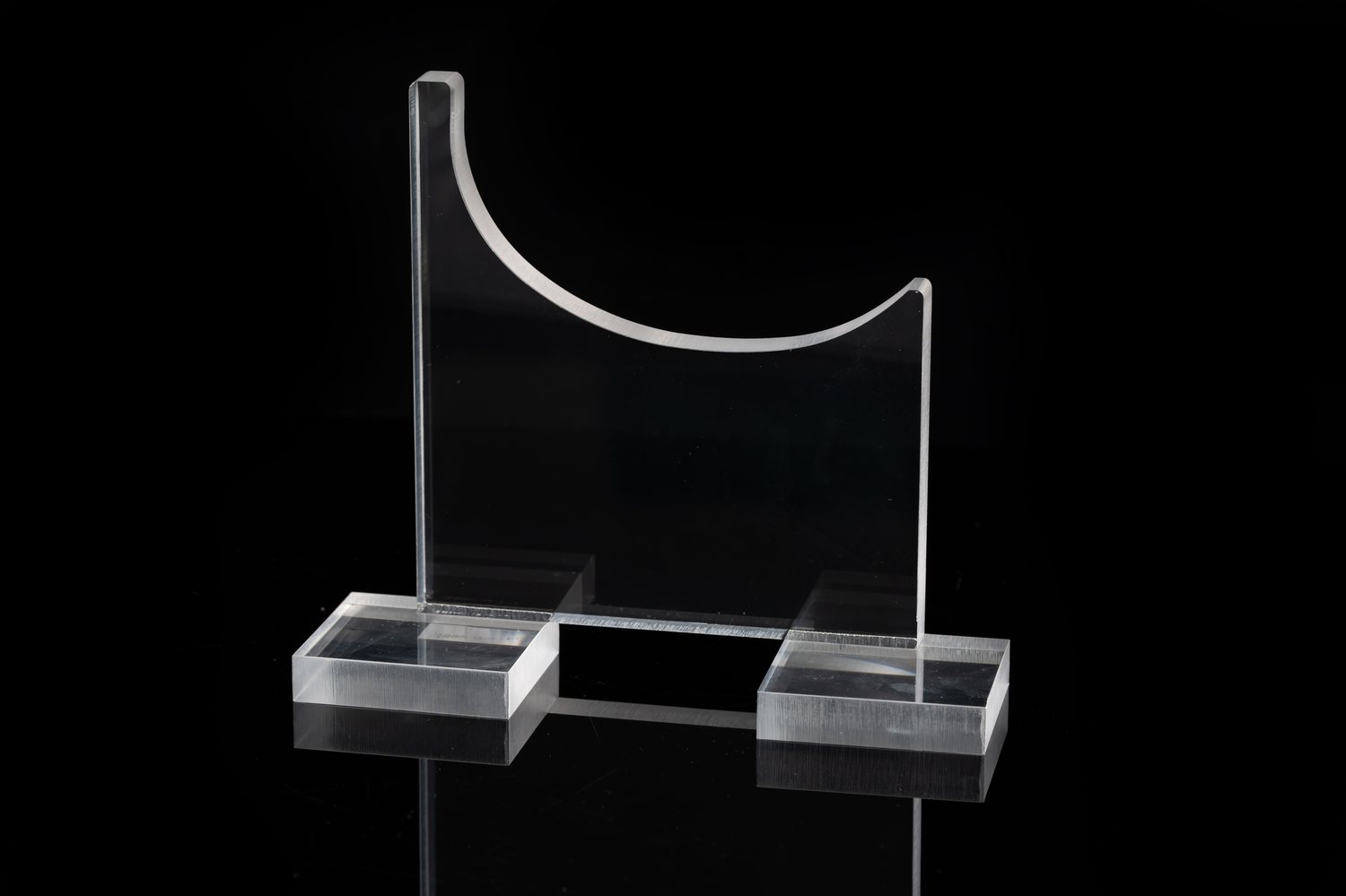
Turned · annealed · optical faces
| Machines | 8 × 3-axis CNC + 1 × 5-axis CNC |
| Tolerance | ±0.1 mm standard / ±0.05 mm critical |
| Max block thickness | 100 mm |
| Internal finish | Vapor / flame polished channels available |
| Post-processing | Annealing (standard), polishing, bonding |
| Quantities | Pre-production samples; production from 20 pieces per design or specification |
Why annealing matters
Machining introduces internal stress in acrylic; unannealed parts craze (micro-crack) when they later meet solvents, cleaners or load. Every machined part we ship is annealed — a slow thermal cycle that relaxes stress — unless the drawing states otherwise. More in our machining tolerances guide.
±0.1 mm standard and ±0.05 mm on critical dimensions. Acrylic moves with temperature (~0.07 mm/m/°C), so we machine and inspect at controlled temperature and tolerance at a 23°C reference.
Cast, almost always — it machines cleaner, anneals better and comes in thick blocks. Extruded suits simple economical flat parts. We quote the right grade per drawing.
Yes — vapor polishing restores transparency in machined channels for flow-visualization parts.
Yes. CNC needs no tooling, so single pieces are routine; most prototypes ship in 48 hours.
Machined components run to General tolerances per GB/T 1804-2000 / ISO 2768 by size span; holes and features are ±0.1 mm typical, and drawing-flagged critical dimensions are confirmed at ±0.05 mm by first-article inspection.
First-article data retained; reorders run on the same CNC programs, and material locked to the part number for reorders keeps repeat orders consistent, with a revision change triggering a new first article.
Yes: clear cast grades are machined and polished, and Appearance described as clear / glass-clear / optically clear is judged against the approved master sample per the appearance standard.
Cast and extruded acrylic within the fabricated thickness range 3–100 mm; block and thick-sheet work is quoted per part.
Drawings accepted as STEP/DWG/DXF/PDF/sketches, and a manufacturing drawing is drafted from a sketch when no CAD file is available.
Industrial acrylic components cover jigs, fixtures, sight glasses, manifolds, spacers, insulator parts and machined details, CNC-produced from PMMA sheet and block to the drawing. Cast acrylic is recommended for machining-heavy parts because it machines cleaner for precision work, and reorders run on the same programs with the grade locked to the part number.
First-article data is retained and reorders run on the same CNC programs with the material grade locked to the part number, so a reorder is inspected against the original first article before release. Change control and traceability records are order-specific and supplied on request.
Machined components use general tolerances per GB/T 1804-2000 / ISO 2768 varying with size span; ±0.1 mm is typical for holes and machined features, and ±0.05 mm applies only to drawing-called critical dimensions confirmed per drawing plus first-article. Concentricity and fit tolerance are quoted per feature.
Machined to drawing in our own plastic & acrylic fabrication plant, on 3- and 5-axis CNC. Related: sight glasses, precision rings & tubes, medical device parts.
Send part drawings — an engineer replies within 12 hours.
Technical details
Precision-machined clear acrylic rotor housing
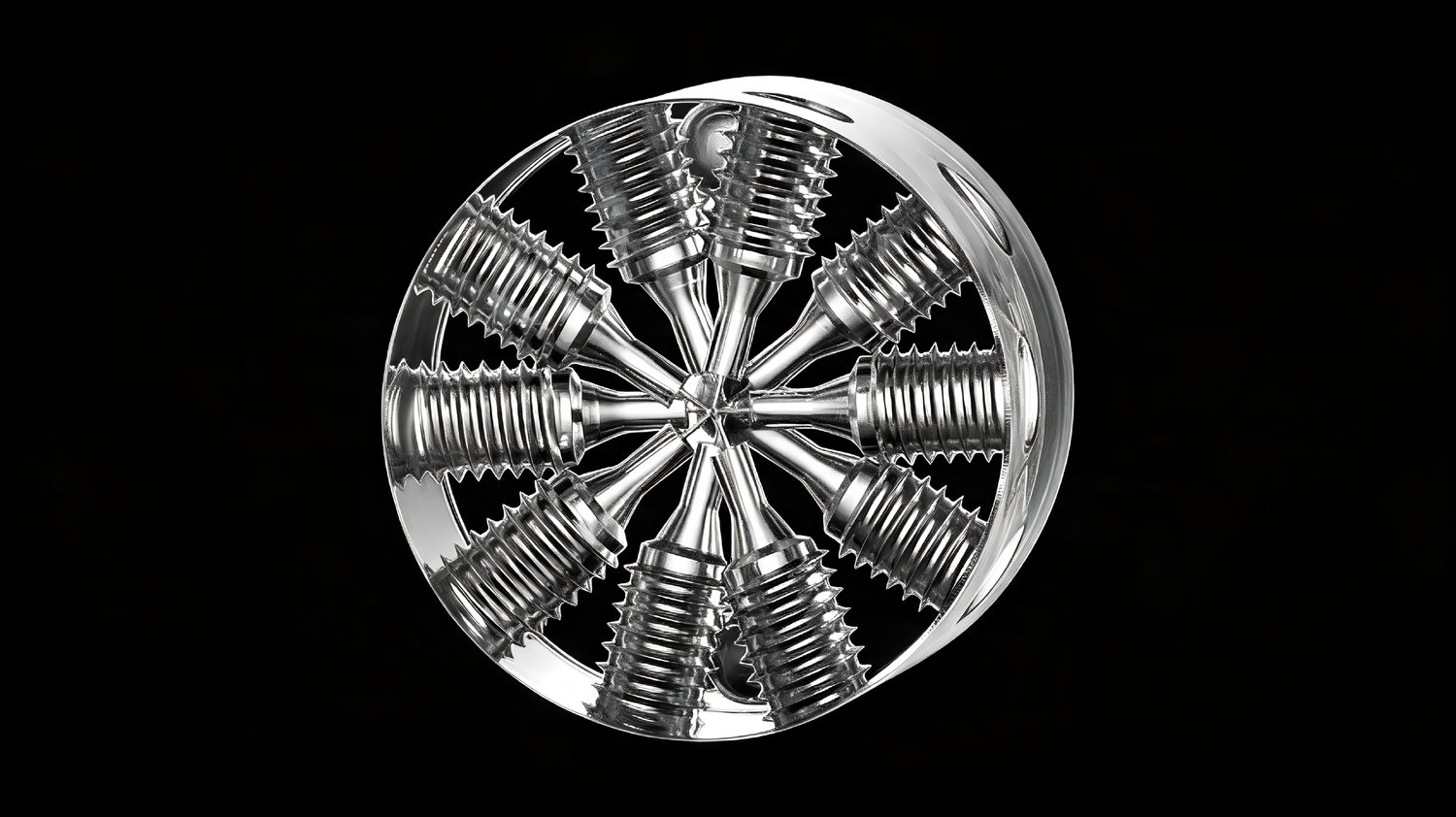
Turned and machined clear acrylic disc component
Calypto cast acrylic sheet, cast in our own Suzhou facility, is our sourcing statement for the clear machined grades we quote; Mitsubishi or Lucite optical-grade PMMA is supplied when the order specifies a branded material.
Technical details
Drawings accepted as STEP/DWG/DXF/PDF/sketches; when no CAD file exists, engineers draft a manufacturing drawing for your approval.
First-article data retained; reorders run on the same CNC programs, and material locked to the part number for reorders keeps repeat orders dimensionally consistent.
Machined components carry Engineering review and quote within 12 hours on working days; Sample in 48 hours, production runs in 7 days for typical batches.
Technical details
Company-declared
Cast acrylic recommended for machining-heavy parts, extruded for flat sheet: machined components with tight features are quoted in cast, which machines cleaner for precision work.
Fabricated acrylic thickness range 3–100 mm covers machined components; block and thick-sheet work is quoted per part, and thin flat details can run from standard sheet stock.
Machined components use General tolerances per GB/T 1804-2000 / ISO 2768 varying with size span; Machined features to ±0.1 mm (holes and machined features) are typical, and Critical dimensions on the 5-axis CNC to ±0.05 mm are confirmed per drawing plus first-article.
Machined parts annealed with the cast-acrylic industry–standard schedule; machined components are stress-relieved with this cycle after CNC machining, and temperature and soak parameters are confirmed per grade and not published. Annealing reduces but does not eliminate cracking risk under fasteners, solvents or thermal cycling.
Visible faces follow Appearance described as clear / glass-clear / optically clear against the approved master sample where the component is a window or sight glass.
Bonded joints described as near-invisible seams apply where machined components are assembled into bonded units.
| Choose this when | Do not choose this when | Option | Claim IDs |
|---|---|---|---|
| The part is machined with tight features and threads | The part is a flat cut sheet | Cast acrylic, CNC-machined | AF-C15 |
| The part is a simple flat spacer or washer | The part needs a machined profile | Extruded acrylic sheet | AF-C15 |
| Optical clarity matters (sight glass, window) | The part is a hidden structural detail | Clear cast grade, polished faces | AF-C16 |
| The part repeats across orders | This is a one-off prototype | Program retention plus material lock | AF-C11, AF-C12 |
| Property | Value | Unit | Product grade | Thickness specimen | Test method / standard | Evidence status | Qualification | Claim IDs |
|---|---|---|---|---|---|---|---|---|
| Thickness range | 3–100 mm | mm | Cast and extruded acrylic | Per part | Per drawing | company-declared | Block work quoted per part | AF-C05 |
| Machined tolerance | ±0.1 mm holes and features; ±0.05 mm drawing-flagged critical | mm | Fabricated parts | Per order | GB/T 1804-2000 / ISO 2768 plus first-article | company-declared | Per drawing, never a whole-part band | AF-C01, AF-C02, AF-C03 |
| Drawing formats | STEP, IGES, DWG, DXF, PDF or dimensioned sketch | n/a | Fabricated parts | Per order | Drawing review | company-declared | Manufacturing drawing drafted from sketches | AF-C14 |
| Surface finish | Polished faces, matte or textured per drawing | n/a | Fabricated parts | Per order | Appearance acceptance standard | company-declared | A/B faces per master sample | AF-C16 |
| Repeatability | Same programs and locked material for reorders | n/a | Fabricated parts | Per part number | First-article retention | company-declared | Revision changes trigger a new first article | AF-C11, AF-C12 |
| Lead time | Quote 12 h, sample 48 h, production 7 days | hours / days | Typical machined components | Per order | Working hours Mon–Sat 09:00–18:00 GMT+8 | company-declared | Complex or volume orders evaluated separately | AF-C09, AF-C13 |
Q: Do you manufacture custom machined acrylic (PMMA) parts to drawing? A: Yes. We are a custom acrylic parts manufacturer, CNC-machining PMMA components to ±0.1 mm from your 2D or 3D files — jigs and fixtures, sight glasses, spacers, manifolds and precision plastic components.
Q: Can you make acrylic jigs, fixtures and sight-glass windows? A: Yes. We machine acrylic jigs, fixtures, alignment tooling and sight-glass windows in cast PMMA for optical clarity and dimensional stability, edge-polished as required.
Q: Do you machine engineering plastics besides acrylic? A: Our primary material is cast acrylic (PMMA); we also machine and fabricate related engineering plastics on request — tell us your material and we confirm feasibility.