
Light Diffuser Panels, Cut to Your Fixture
Opal, frosted and light-guide acrylic diffusers for LED luminaires, backlit ceilings and signage boxes — cut, drilled and edge-finished to your drawing, in repeat production quantities.
Reply within 12 hours · free DFM feedback
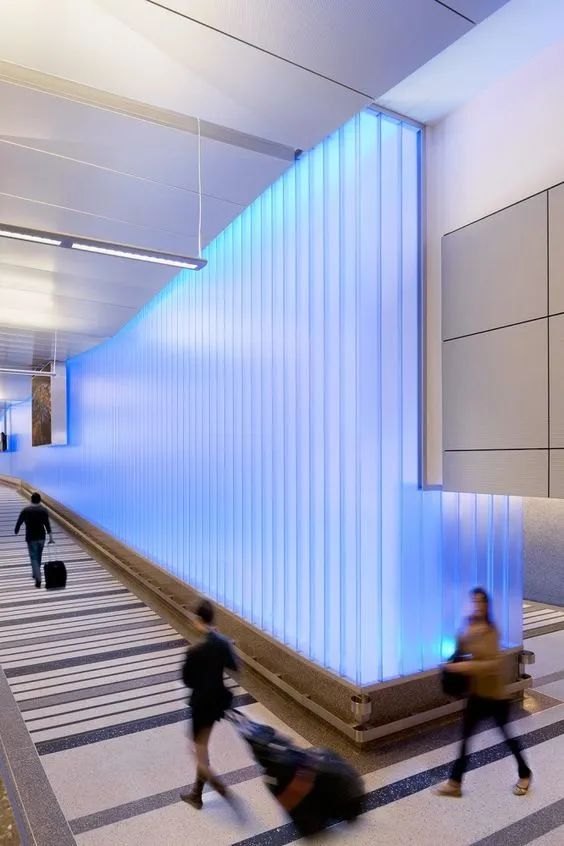
A light diffuser panel is an acrylic sheet selected to scatter LED point sources into more uniform light. Transmission and haze depend on the exact diffuser grade, thickness and pigment or surface treatment and should be checked against the selected supplier data sheet. Our 3–100 mm capability is a factory-wide fabrication range, not a recommendation for every diffuser; common lighting selections are confirmed from the optical target and available grade. Hotspot visibility is an interaction between diffuser grade, transmission and haze, LED pitch, beam angle, cavity depth and viewing distance.
What lighting buyers specify
The four decisions that set the price
- Diffusion grade. Opal white for hiding LED dots, frosted for softer glare control, light-guide (LGP) for edge-lit panels where light enters the edge and exits the face.
- LED layout and cavity. A shorter gap can require greater diffusion, but LED pitch, beam angle, output, diffuser grade and viewing distance also affect uniformity. Send those inputs so a candidate grade and sample plan can be reviewed; no sheet grade can guarantee hotspot removal independently of the fixture.
- Cut-outs and fixings. Driver access holes, screw slots and clip channels are CNC-routed in the same operation as the profile — no secondary drilling, no cracked corners.
- Edge finish. Diamond-polished edges matter on edge-lit panels because a rough edge scatters light before it enters. Concealed edges can stay saw-cut and cost less.
Specifications
What we can make, in numbers
| Panel sizes | Up to 3000 × 2000 mm single piece; larger runs split into aligned modules |
| Thickness | 3–100 mm factory-wide fabrication capability; optical diffuser selection is grade- and fixture-specific |
| Grades | Opal white, frosted/satin, light-guide (edge-lit), clear |
| Light transmission | Grade- and thickness-specific; verify transmission and haze on the selected supplier data sheet |
| Cut-outs | CNC-routed slots, driver holes, clip channels |
| Edges | Saw-cut, machine-polished or diamond-polished |
| Forming | Cold-bent to radius ≥ 300 × thickness; thermoformed for tighter curves |
| Quantities | Pre-production samples through repeat production; 20 pieces per design or specification minimum for production runs |
| Material | Calypto cast acrylic (cast in our own Suzhou facility); Mitsubishi or Lucite optical-grade PMMA on request |
| Tolerances | General tolerances to GB/T 1804-2000 (equivalent to ISO 2768-1); the applicable value varies with nominal dimension and is agreed at drawing review |
| Minimum order | 20 pieces per design or specification; pre-production samples quoted separately |
| Lead time | Samples in 48 hours; production in 7 days, from approved drawing |
| Monthly capacity | 200 tonnes of acrylic processed per month |
25 machines under one roof — 8 × 3-axis CNC, 1 × 5-axis CNC, 5 × laser cutters, 3 × line benders, 4 × cold-bending stations, 2 × thermoforming ovens and 2 × polishers — in a 15,000 m² ISO 9001 plant running since 2014, shipping to 32 countries.
Optical diffuser RFQ inputs
Send the panel profile and thickness envelope, target uniformity and transmission, LED layout and pitch, beam angle, cavity depth, viewing distance, edge-lighting or backlighting arrangement, exposed-edge finish, mounting details, quantity and any sample acceptance method. We can coordinate the profile through CNC machining and the optical entry edge through edge polishing.
Where acrylic is the wrong choice
The limits, stated up front
Acrylic is not the right diffuser everywhere. Above roughly 80 °C continuous service, or where a fixture must meet an impact or fire class that acrylic cannot hold, polycarbonate is the correct material and we will say so — see acrylic vs polycarbonate.
FAQ
Questions buyers ask before ordering
What thickness diffuser do I need to hide LED dots?
It depends on the gap between the LED and the panel, not the thickness alone. A 30 mm cavity with 3 mm opal usually still shows dots; the same opal at 60 mm cavity does not. Send us the cavity depth and LED pitch and we will recommend the grade and thickness.
Can you cut diffusers to a shape, not just rectangles?
Yes. Profiles, radii, notches and internal cut-outs are CNC-routed from your DXF in one operation, which keeps edges square and avoids the chipping you get from secondary drilling.
Do you supply light guide panels for edge-lit signage?
Yes — light-guide grade with a dot pattern or a polished entry edge. Tell us the panel size, LED strip position and required uniformity and we will quote the pattern with it.
What quantities do you run?
From a single prototype to repeat production batches. Because the cut file is reused, unit cost drops sharply after the first run; the exact break points are on your quotation.
Part of our architectural acrylic panels range. Related: wall panels, skylight domes.
Get a project quote
Send drawings, quantities and your target delivery date — we reply within 12 hours with DFM feedback or a price.