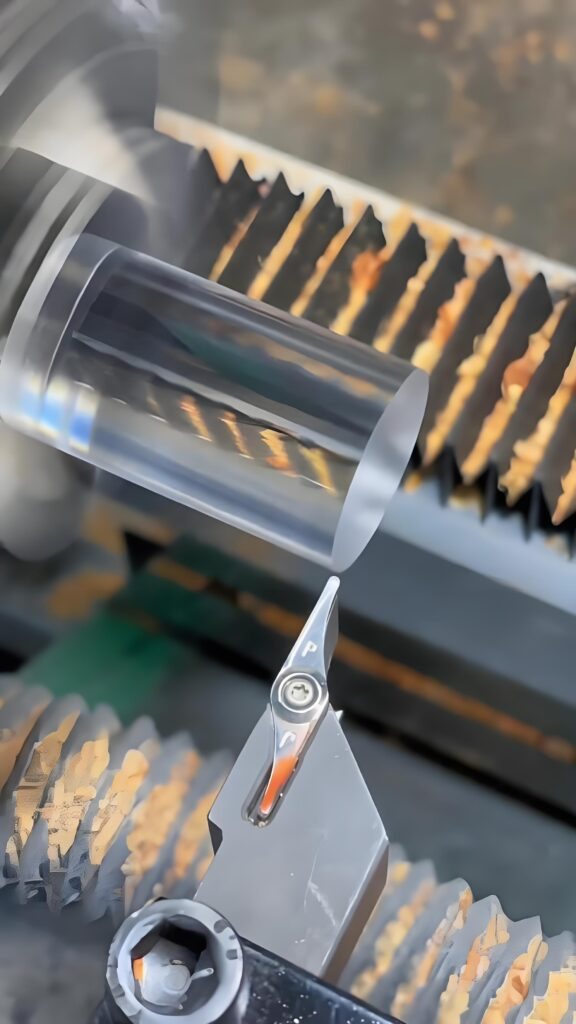
CNC Machining
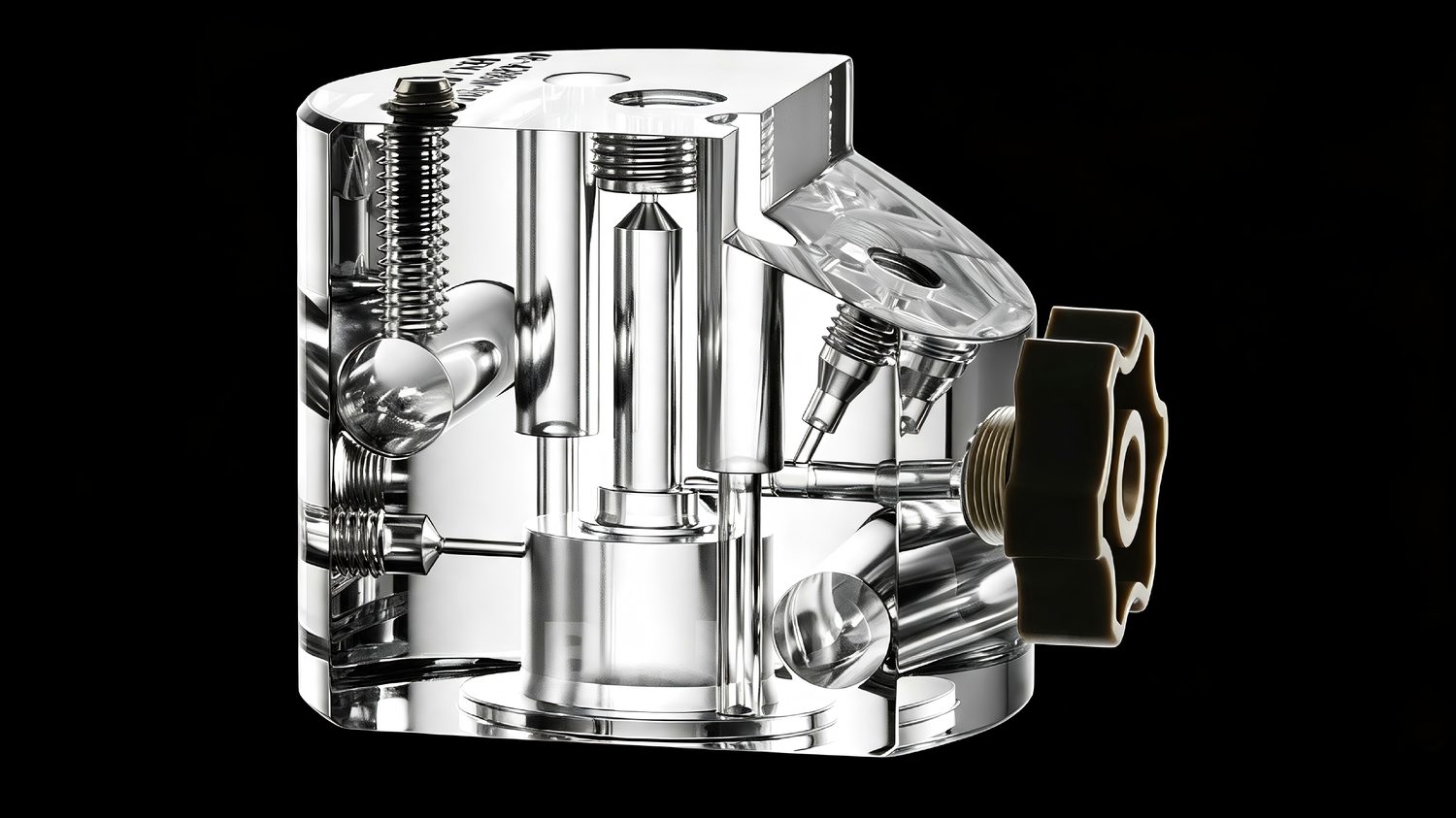
8× 3-axis + 1× 5-axis centers. Tight tolerance, pockets, threads, thick block.

Capabilities
Acrylic and polycarbonate machined, cut, formed and finished to your drawing — 25 machines, one QC chain, one accountable factory.
Plastic fabrication here combines CNC machining, laser cutting, bending, thermoforming, bonding and polishing across PMMA and PC, with the process route selected by material: acrylic may be laser-cut, while PC is routed or CNC-machined and never sent through the laser. Single-site processing removes handoff damage, mixed tolerances and multi-vendor lead times.
8× 3-axis + 1× 5-axis centers. Tight tolerance, pockets, threads, thick block.
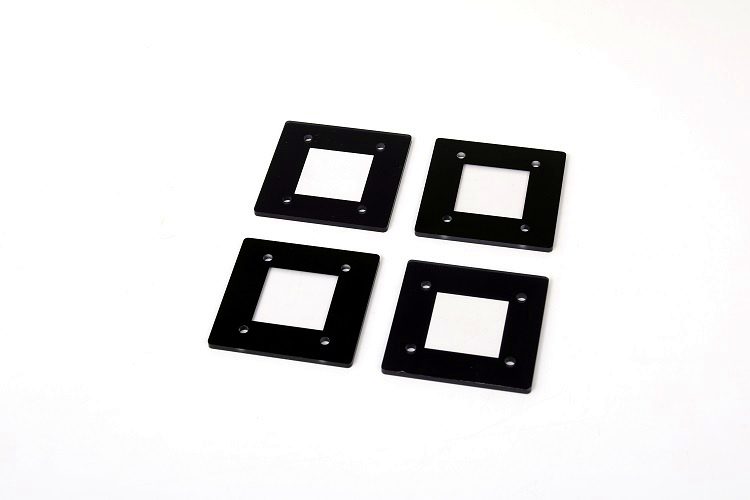
5 CO₂ machines. Flat profiles, polished edges off-machine, volume.
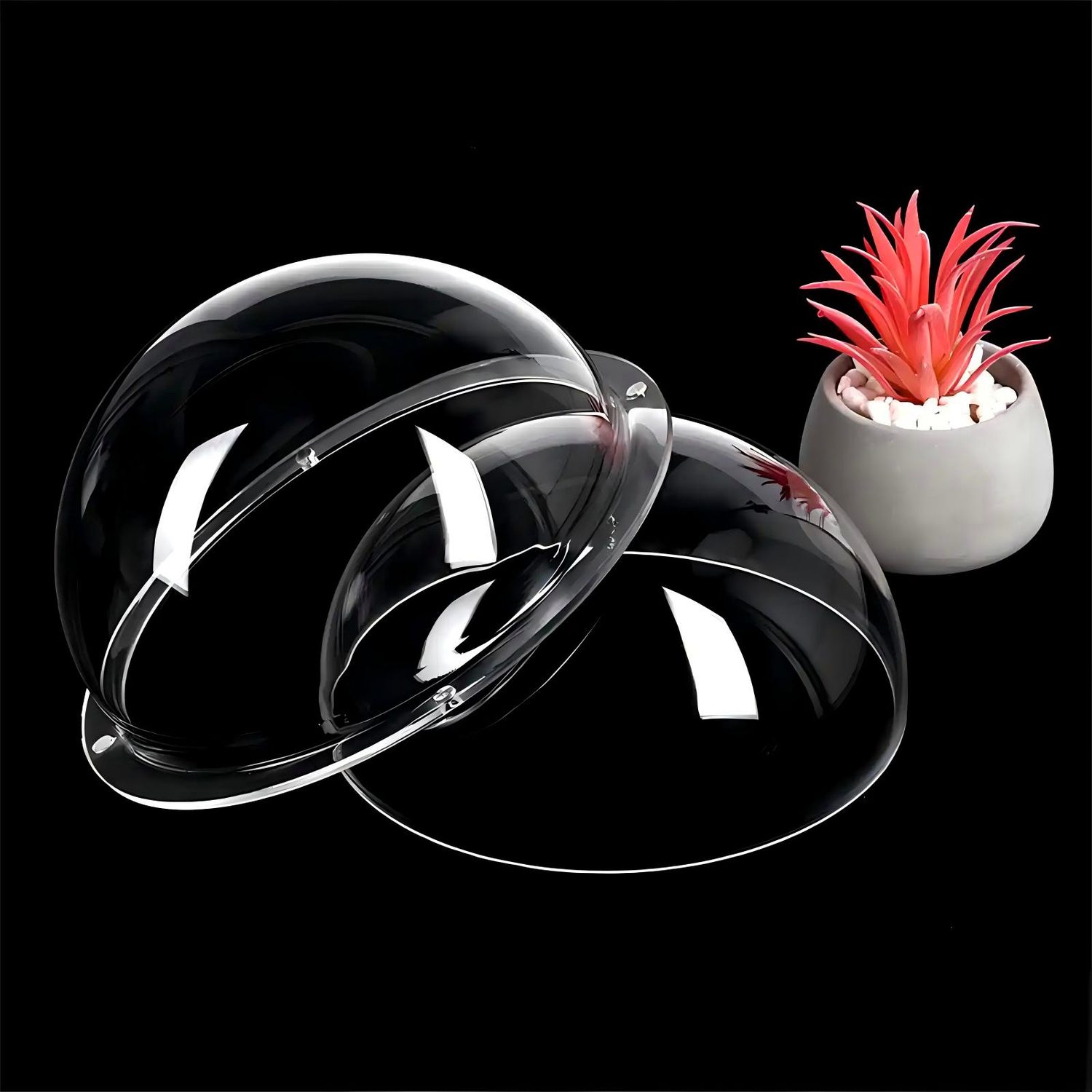
3 heat + 4 cold + 2 ovens. Angles, curves, domes, wrap guards.
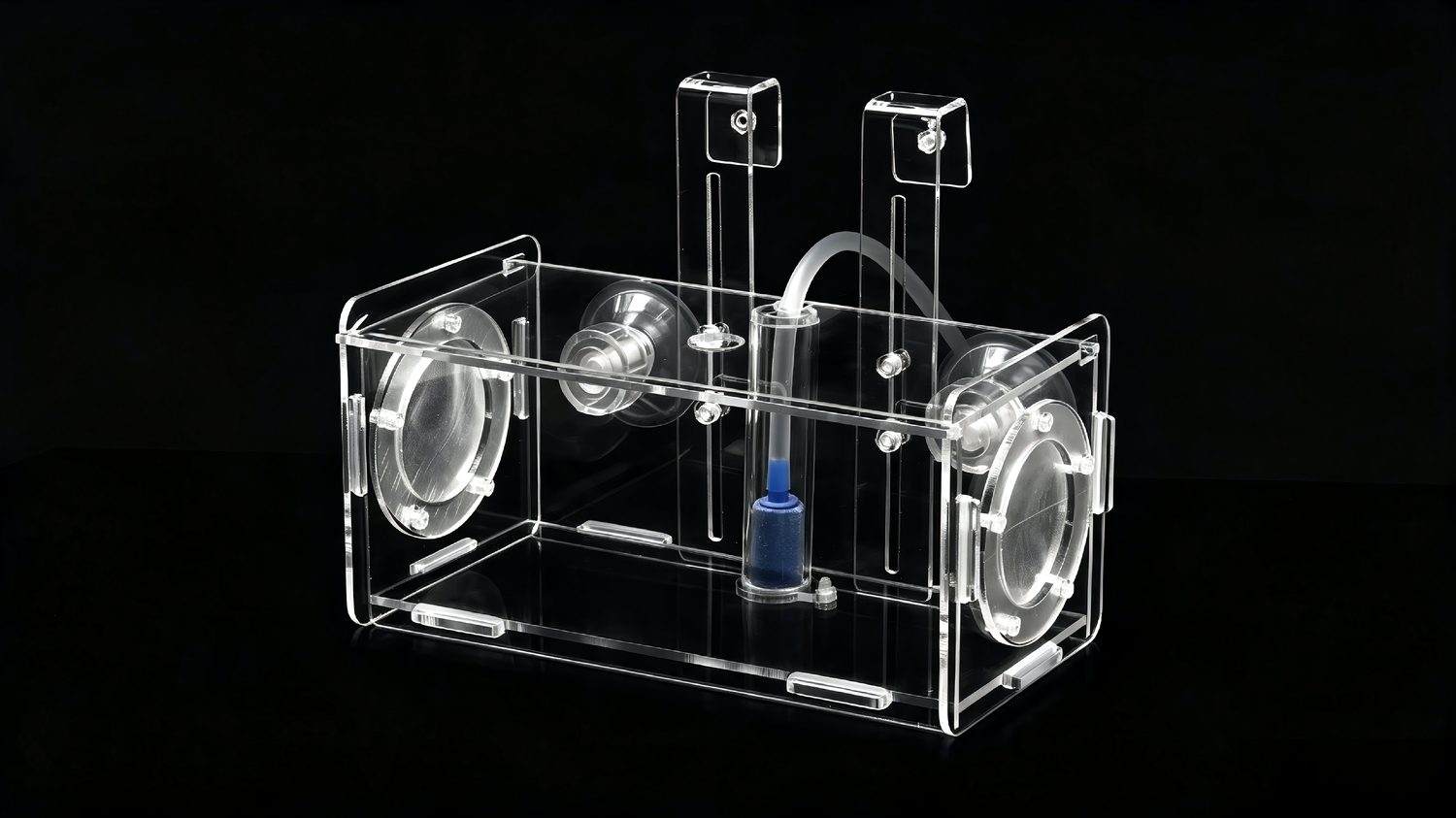
Invisible seams, hardware fitted, full assemblies.
Diamond, flame and buffing to optical clarity.
Oversized panels to 3000 × 2000 mm, walls, big enclosures.
Most buyers who send us a drawing already know they want a clear plastic part. Which one matters more than people expect, because the two fabricate differently.
| Acrylic (PMMA) | Polycarbonate (PC) | |
|---|---|---|
| Impact strength | Moderate | ~30× higher |
| Light transmission | 92%, stays clear | 88%, yellows uncoated |
| Scratch resistance | Good | Poor without hard coat |
| Cutting method | Laser — flame-polished edge straight off the beam | Routed or CNC-machined — laser leaves a scorched brown edge |
| Material cost | ~30% lower | Higher |
That last row is the one that changes a quote. A flat acrylic profile comes off the laser finished; the same profile in polycarbonate has to be routed and then edge-finished, which is slower. If the part does not need impact resistance, acrylic is cheaper twice over — material and process. If it guards a moving tool or takes a knock, polycarbonate earns the difference.
We cast our own optical-grade PMMA as Calypto cast acrylic sheet, and stock Mitsubishi and Lucite optical-grade PMMA for orders that specify a branded material. Polycarbonate is bought to the grade your drawing calls for. Other plastics — PVC, PETG, HDPE — we do not fabricate, so if your part needs one of those we will say so on day one rather than three weeks in.
| CNC machining | 8 × 3-axis and 1 × 5-axis centers, travel to 3000 × 2000 mm |
| Laser cutting | 5 CO₂ machines, sheet to 1600 × 3000 mm, up to 25 mm — acrylic only; a polished edge is typically specified up to 20 mm |
| Bending & forming | 3 line benders, 4 cold-bending stations, 2 thermoforming ovens; bends to 3000 mm |
| Thickness range | 3–100 mm |
| Tolerance | ±0.1 mm on holes and machined features, ±0.05 mm on critical dimensions; larger spans to GB/T 1804-2000 (ISO 2768) fine class |
| MOQ | 20 pieces per design for production; samples and one-off prototypes quoted separately |
| Lead time | Samples in 48 hours, production in 7 days — both from drawing approval |
| Quality | ISO 9001 certified (certificate details on request); first-article inspection on every new drawing |
How multi-process parts flow
Profiles cut with polished edges straight off the beam.
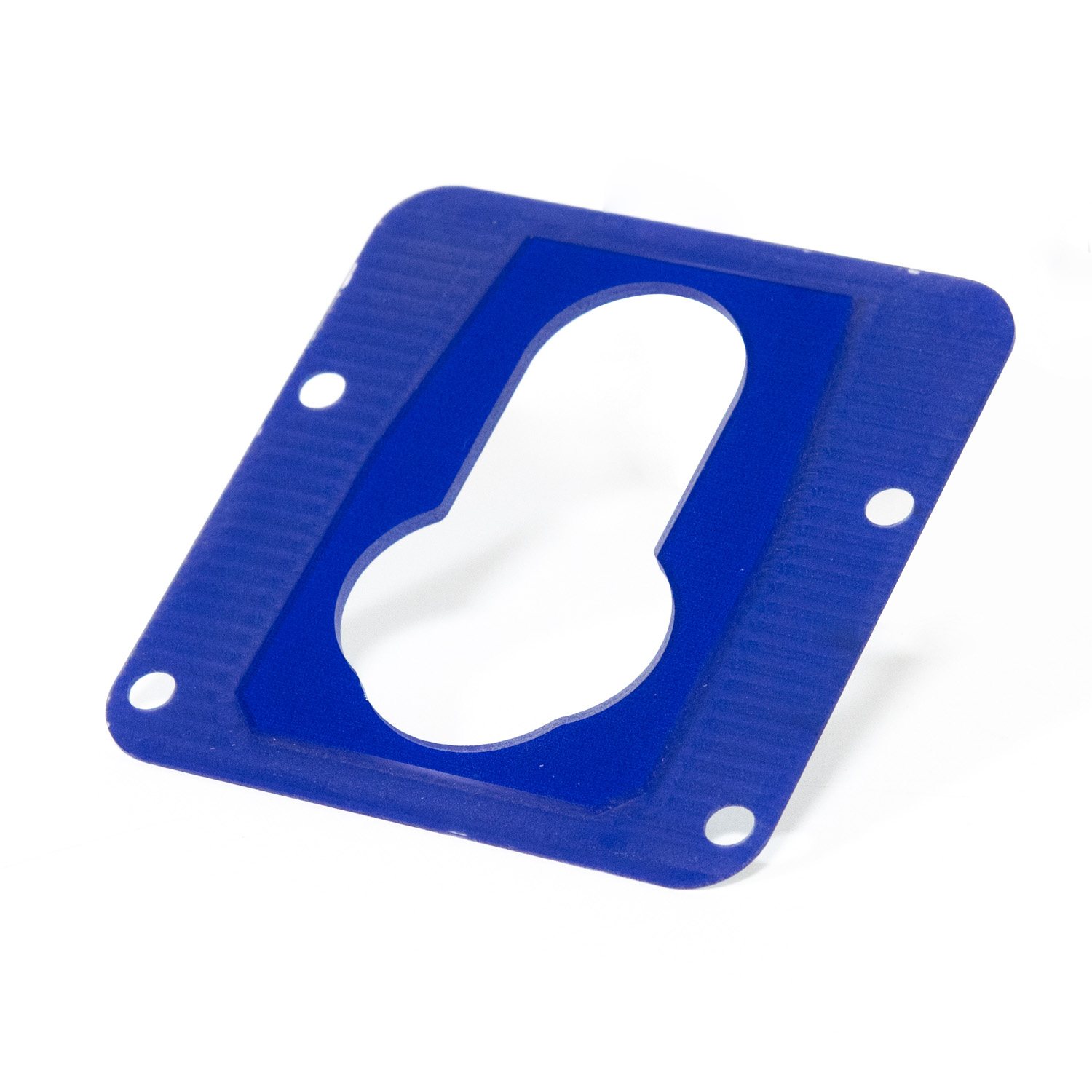
Vent slots, cable ports and threaded inserts machined in.
Sharp, crisp corners with confined heat.
Stress relieved, then solvent-welded into seamless housings.
Visible edges polished, hinges and latches fitted, crated.
One PO, one QC chain (see quality), one accountable factory.
No. Send the drawing and application; our engineers route each feature to the most economical capable process and note it on the quote. You’re welcome to specify if your spec requires it.
Yes — acrylic (PMMA) and polycarbonate (PC) are both fabricated in-house, and plenty of assemblies use both: an acrylic viewing window in a polycarbonate guard, for example. We do not fabricate PVC, PETG or HDPE.
Yes — CNC and laser need no tooling, so your prototype and the 5,000-piece rerun use the same programs, which is why reorders measure identical to first articles.
No. Polycarbonate is routed or CNC-machined; the laser is reserved for acrylic, where it delivers a polished-quality edge straight off the beam.
Acrylic (PMMA) and polycarbonate (PC) only. PVC, PETG and HDPE are outside our fabrication scope, and we flag that at quoting rather than after you have committed.
Large-format panels are reported up to 3000 x 2000 mm, a company-declared figure, with flatness and transport limits confirmed per order; most parts are routed across several processes in one facility.
Tolerance bands in the matrix are company-declared starting points; the actual values for your part are confirmed against the drawing and first-article inspection before production.
Yes. Fabrication combines CNC machining, laser cutting, bending, thermoforming, bonding and polishing across PMMA and polycarbonate, with the route selected by material: acrylic may be laser-cut, while polycarbonate is routed or CNC-machined and never sent through the laser. Most real parts need three or more processes under one quality chain.
Standard acrylic sheet stock commonly runs 1-30 mm and fabricated parts 3-100 mm; large-format panels reach 3000 × 2000 mm. Availability depends on grade, colour and source, and the quote states which material and thickness were assumed for your part. Process figures are confirmed against the drawing and first article.
The capability matrix compares each process by practical size, thickness, tolerance and surface result, and the quote assigns each operation to your drawing. A part may be laser-cut to blanks, CNC-featured for vents and ports, bent, annealed, bonded and polished. Every cell is confirmed per order; no cell is an automatic engineering approval.
From process to product
The same CNC, laser, forming, bonding and polishing lines feed every part we ship. See the finished work by application:
Send the drawing and application — we route it for you and quote within 12 hours.
Technical details
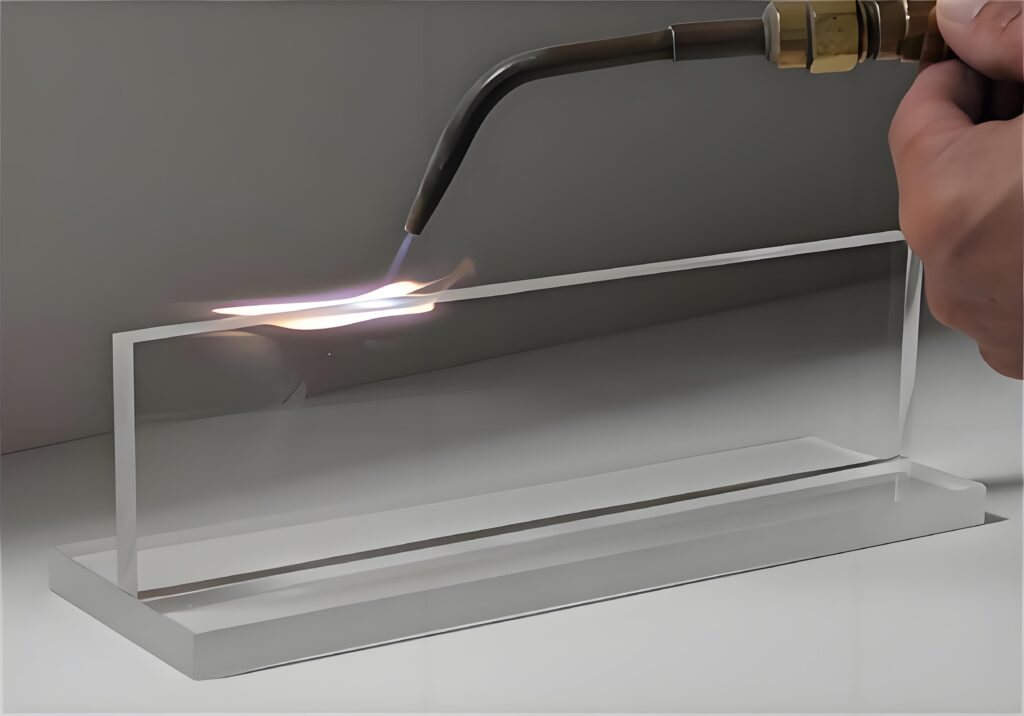
Flame polishing the edge of a clear acrylic part
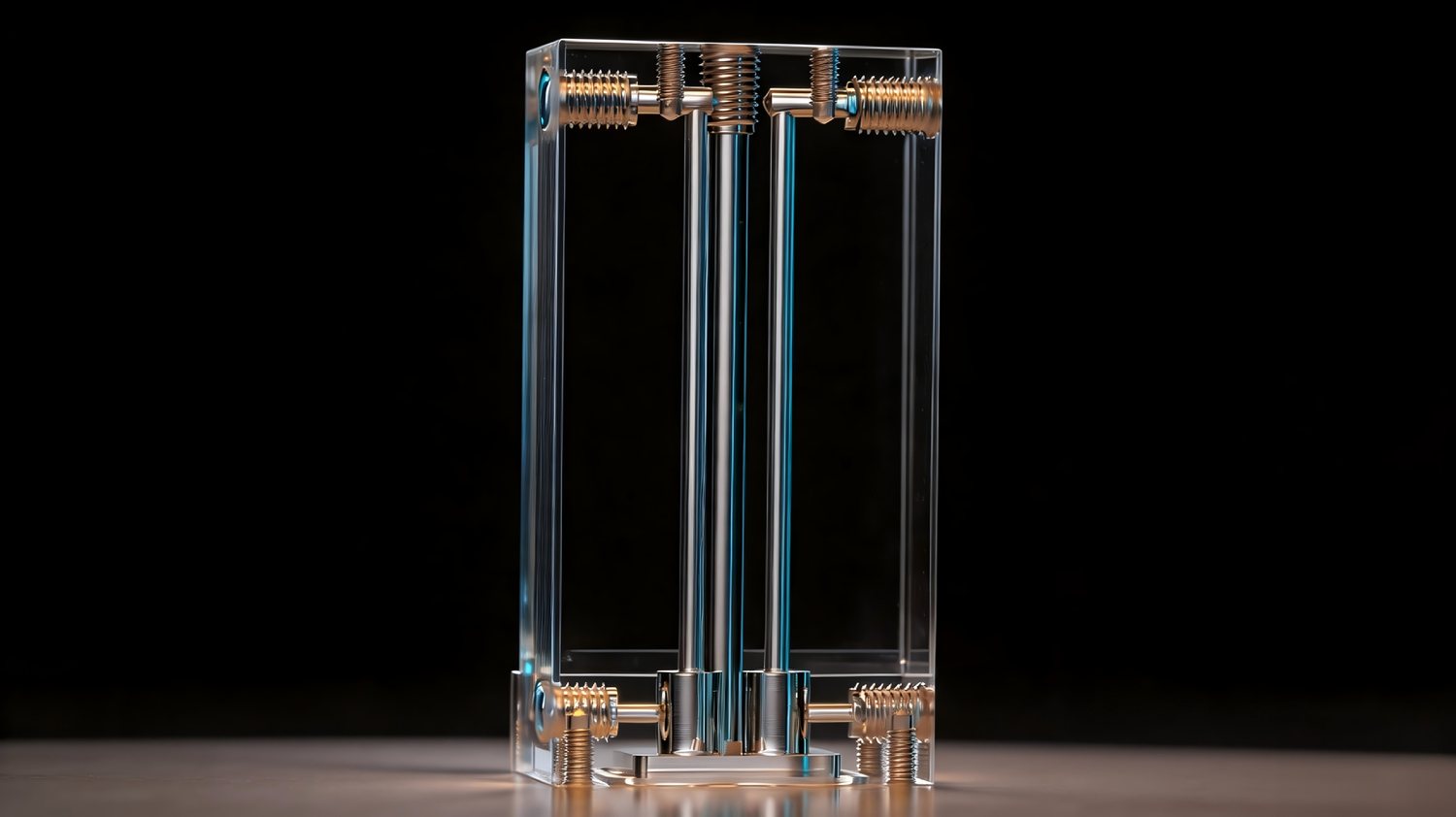
Solvent-bonded clear acrylic assembly with seamless joints
Technical details
Final process routing, tolerances and lead times for your part are confirmed against the drawing and first-article inspection, not assumed from the matrix alone.
Technical details
Company-declared
Most real parts need three or more processes; an equipment enclosure, for example, may be laser-cut to blanks, CNC-featured for vents and ports, line-bent into a wrap, annealed, solvent-bonded and then polished and fitted under one quality chain.
The capability matrix below lists each process with its practical size, thickness and feature limits; cells without an approved value say so rather than guessing an industry figure.
We fabricate acrylic (PMMA) and polycarbonate (PC) only; PVC, PETG and HDPE are outside scope, and we say so at quoting rather than late in the process.
Machined parts are annealed as standard with the cast-acrylic industry-standard schedule before bonding, and annealing reduces but does not eliminate stress-cracking risk.
The full per-process acrylic fabrication capability matrix sets out the size and thickness envelope, tolerance bands and annealing rules for each process. For where these processes are actually used, see custom acrylic applications — sight glasses, robotics covers, lighting diffusers, large-format panels, precision rings and control-panel fascias.
| Choose this when | Do not choose this when | Process |
|---|---|---|
| You need flat profiles with polished edges at volume | Your part needs deep pockets, threads or tight feature tolerances | Laser cutting (acrylic) |
| You need pockets, threads, slots or tight tolerances in sheet or block | The part is a flat profile better cut by laser | CNC machining |
| You need angle bends, curves, domes or wrap guards | The geometry is machined rather than formed | Bending and thermoforming |
| You need sealed, leak-tight assemblies or fitted hardware | The part is a single-piece machined component | Bonding and assembly |
| Visible edges or faces must be transparent or optically clear | Edges are hidden and only a machined finish is required | Polishing |
| You need panels beyond standard sheet size | Your parts fit standard sheet dimensions | Large-format fabrication |
| Property | Value | Unit | Product grade | Thickness specimen | Test method / standard | Evidence status | Qualification | Claim IDs |
|---|---|---|---|---|---|---|---|---|
| CNC machining | 8 x 3-axis and 1 x 5-axis centers | machines | Acrylic (PMMA) and polycarbonate | 3-100 mm | Drawing plus first-article inspection | company-declared | Tolerance per drawing and first article | AF-C06, AF-C05 |
| Laser cutting | 5 CO2 machines; flat profiles with polished-edge quality | machines | Acrylic only; not polycarbonate | Sheet per machine limits | Company process statement | company-declared | Thickness and geometry limits confirmed per part | AF-C06 |
| Bending and thermoforming | 3 line benders, 4 cold-bending stations, 2 thermoforming ovens | stations | Acrylic and polycarbonate | Order-specified | Company process statement | company-declared | Formed-dimension tolerance confirmed per part | AF-C06 |
| Bonding and assembly | Solvent and cement bonding; seams described as near-invisible | n/a | Acrylic (PMMA) | Order-specified | Company data | company-declared | Bond type, strength and appearance grade pending | AF-C17 |
| Polishing | Diamond, flame and buffing stations | stations | Acrylic (PMMA) | Order-specified | Appearance per agreed sample | company-declared | Acceptance standard agreed per order | AF-C16 |
| Large-format panels | Up to 3000 x 2000 mm | mm | Cast acrylic and polycarbonate | Per sheet type | Company statement | company-declared | Flatness, transport and crating limits pending | AF-C04 |
| Fabrication thickness range | 3-100 mm | mm | Cast and extruded acrylic | Fabricated parts | Company statement | company-declared | Cast versus extruded ranges pending | AF-C05 |
| Laser cutting tolerance | +/-0.2 mm | mm | Acrylic sheet | Per sheet and geometry | Company statement | company-declared | Thickness and cut-geometry scope pending | AF-C24 |
| Formed-part tolerance | +/-0.5 mm on formed dimensions | mm | Formed acrylic | Order-specified | Company statement | company-declared | Forming method, thickness and geometry pending | AF-C26 |
| General tolerances | GB/T 1804-2000 / ISO 2768, varying with size span | n/a | Fabricated acrylic parts | Order-specified | GB/T 1804-2000; ISO 2768 | company-declared | Grade and size-span mapping pending | AF-C03 |
| CNC feature tolerance | +/-0.1 mm on holes and machined features | mm | Machined acrylic | Order-specified | Company statement | company-declared | Applicable hole and thickness range pending | AF-C01 |
Beyond fabrication, we also supply sheet: AcrylicFabWorks is a China cast acrylic sheet manufacturer — Calypto cast acrylic in 1–30 mm — with bulk and cut-to-size sheet supply.