Acrylic Mirror Sheet, Cut and Finished to Shape
Silver, gold, tinted and one-way acrylic mirror — CNC-cut to your profile, edge-finished and drilled, for retail fixtures, signage, interiors and display work in production quantities.
Reply within 12 hours · free DFM feedback
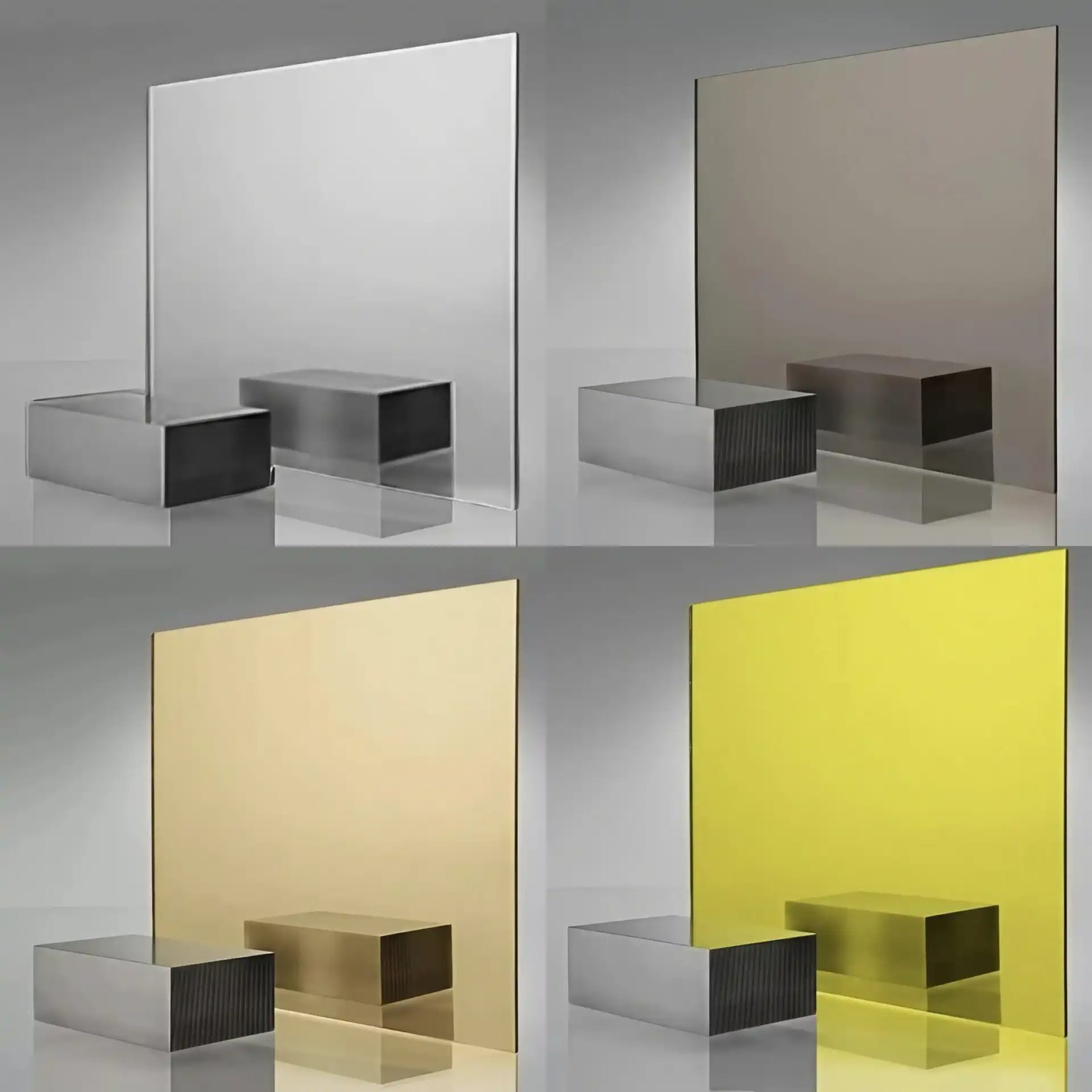
Acrylic mirror sheet is a cast or extruded PMMA panel with a reflective coating on the back face. It weighs roughly half of glass mirror of the same size, will not shatter into shards, and can be CNC-cut, drilled and cold-bent — none of which glass tolerates. We cut mirror from 3 mm to 100 mm thick and up to 3000 × 2000 mm as one piece, in silver, gold, bronze, tinted and one-way grades.
What buyers get wrong
Four things that decide whether mirror looks right
- Flatness and mounting. Acrylic mirror distorts if it is bonded to an uneven substrate or over-tightened. Full-surface bonding to a flat backing, or edge-captured framing, keeps the reflection clean.
- Coating side. The mirror coating is on the back. Every cut, drill and route we make is planned so the tool exits away from the coating — that is why edges do not show silvering damage.
- Thermal movement. Acrylic expands and contracts more than glass. Fixing holes are oversized and slotted so panels are not pinched; on long runs we detail expansion gaps.
- Cleaning. Ammonia cleaners and abrasive pads destroy the surface. We ship with protective film on both faces and include handling instructions with every crate.
Specifications
What we can make, in numbers
| Panel sizes | Up to 3000 × 2000 mm single piece |
| Thickness | 3–100 mm (mirror grades typically 2–6 mm) |
| Finishes | Silver, gold, bronze, tinted, one-way / two-way |
| Weight | Roughly half of glass mirror at the same size and thickness |
| Cutting | CNC routing and laser cutting from your DXF |
| Edges | Saw-cut, machine-polished or diamond-polished |
| Fixings | Drilled, countersunk, slotted for thermal movement |
| Protection | Film both faces; crated per installation sequence |
| Material | Calypto cast acrylic (cast in our own Suzhou facility); Mitsubishi or Lucite optical-grade PMMA on request |
| Tolerances | General tolerances to GB/T 1804-2000 (equivalent to ISO 2768-1); the applicable value varies with nominal dimension and is agreed at drawing review |
| Minimum order | 20 pieces per design or specification; pre-production samples quoted separately |
| Lead time | Samples in 48 hours; production in 7 days, from approved drawing |
| Monthly capacity | 200 tonnes of acrylic processed per month |
25 machines under one roof — 8 × 3-axis CNC, 1 × 5-axis CNC, 5 × laser cutters, 3 × line benders, 4 × cold-bending stations, 2 × thermoforming ovens and 2 × polishers — in a 15,000 m² ISO 9001 plant running since 2014, shipping to 32 countries.
Where acrylic is the wrong choice
The limits, stated up front
Acrylic mirror is not a substitute for glass everywhere. Where a surface will be scrubbed daily, exposed to solvents, or must meet a glass-specific building code, specify glass. We would rather tell you that at quotation than replace panels later.
FAQ
Questions buyers ask before ordering
Does acrylic mirror scratch more easily than glass?
Yes. The surface is softer, so it needs non-abrasive cleaning and it is not suitable for high-traffic scrub-down areas. In retail fixtures, signage and decorative interiors that is rarely the limiting factor; in a public washroom it can be.
Can acrylic mirror be bent?
Cold bending to a radius of roughly 300 × thickness is routine, and thermoforming is possible for tighter curves — but the coating limits how far you can go. Send the radius and we will tell you before you commit to a design.
Do you supply one-way mirror for displays and enclosures?
Yes. One-way (two-way) acrylic needs a lighting differential between the two sides to work; we will ask about the lighting design before quoting, because the material alone does not create the effect.
How do you cut mirror without damaging the coating?
Tool paths are set so the cutter exits away from the coated face, the film stays on through machining, and edges are finished dry. This is ordinary practice for us — it is the reason edges arrive without silvering flake.
Get a project quote
Send drawings, quantities and your target delivery date — we reply within 12 hours with DFM feedback or a price.