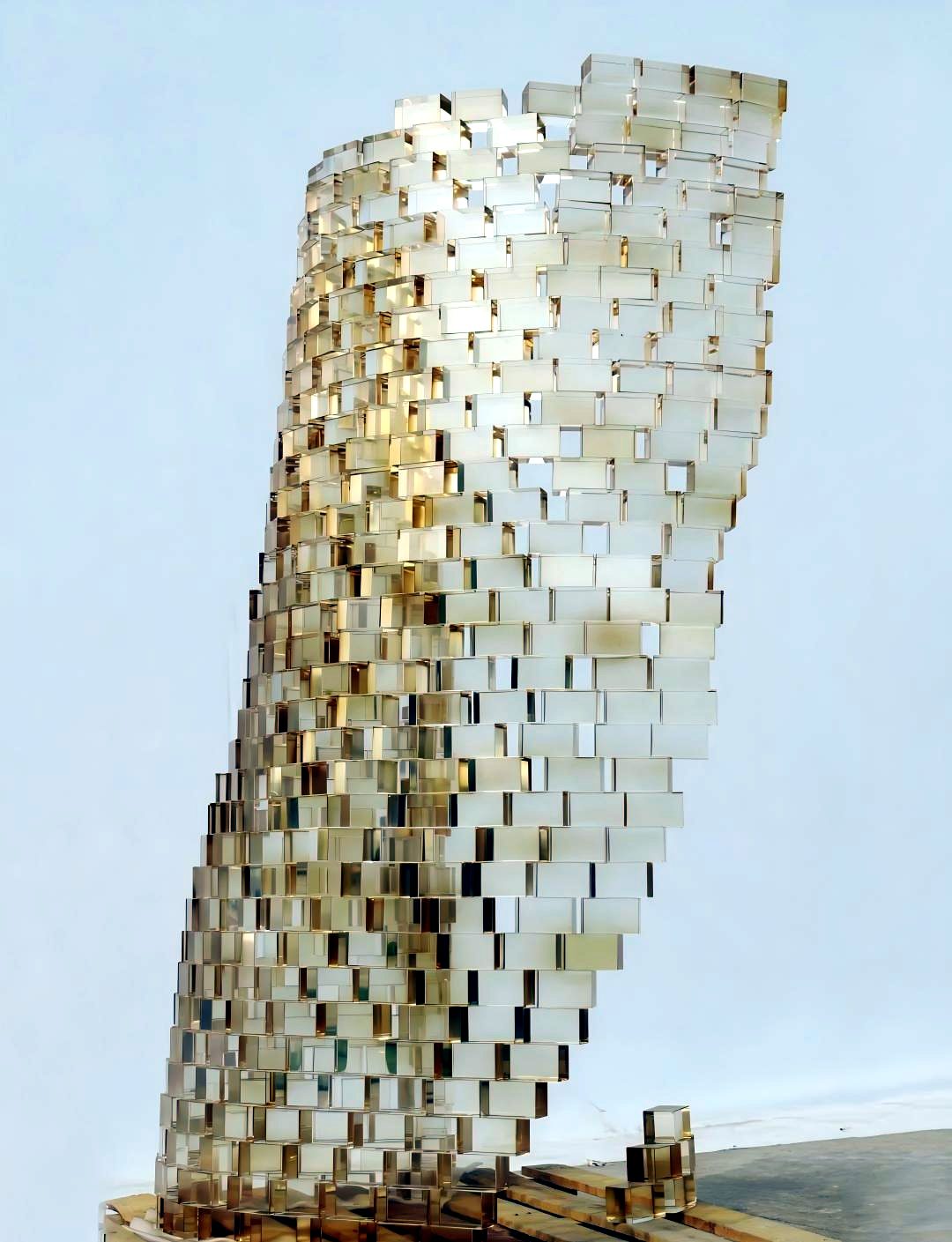
Atrium ribbon feature
Cold-bent colored acrylic · project-crated

Custom PMMA cladding, partitions, balustrade infills and curved translucent features — half the weight of glass, more impact-resistant, and formable into curves.
Reply within 12 hours · free DFM feedback

Architectural acrylic panels are custom-fabricated PMMA elements — wall cladding, partitions, balustrade infills and translucent feature walls — chosen over glass for being half the weight, more impact-resistant and formable into curves. Cast acrylic transmits 92% of light and comes in clear, frosted, colored and light-diffusing grades up to 100 mm thick.
For hotel and restaurant interiors — reception desks, lighting features, décor — see hospitality acrylic fabrication.
Application imagery: The following images illustrate architectural acrylic forms and installation contexts; they are not presented as documented customer case studies.
Cold-bent colored acrylic · project-crated
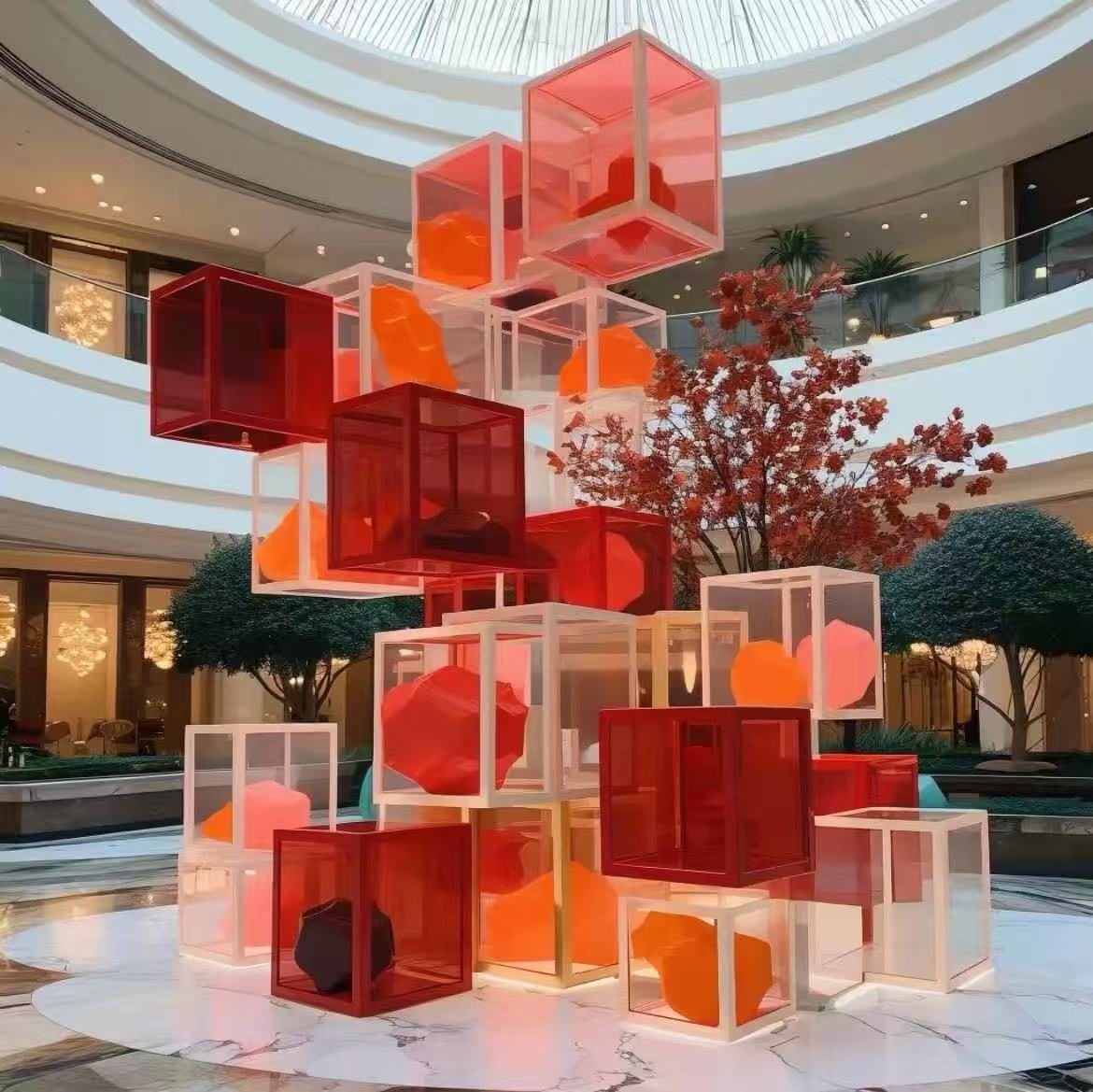
Bonded transparent cubes
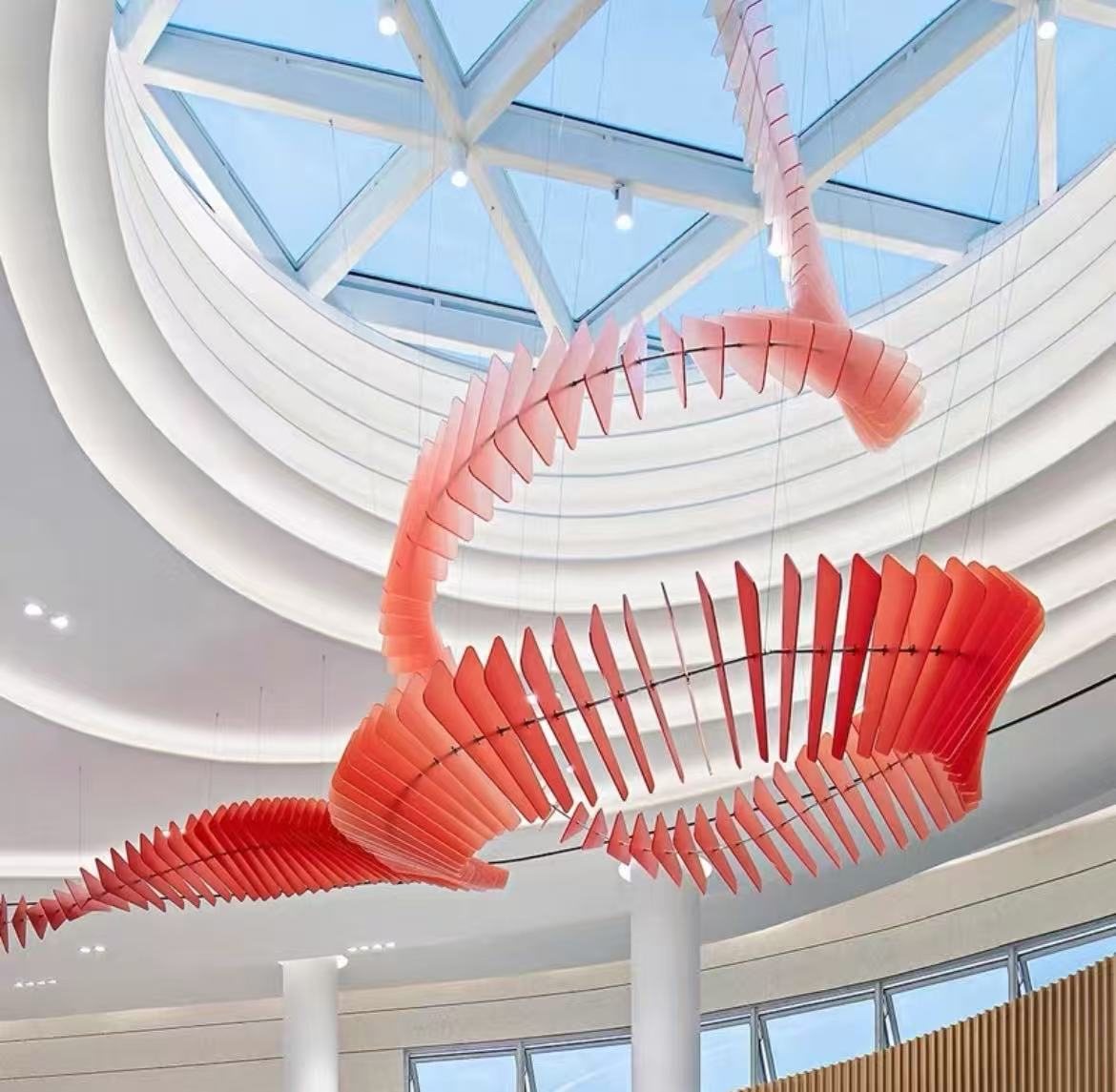
Formed acrylic · sequenced install
| Max panel size | 3000 × 2000 mm single piece |
| Thickness | 3–100 mm |
| Curves | Cold bending radius ≥ 300 × thickness; thermoformed tight radii |
| Surfaces | Gloss, frosted, satin, light-diffusing (LED-even), colors |
| Edges | Diamond-polished for exposed edges |
| Delivery | Cut-to-size, drilled, crated per installation sequence |
| Factor | Acrylic | Glass |
|---|---|---|
| Weight | 1.19 g/cm³ — half of glass | 2.5 g/cm³ |
| Impact | 10–17× more resistant | Brittle |
| Curves | Cold/heat formable | Expensive slumping |
| Scratch | Softer — care in high-touch zones | Hard |
| Fire | Combustible — check local code | Non-combustible |
Fire and building-code note for specifiers. PMMA is combustible. Any reaction-to-fire class must be verified for the exact material grade, thickness and configuration against its applicable classification report; a generic PMMA description is not evidence of a project rating. State the required code, location and assembly in the RFQ. We can provide available supplier documentation for the selected grade, while acceptance remains with the project designer and authority having jurisdiction.
Send the panel schedule, fixing system and supported edges, thermal movement allowance, joint layout, structural loads, environmental exposure, fire requirement, installation sequence and required submittal documents. Identify whether dimensions are design intent or approved shop-drawing dimensions, and state the material reports required for review.
3000 × 2000 mm as one piece. Larger walls are designed as panel systems with aligned joints or bonded seams, which we detail in shop drawings.
Panels within cold-bend radius (roughly 300 × thickness) can be sprung into curved frames on site. Tighter curves are thermoformed in-factory and ship pre-curved.
Light-diffusing grades spread point sources evenly at the correct LED-to-panel depth; we advise the diffusion grade and minimum cavity depth for your fixture spacing.
It can be, when the selected grade is suitable for the exposure. Confirm the supplier’s UV data, color, thickness, climate, cleaning and maintenance conditions, then engineer wind load, thermal movement, fixings and fire requirements for the project.
Compliance depends on the exact material grade, thickness, assembly, location and governing code. PMMA is combustible, so use the selected grade’s classification report rather than a generic material assumption. Fire-rated assemblies and escape-route applications require project-specific review and may require an alternative material.
Large-format panels up to 3000 × 2000 mm are available; flatness, crating and transport limits are confirmed per order, and very large panels may ship flat-pack.
Yes: curved panels are thermoformed from cast sheet, and formed part tolerance ±0.5 mm on formed dimensions is quoted per geometry and forming method.
Cladding and partition panels typically run 5–15 mm inside the fabricated acrylic thickness range 3–100 mm, confirmed per panel size and load.
Acrylic expands and contracts with temperature; fixing designs include clearance, and the grade and finishing route are agreed per project.
Panel edges are polished and Appearance described as clear / glass-clear / optically clear is judged against the approved master sample per the published appearance acceptance standard.
Large flat cladding and partition panels run efficiently in extruded sheet, while curved and bonded architectural elements use cast. Large-format panels up to 3000 × 2000 mm are available, with cladding and partition panels typically running 5-15 mm; flatness is confirmed per order against panel size and support spacing.
Fire and structural ratings are not claimed without project evidence. Fabrication covers cladding, partitions, balustrade infills and curved panels; the buyer’s engineer validates the assembled design against the applicable building standard, and formed dimensions carry wider tolerances than machined features.
Panel cutouts follow general tolerances per GB/T 1804-2000 / ISO 2768 depending on size span, with ±0.1 mm as the working band for machined features and ±0.05 mm only for drawing-called critical dimensions verified at first article. Thermal expansion clearance and fixing methods are reviewed per design.
Send project specs or shop drawings — we reply within 12 hours.
Technical details

Large-format acrylic wall panels
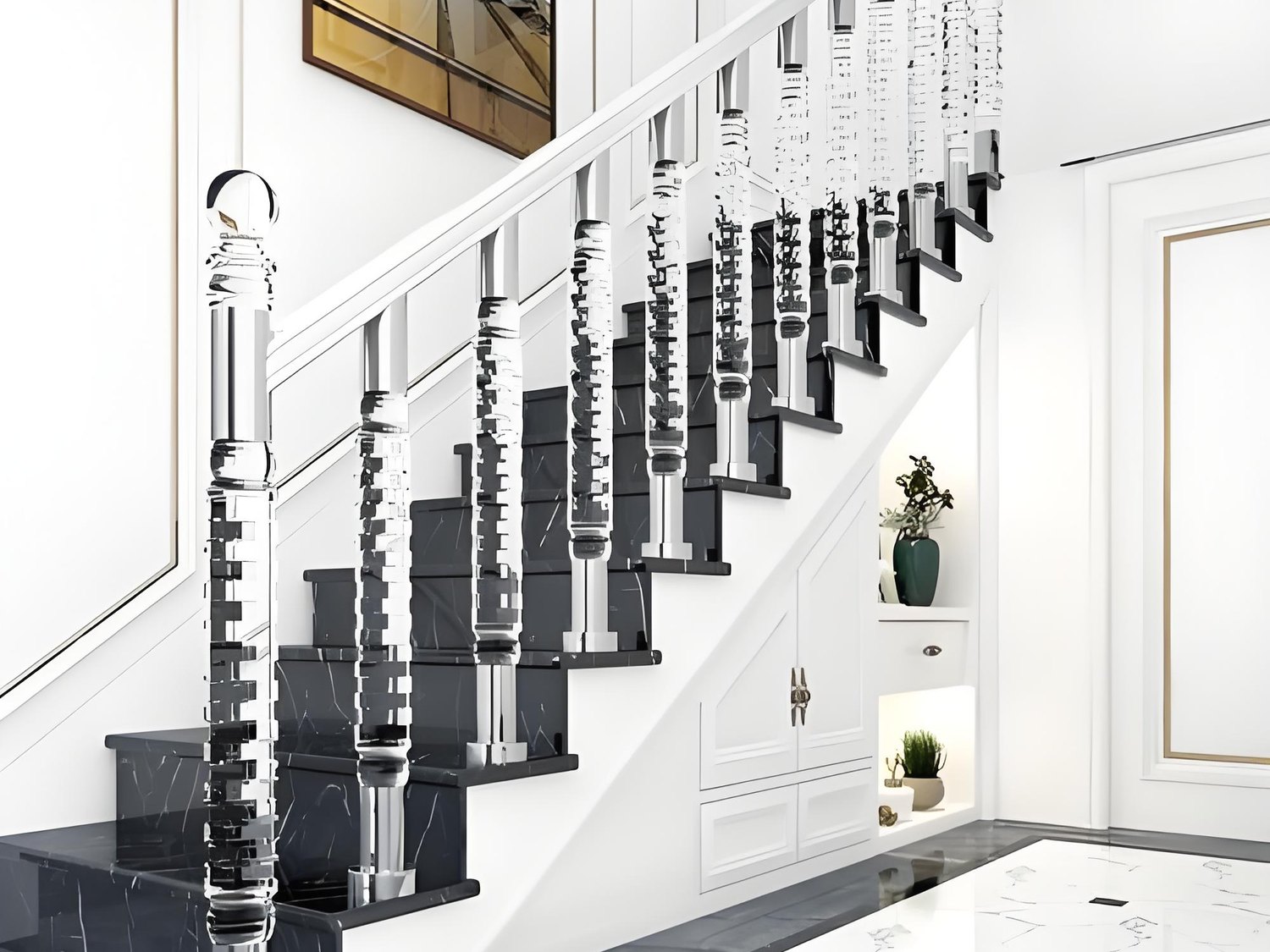
Acrylic balustrade and staircase panels
Calypto cast acrylic sheet, cast in our own Suzhou facility, is used for the clear architectural grades we quote; Mitsubishi or Lucite optical-grade PMMA is supplied when the order specifies a branded material, confirmed per project.
Technical details
Panel batches get Engineering review and quote within 12 hours on working days; Sample in 48 hours, production runs in 7 days with transport planned per panel size.
Technical details
Company-declared
Cast acrylic recommended for machining-heavy parts, extruded for flat sheet: curved and bonded architectural elements use cast, while large flat cladding and partition panels run efficiently in extruded sheet.
Large-format panels up to 3000 × 2000 mm are available, with fabricated acrylic thickness range 3–100 mm; cladding and partition panels typically run 5–15 mm and curved panels are formed from cast sheet.
Panel cutouts follow General tolerances per GB/T 1804-2000 / ISO 2768 depending on size span; Machined features to ±0.1 mm (holes and machined features) are the working band, and Critical dimensions on the 5-axis CNC to ±0.05 mm are confirmed per drawing plus first-article.
Visible panel faces follow Appearance described as clear / glass-clear / optically clear against the approved master sample, with A and B faces named on the drawing.
Machined parts annealed with the cast-acrylic industry–standard schedule; architectural panels are stress-relieved with this cycle before bonding or forming, and temperature and soak parameters are confirmed per grade, not published. Annealing reduces but does not eliminate stress-cracking risk under fasteners, thermal cycling or sustained load.
Bonded joints described as near-invisible seams are achievable on the polished edges of architectural panels.
Standard acrylic sheet stock range 1–30 mm covers many flat panel thicknesses, with availability depending on grade and colour.
| Choose this when | Do not choose this when | Option | Claim IDs |
|---|---|---|---|
| The panel is curved, bonded or machined | The panel is flat with simple edges | Cast acrylic, formed and bonded | AF-C15 |
| The panel is large and flat | The panel needs tight machined features | Extruded acrylic sheet | AF-C15 |
| The panel spans over 2 m | The panel fits standard sheet sizes | Large-format up to 3000 × 2000 mm | AF-C04 |
| The installation is outdoors | The installation is fully interior | UV-stable grade and finishing route agreed per project |
| Property | Value | Unit | Product grade | Thickness specimen | Test method / standard | Evidence status | Qualification | Claim IDs |
|---|---|---|---|---|---|---|---|---|
| Large-format capacity | 3000 × 2000 | mm | Cast acrylic sheet | Sheet dependent | Per order | company-declared | Flatness and transport limits per order | AF-C04 |
| Thickness range | 3–100 mm capability; 5–15 mm typical for panels | mm | Cast and extruded acrylic | Per panel | Per drawing | company-declared | Confirmed per panel size and load | AF-C05 |
| Formed tolerance | ±0.5 mm on formed dimensions | mm | Formed acrylic | Per geometry | Per drawing | company-declared | Forming method and geometry per part | AF-C26 |
| Machined tolerance | ±0.1 mm holes and features; ±0.05 mm drawing-flagged critical | mm | Fabricated parts | Per order | GB/T 1804-2000 / ISO 2768 plus first-article | company-declared | Per drawing, never a whole-part band | AF-C01, AF-C02, AF-C03 |
| Appearance | A/B faces against approved master sample | n/a | Fabricated panels | Per order | Appearance acceptance standard | company-declared | Seam and edge acceptance per order | AF-C16, AF-C17 |
| Lead time | Quote 12 h, sample 48 h, production 7 days | hours / days | Typical panel batches | Per order | Working hours Mon–Sat 09:00–18:00 GMT+8 | company-declared | Large-format and volume orders evaluated separately | AF-C09, AF-C13 |