
Finishes, tolerances and adhesives for acrylic parts going to the UAE and the wider Gulf, where heat, sun and long container transits decide more of the specification than the drawing does.
Reply within 12 hours · production from 20 pieces per design
For acrylic fabrication in the UAE, design around heat first. Write the tolerances at a stated reference temperature, because a 2 m acrylic panel grows by about 5–6 mm between 20 °C and 60 °C. Leave room for that movement in slotted holes and channels. Keep acrylic mirror, solvent-bonded joints and printed graphics out of direct sun unless the inks and adhesives are rated for it. For loaded or outdoor joints, use mechanical fixings rather than solvent cement. Typical cast acrylic is rated for continuous service up to about 80 °C. In an air-conditioned interior it behaves much as it does in Europe, but dark panels in direct Gulf sun can run well above the air temperature.
Tolerances: state the temperature, not just the number
General tolerances on our drawings follow GB/T 1804-2000, the Chinese equivalent of ISO 2768-1. Machined features and holes are held to ±0.1 mm, and critical dimensions to ±0.05 mm on the 5-axis machine; both apply to sizes within 30 mm and widen for larger spans. Like any dimensional tolerance, they refer to a reference temperature; ISO 1 sets it at 20 °C. Acrylic expands about ten times more than steel, so on long panels the site temperature can move a dimension further than the whole tolerance band.
| Panel length | Growth at +20 °C | Growth at +40 °C |
| 500 mm | 0.7 mm | 1.4 mm |
| 1000 mm | 1.4 mm | 2.8 mm |
| 2000 mm | 2.8 mm | 5.6 mm |
| 3000 mm | 4.2 mm | 8.4 mm |
Calculated with a typical coefficient of thermal expansion for cast acrylic of 7 × 10⁻⁵ per °C. The exact value comes from the data sheet for the grade you order. A temperature change of +40 °C covers a part fitted at 20 °C in a workshop that sits at 60 °C on a sunlit façade.
Three consequences for the drawing: give a reference temperature (20 °C is the usual one); size slotted holes for the movement plus fastener clearance; and leave an expansion gap inside channels and frames instead of fitting panels tight.
Finishes by where the part will live
| Finish | Air-conditioned interior | Outdoor or sunlit glazing |
| Clear cast sheet, polished edges | Suitable | Suitable; allow for movement and keep within the service temperature |
| Frosted or opal sheet | Suitable | Suitable; light colours stay cooler than dark tints |
| Dark tints and black | Suitable | Check panel temperature in direct sun before specifying |
| Screen or digital print | Suitable | Only with inks rated for outdoor UV; ask for the ink data |
| Acrylic mirror | Suitable away from wet areas | Not recommended; heat and humidity attack the mirror backing |
| Solvent-bonded assemblies | Suitable | Avoid where the joint carries load in heat; use fixings |
Cast acrylic itself resists UV and weathering well. On outdoor parts, the coatings, inks, mirror backings and adhesives usually fail before the sheet does.
Adhesives and fixings
- Solvent cement gives the clearest joint for displays, cases and interior fixtures. The joint is only as strong as its fit, and joints under stress can craze. Keep these assemblies indoors and unloaded.
- UV-curing adhesive fills small gaps and keeps the joint clear when the whole bond line can be reached by UV light. Check the adhesive’s stated service temperature against the location.
- Mechanical fixings (clamps, bolts through slotted holes, channels) are the default for façades, canopies, balustrade infill and any panel larger than about a metre that sits in the sun. They let the panel move.
Our guide to solvent vs UV bonding for clear acrylic covers joint design in more detail. If a joint has to seal or carry load, tell us at the quoting stage. Bonding is then a design decision, not a finishing step.
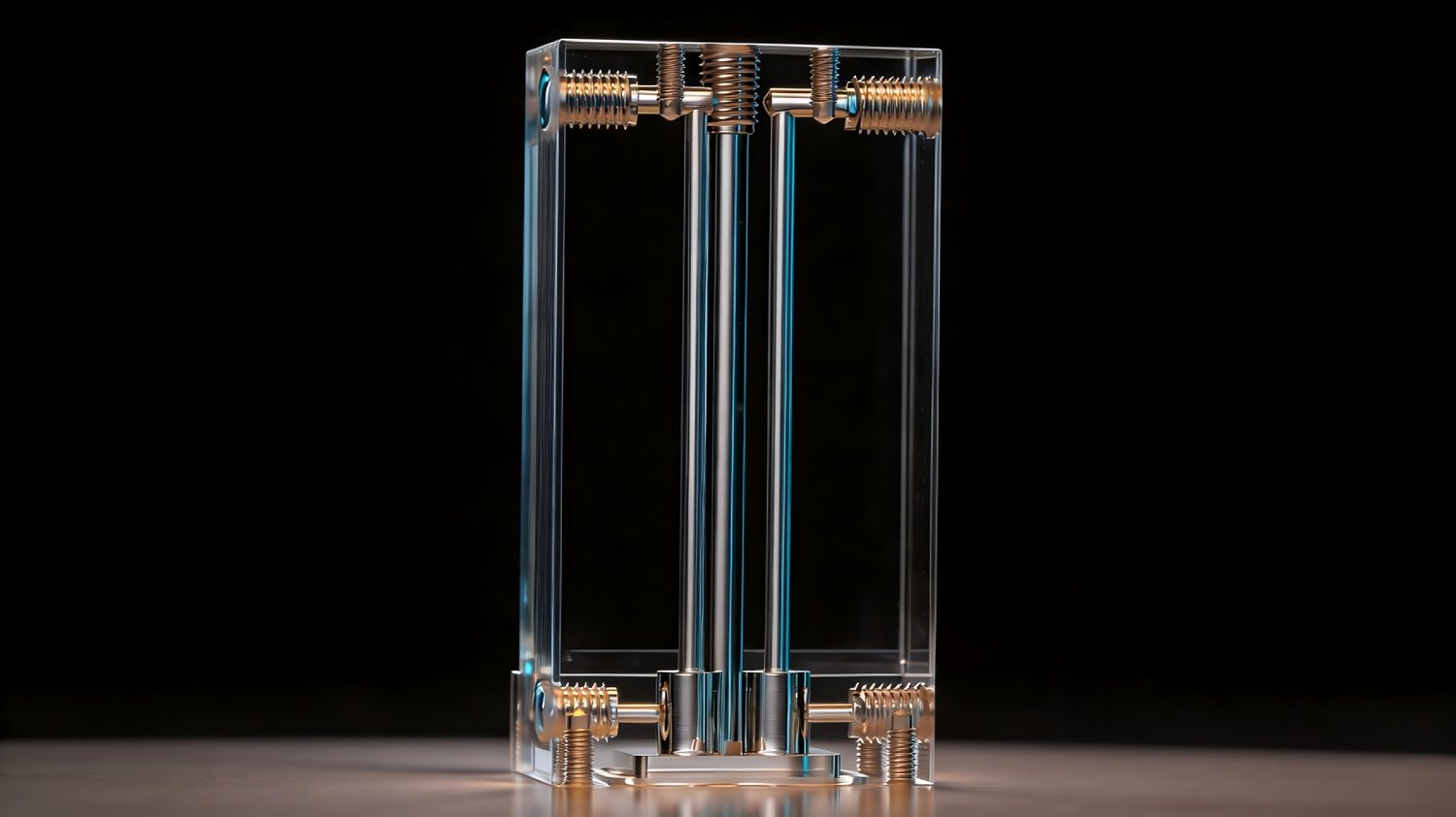
Solvent-bonded joints
Best kept indoors and unloaded
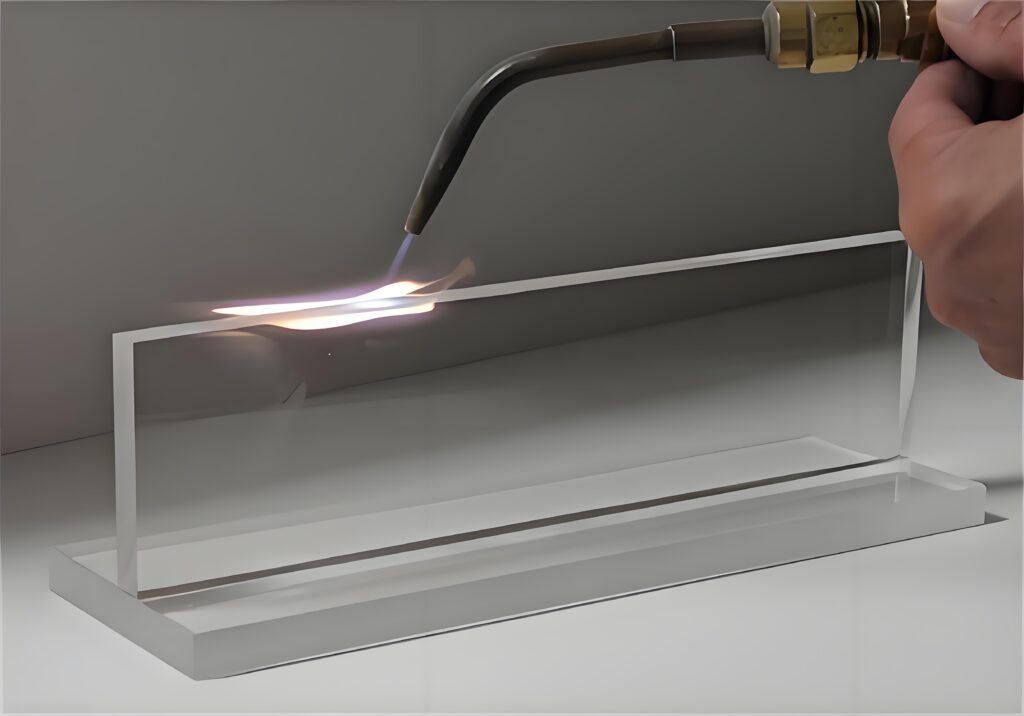
Polished edges
Clear edges on exposed sides
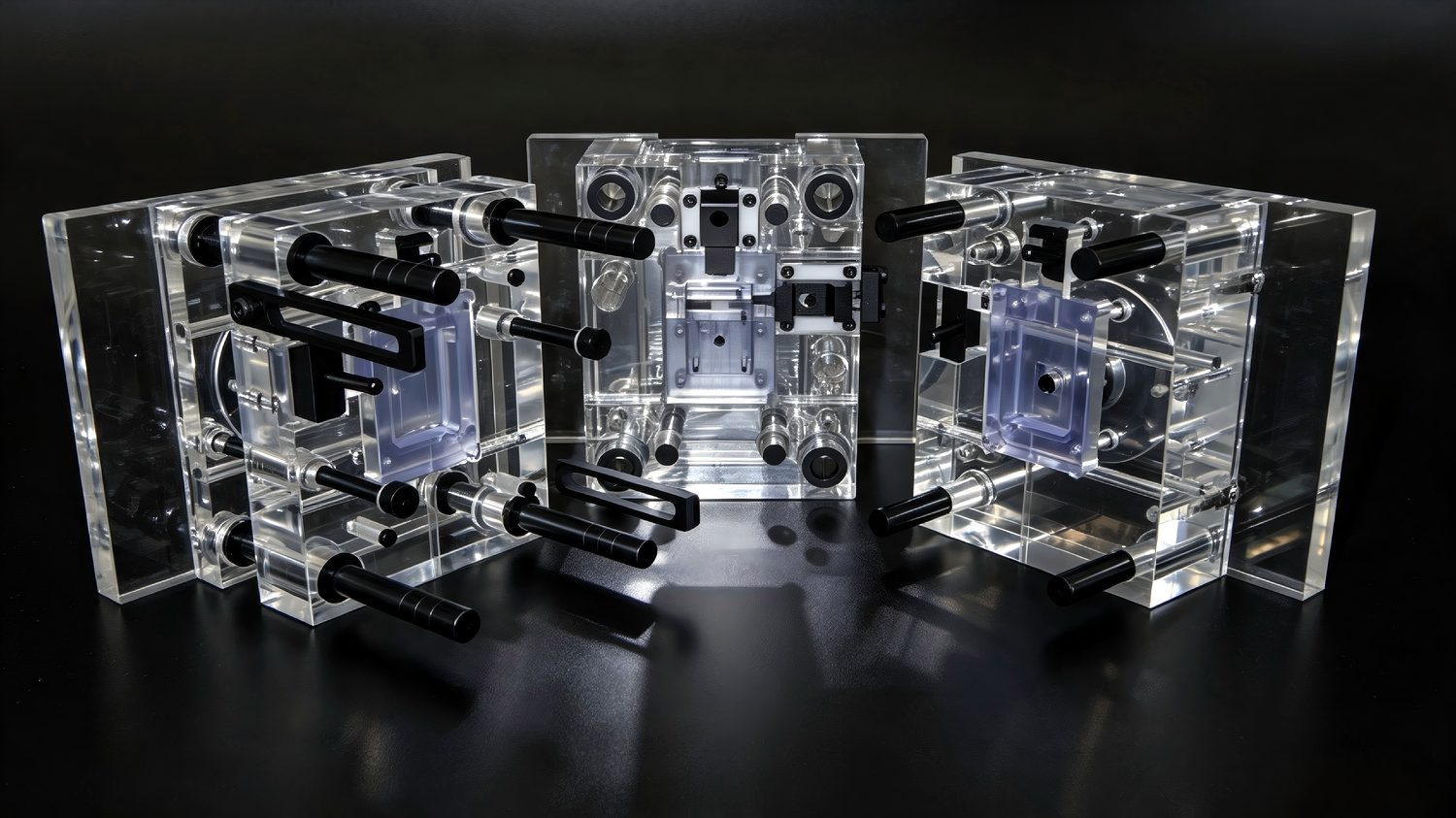
Interior assemblies
Polished parts for display and fit-out
Shipping and installation in hot climates
- Protective film. Leave it on through transit and installation, then remove it promptly. Film left on in strong sun for weeks can bond to the surface and become hard to peel.
- Container heat. Containers can get very hot on the long sea leg. Ask for large panels to be crated flat and supported over their full area, so they do not take a set while hot. Our parts ship film-protected, labelled and crated.
- Landed cost. Freight is charged on volume more than weight. Our guide to FOB, CIF and DDP for acrylic from China explains how to compare quotes.
- Import documents. A commercial invoice and packing list are the minimum. Confirm with your forwarder which other documents your project needs, such as a certificate of origin, and put them on the order before it ships.
What to send for a Gulf project quote
| Item | Example |
| Drawings and revision | DXF for profiles; PDF or STEP with tolerances |
| Installed location | Air-conditioned lobby / shaded terrace / sunlit façade |
| Reference temperature | Dimensions at 20 °C |
| Fixing method | Point clamps, Ø10 bolts in slotted holes |
| Finish per face and edge | Clear, polished exposed edges; print on rear face |
| Quantity per design | Production from 20 pieces per design |
| Destination | Port of discharge or site address |
AcrylicFabWorks, the acrylic division of SinoPlastix, fabricates acrylic only. We work from one plant in Suzhou, China and have no office or installation team in the Gulf. We supply finished, labelled and crated parts, and your contractor installs them. Samples take 48 hours and production 7 days from drawing approval.
FAQ
What tolerances are common in acrylic fabrication for UAE projects?
General tolerances to ISO 2768-1 (GB/T 1804-2000), with ±0.1 mm on machined features and ±0.05 mm on critical 5-axis dimensions within 30 mm. On long panels, state a reference temperature, because thermal movement in Gulf heat can exceed the tolerance itself.
Which finishes hold up best in Gulf heat and sun?
Clear, frosted and opal cast sheet with polished edges. Dark tints, prints and acrylic mirror need more care: check panel temperature, use outdoor-rated inks, and keep mirror indoors.
Which adhesive should be used for acrylic in hot climates?
Solvent cement or UV adhesive for clear interior joints; mechanical fixings with slotted holes for outdoor, loaded or large panels. Check every adhesive’s stated service temperature against the location.
Can acrylic be used outdoors in the UAE?
Cast acrylic resists UV well, but typical grades are limited to about 80 °C continuous service. Allow for thermal movement, prefer light colours in direct sun and fix panels mechanically.
Planning acrylic for a Gulf project?
Tell us where each part will be installed. We reply within 12 hours with the finish, fixing and tolerance notes for your drawing.
Or email [email protected]