
Acrylic Wall Panels and Translucent Cladding
Backlit panels, feature walls, column wraps and translucent cladding — cut, formed and edge-finished to your setting-out drawing, and crated in installation sequence.
Reply within 12 hours · free DFM feedback
Illustrative interior images show possible panel applications; they are not documented customer installations.
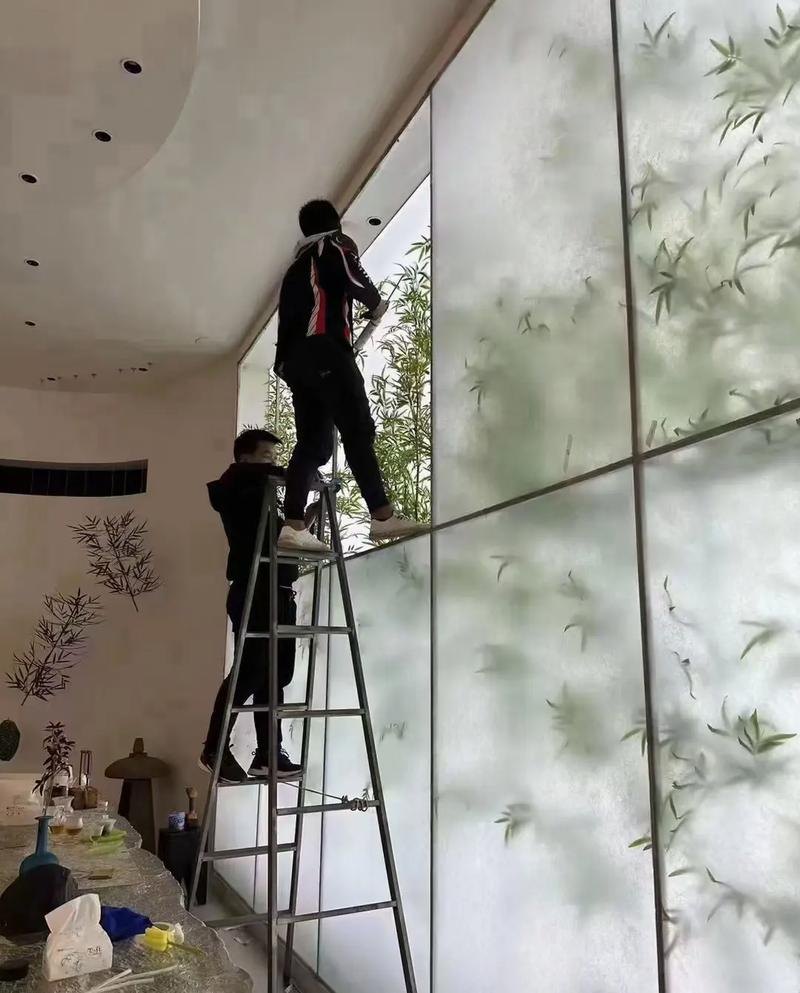
Acrylic wall panels can be specified as clear, coloured, frosted or light-diffusing surfaces, with the grade chosen for the design and lighting assembly. Clear transmission and diffusion are different optical functions: performance depends on the selected grade, thickness, surface and installed light source. Our scope can include sheet supply, cut-to-size panels or drawing-based machining; fixing, structure and site installation must be defined in the project documents.
What specifiers send us
How a wall panel package is quoted
- Setting-out drawing, not just a size. Panel joints, reveal widths and fixing centres decide the cut list. Send the elevation and we return a panel schedule with it.
- Backlighting or not. A backlit wall needs an even LED cavity and a diffusion grade matched to the cavity depth — the panel alone does not fix hotspots.
- Fixing method. Mechanical (drilled and slotted for movement), captured in a frame, or bonded to substrate. Each changes edge finish and tolerance.
- Installation sequence. We crate to the sequence you install in and label each panel to the drawing, which is what stops site sorting time.

Specifications
What we can make, in numbers
| Max single panel | 3000 × 2000 mm |
| Thickness | 3–100 mm |
| Grades | Clear, frosted, opal, colored, light-diffusing |
| Light transmission | Selected grade data sheet; transmission depends on grade, thickness, surface and test conditions |
| Curves | Cold bending radius ≥ 300 × thickness; thermoformed for tighter radii |
| Edges | Diamond-polished where exposed |
| Fixings | Drilled, countersunk, slotted for thermal movement |
| Delivery | Labelled and crated per installation sequence |
| Material | Calypto cast acrylic sheet (cast in our own Suzhou facility); Mitsubishi or Lucite optical-grade PMMA on request |
| Tolerances | General tolerances to GB/T 1804-2000 (equivalent to ISO 2768-1); the applicable value varies with nominal dimension and is agreed at drawing review |
| Minimum order | 20 pieces per design or specification; pre-production samples quoted separately |
| Lead time | Samples in 48 hours; production in 7 days, from approved drawing |
| Monthly capacity | 200 tonnes of acrylic processed per month |
25 machines under one roof — 8 × 3-axis CNC, 1 × 5-axis CNC, 5 × laser cutters, 3 × line benders, 4 × cold-bending stations, 2 × thermoforming ovens and 2 × polishers — in a 15,000 m² ISO 9001 plant running since 2014, shipping to 32 countries.
Where acrylic is the wrong choice
The limits, stated up front
Fire performance is set by project code, not by us. We supply material fire-classification datasheets for your submittal, but acrylic is combustible and is not a fire-rated assembly. If your specification calls for a rated wall, acrylic is the wrong material for that layer.
FAQ
Questions buyers ask before ordering
What is the largest single acrylic wall panel you can supply?
3000 × 2000 mm as one piece. Larger walls are engineered as panel systems with aligned joints or bonded seams, detailed on the shop drawings we issue before cutting.
Can panels be curved on site?
Panels within the cold-bend radius — roughly 300 × thickness — can be sprung into a curved frame on site. Tighter curves are thermoformed in our ovens before shipping.
How do you handle thermal movement on a long wall?
Fixing holes are oversized and slotted, and expansion gaps are detailed in the panel schedule. Acrylic moves more than glass; a wall fixed rigidly will bow.
Do you provide shop drawings?
Yes. We issue a panel schedule and shop drawings for approval before cutting, so joint lines and fixing centres are agreed on paper rather than on site.
Translucent or backlit
Translucent wall panels and backlit acrylic panels: what changes in the spec
A translucent wall panel and a backlit acrylic panel can use similar sheet, but they are specified differently. A translucent panel works with the light already in the room. A backlit panel is part of a lighting assembly, so the cavity behind it matters as much as the panel.
| Translucent wall panel | Backlit acrylic panel | |
|---|---|---|
| Light source | Room light or daylight | LEDs in a cavity behind the panel |
| Typical grades | Frosted, satin, tinted or opal | Light-diffusing or opal, chosen with the cavity depth |
| What we need from you | Setting-out drawing, joints, fixing method | The same, plus LED layout, cavity depth and a sample trial if uniformity is critical |
For the diffusing grades see light diffuser panels; for LED spacing and hotspots see our backlit panel guide.
Interior & decorative
Decorative acrylic wall paneling for interiors
Beyond backlit and cladding runs, we cut decorative acrylic wall paneling and interior feature panels — clear, frosted, tinted or printed — to your layout, with polished or flush edges for wall fixing. Acrylic wall paneling is lighter than glass, warmer than metal and can be backlit; we size and drill each panel to your fixing system.
Decorative acrylic panels can be ordered at the 4 × 8 ft module (1220 × 2440 mm) or cut to your wall layout in any size up to 3000 × 2000 mm as one piece; acrylic wall boards larger than that are supplied as a panel system with aligned joints.
Part of our architectural acrylic panels range. Related: partitions & dividers, skylight domes, light diffuser panels.
Prepare a wall-panel schedule
List each panel location, finished dimensions, joints, support and fixing references, visible finish and delivery sequence. Final fixing and structure remain project-specific.
Get a project quote
Send drawings, quantities and your target delivery date — we reply within 12 hours with DFM feedback or a price.