
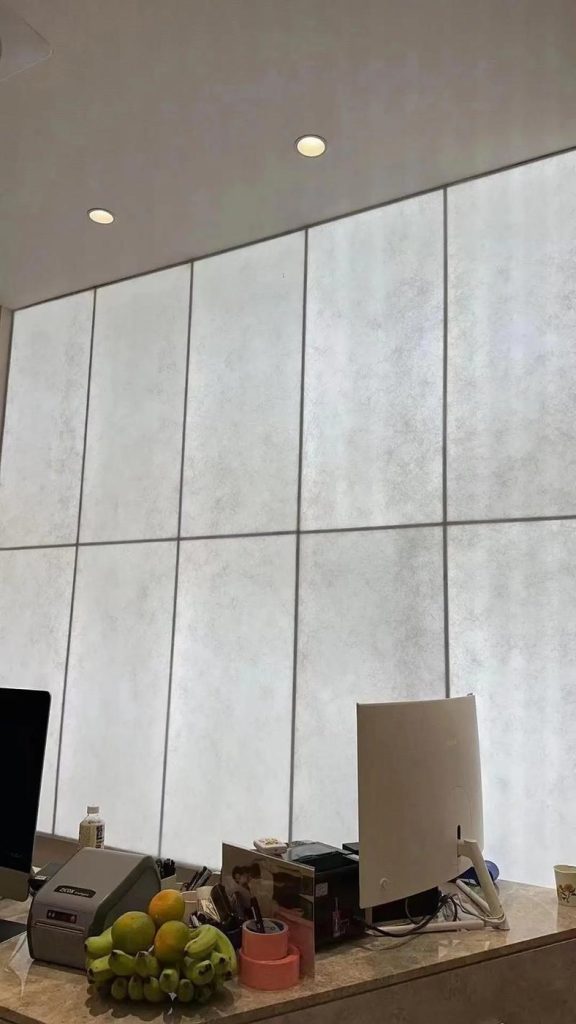
Short answer: Thickness should satisfy structure and fabrication first, then be evaluated as part of the optical stack. Higher haze can hide LED images but often reduces useful transmission; greater thickness may change scattering and stiffness but cannot compensate for an extremely shallow cavity alone. Use measured samples with the production light source.
A useful supplier discussion starts with the failure that must be prevented, the condition in which the part will operate, and the evidence that will be used for acceptance. AcrylicFabWorks has fabricated custom PMMA components since 2014 in an ISO 9001-certified, 15,000 m² facility. Our documented equipment includes eight 3-axis CNC machining centers and one 5-axis center. These firsthand manufacturing observations inform the notes below, but quoted material grade, drawing revision and project-specific test evidence remain controlling.

Diffuser thickness and haze: the optical trade-off
A useful review of light diffuser thickness starts with the part’s function, material grade, thickness, dimensions, environment, load, expected access, cosmetic faces and inspection method. Where a safety function, chemical exposure or regulated installation is involved, assign an engineer or qualified compliance professional to approve the requirement.
This guide stays within one practical decision: balancing diffuser thickness, transmission and haze. Manufacturing capacity, pricing and lead-time questions are covered on the linked capability or product page. Keeping the engineering question separate helps the reader reach a decision without mixing it with purchasing details.
| Situation | Best-fit use or concern | What to verify |
|---|---|---|
| Thin/high transmission | Deeper cavity or dense LEDs | Efficient output; hot spots may show |
| Higher haze | More source hiding | Check brightness and color shift |
| Thicker panel | Larger span or rigidity need | Weight, edge appearance and scattering |
| Two-layer stack | Difficult shallow system | More interfaces, assembly and loss |
Sizing the optical cavity
Use the following sequence during design review. It prevents a cosmetic preference from overriding a functional requirement and gives the supplier a testable acceptance condition. For custom work, AcrylicFabWorks follows GB/T 1804-2000 / ISO 2768-1 for unspecified general tolerances; actual tolerances still depend on the feature size, geometry, material condition and drawing review.
- Set maximum panel span, support and service-access requirements.
- Define transmission, uniformity and brightness measurement positions.
- Screen thickness and haze combinations from the same material family.
- Test at full LED pitch, cavity depth, dimming state and viewing angle.
- Freeze diffuser grade, thickness, LED and reflector in one approved specification.
Do not release production from an illustrative table alone. A sample or first article should reproduce the real resin, thickness, feature geometry, support, process sequence and inspection lighting. If the part will be bonded, cleaned, loaded, heated or installed outdoors, include that downstream exposure in the validation plan. For production orders, our MOQ is 20 pieces per design and specification; samples and one-off prototypes are quoted separately.

What our factory reviews before quoting
For diffuser thickness and haze, we review the optical cavity first: LED-to-diffuser distance, LED pitch, and the target uniformity ratio. Thicker diffusers (3–6 mm) spread light more evenly but absorb more; higher haze (60–80%) diffuses better but cuts transmission. We confirm the balance against the fixture’s brightness target and recommend the grade — cast acrylic with controlled haze for uniformity, or white-opal for maximum diffusion. Structural stiffness and mounting span are checked for larger panels.
What changes when uniformity is critical
For this guide on light diffuser thickness and haze, the failures that matter most in production and service are:
- Check: Choosing thickness only from a handheld lit sample.
- Check: Confusing high haze with high transmission.
- Check: Approving maximum brightness while low dimming still shows dots.
- Check: Changing panel support and creating visible shadow lines.
How to verify the result
Agree on inspection before production. State the instrument or visual setup, sample conditioning, viewing distance, lighting, measurement locations and acceptance rule. Save the approved sample and process record with the drawing revision. If a result changes, compare resin lot, tool or adhesive lot, machine setup, environment and test method before changing the specification. This evidence trail is more useful than an unsupported performance claim and makes later supplier or customer reviews much faster.
Related engineering and purchasing resources
- Custom light diffuser panels
- How to request a fabrication quote
- ISO 9001 quality-control process
- Acrylic fabrication FAQ
Primary references
- CIE technical work on transmittance and haze measurement. Confirm the current edition, scope and applicability for the project.
- CIE definition of a diffuser. Confirm the current edition, scope and applicability for the project.
Related engineering guides
Review your drawing with an acrylic fabricator
If the decision in this guide affects a production part, send the drawing, application conditions and acceptance criteria. See our custom light diffuser panels page, then request a manufacturability review. Typical samples can be produced in 48 hours and production in 7 days after drawing approval when the project scope supports that schedule.
Frequently asked questions
Q: Does thicker acrylic diffuse more light? A: It can change scattering and stiffness, but grade formulation and complete optical geometry are equally important.
Q: What is the difference between haze and transmission? A: Transmission describes light passing through; haze describes how much transmitted light is scattered.
Q: How should a diffuser be approved? A: Approve a production-representative lit mock-up with documented measurement and viewing conditions.
Editorial boundary: This article provides manufacturing and specification guidance. Safety, code, electrical, fire and regulatory decisions remain with the responsible project professionals and relevant authorities.