Choosing a supplier for acrylic laser cutting, from a few prototypes through to repeat production. Six questions that separate a shop that can cut one good part from a factory that can cut the five-hundredth part the same way.
Reply within 12 hours · production from 20 pieces per design
Price is the last thing to compare, not the first. A reliable acrylic laser cutting supplier for prototyping and production does four things. It routes each feature to laser, CNC or cut-to-size and tells you why. It makes the prototype from the same sheet grade, file and process the production run will use. It writes down the material source, the tolerance standard, the minimum order and a lead time counted from drawing approval. And it has you approve a first article before the run starts. A supplier that cannot answer these in writing may still cut a good sample, but it cannot promise that the production parts will match it.
Why the prototype can pass and production still fail
Prototype shops are built for speed: one or two parts, cut from whatever sheet is on the rack. Production depends on repeatability. Most problems that show up after an approved sample come from the gap between the two:
- Different sheet. The sample was cut from an extruded offcut and the order is run on cast sheet, or the other way round. Laser edges, bonding behaviour and crazing resistance differ between the two (see cast vs extruded acrylic for fabrication).
- Different route. A hole was drilled by hand on the sample and is laser-cut in production, or a pocket was milled on a sample that production then tries to cut with the laser.
- Different file. Nobody tied the sample to a drawing revision, so the production run is cut from a newer or older file.
- No agreed appearance standard. The sample was judged by eye under office light. Production parts are judged under a backlight or at an angle where cutting marks show.
Six questions to ask any acrylic cutting supplier
| Ask | A usable answer | Warning sign |
| Which process will cut each feature? | Profile by laser, pockets and tapped holes by CNC, blanks cut to size, each named on the quote | Everything goes on the laser, including features it cannot make |
| What sheet will you use? | Cast or extruded, house sheet or a named brand, thickness and colour, stated per line item | “Acrylic” with no grade or form |
| What tolerance applies? | A general standard such as ISO 2768-1 for most dimensions, with the critical dimensions called out separately | One ± value for every dimension, or no tolerance at all |
| Is the prototype made the production way? | Same sheet grade, same file revision, same machine route | “We’ll sort out production later” |
| What do I approve before the run? | A first article checked against the drawing, plus an appearance sample if looks matter | Approval by photo only |
| What happens to my file? | Kept under its revision and reused for repeat orders | Re-drawn for every order |
These questions apply to any supplier, including us. Get the answers in writing on the quotation, not in a chat message.
Laser, CNC or both: what the route tells you
Laser cutting is the cheapest route for flat acrylic profiles, fine detail and engraved legends, and it leaves a glossy flame-polished edge on cast sheet. It only cuts straight through. Pockets, chamfers, threads and thick plate need CNC machining. A supplier that owns both can split one drawing between them and quote it as one part. A laser-only shop has to either outsource those features or leave them out. Ask which route each feature takes and you will learn quickly what the supplier can actually make in-house.
| Route at AcrylicFabWorks | Envelope | Use it for |
| Laser cutting (5 machines) | Sheet up to 2000 × 3000 mm, up to about 25 mm thick | Flat profiles, fine detail, engraving |
| CNC machining (8 × 3-axis, 1 × 5-axis) | Up to 3000 × 2000 mm, 3–100 mm thick | Pockets, threads, chamfers, thick plate, tighter tolerances |
| Cut to size | From full cast sheet | Rectangles, discs and blanks |
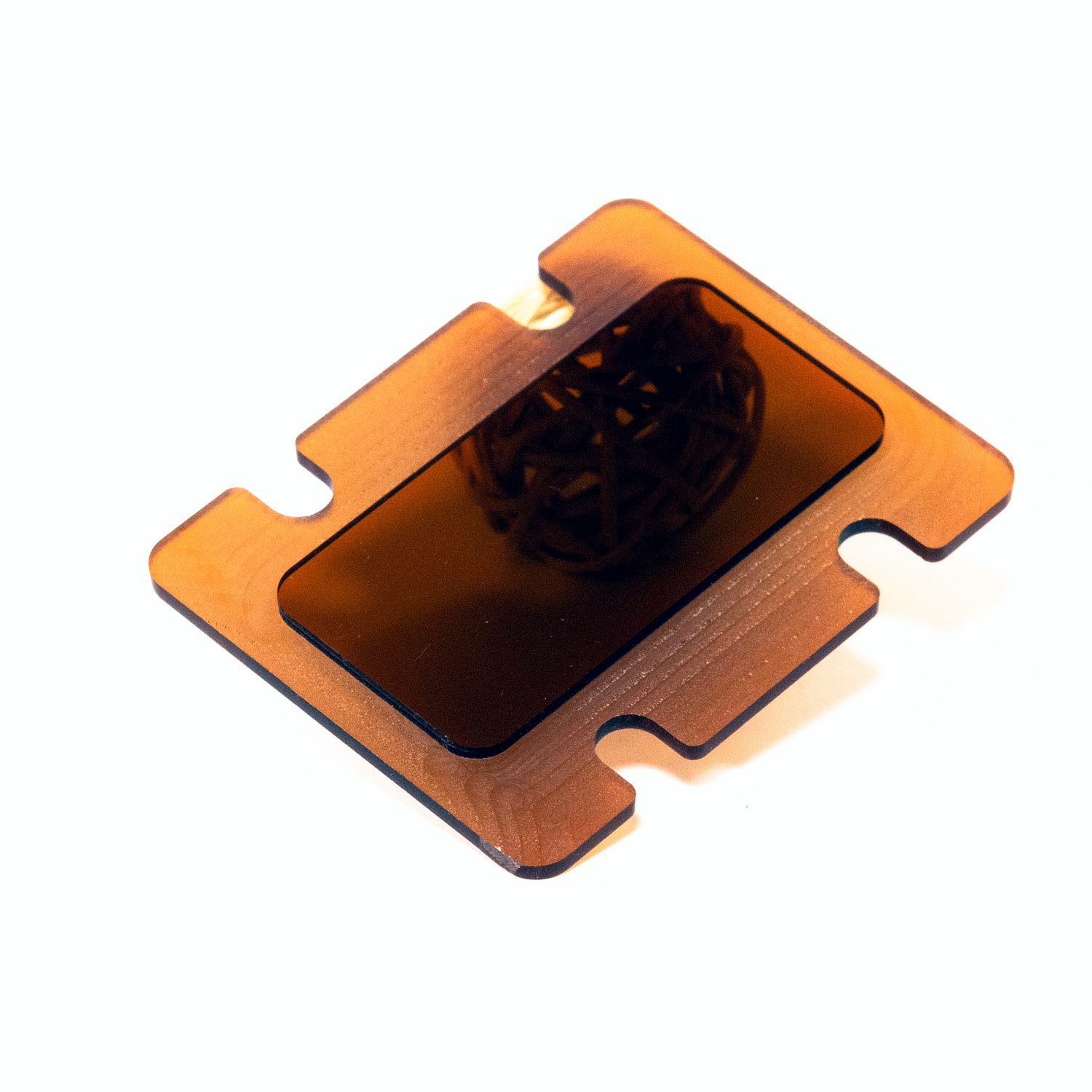
Laser profile
Flat gasket cut from a DXF

Engraving
Fine grid engraved on clear sheet
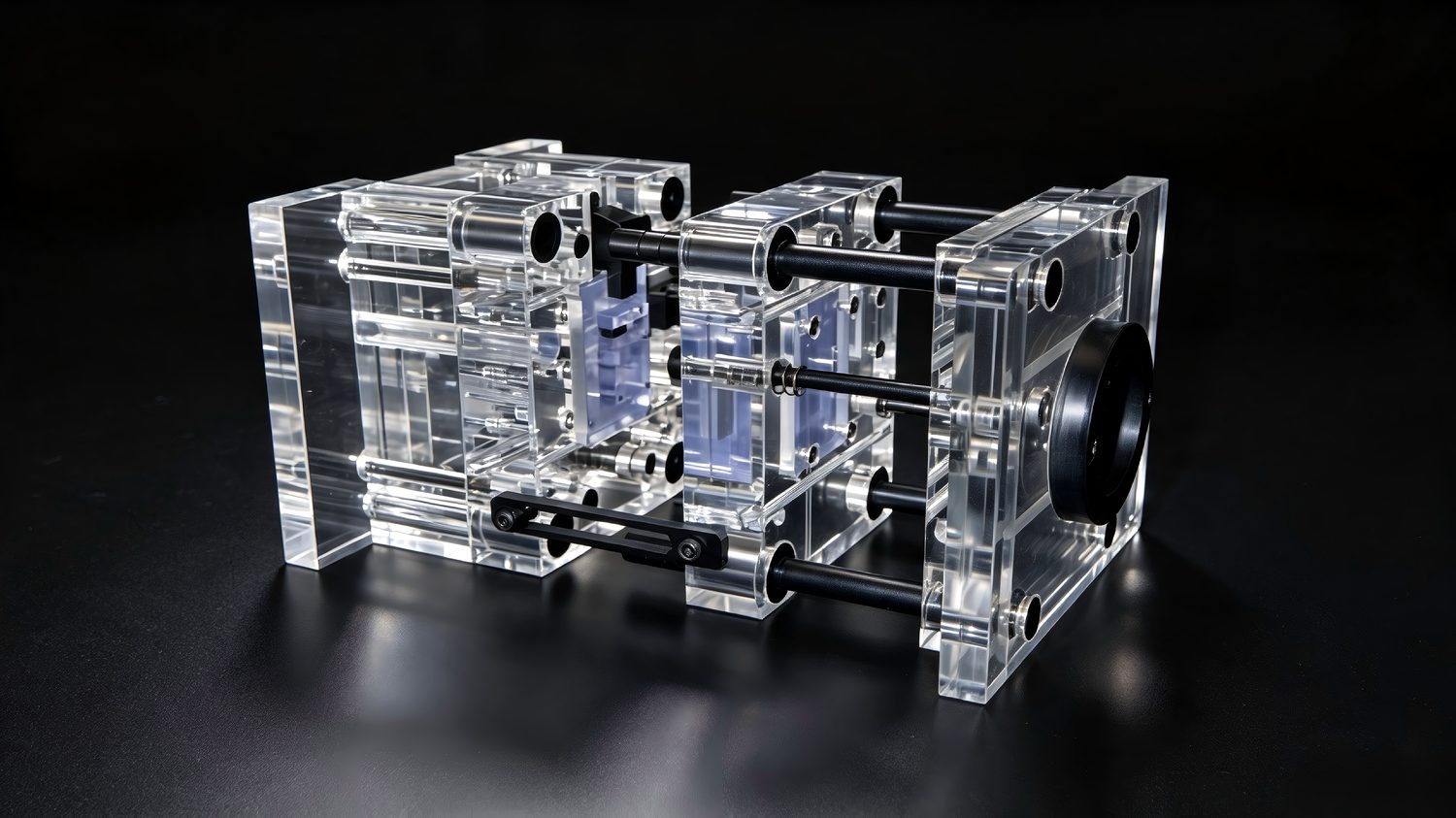
CNC features
Pockets and ports the laser cannot cut
Send one package that prices both stages
Ask for the prototype and the production price on the same quotation. If they come from different routes or different sheets, the quotation will show it. Include:
- Files and revision. DXF or DWG for flat profiles; a STEP model or a 2D drawing with tolerances for machined features.
- Material. Cast or extruded, thickness, colour or finish, and any brand named in your own specification.
- Both quantities. For example, 3 prototypes and 500 production parts, plus how often you expect to reorder.
- Critical dimensions. Mark only the ones that matter. Everything else can follow the general tolerance.
- Edges and appearance. Which edges show, any engraving or print, and how the part will be viewed (backlit, at an angle, behind a bezel).
- Packing and destination. Port or address. This decides crating and freight.
Where AcrylicFabWorks fits, and where it does not
AcrylicFabWorks is the acrylic division of SinoPlastix. We have run laser cutting, CNC machining, bending, bonding and polishing in one 15,000 m² (160,000 sq ft) plant in Suzhou, China since 2014, with ISO 9001 certification since 2020. Parts are cut from Calypto cast acrylic sheet, which is cast on our own line on the same site, or from Mitsubishi or Lucite optical-grade PMMA when your specification names a brand. Samples take 48 hours and production 7 days, both counted from drawing approval. Production runs start at 20 pieces per design; pre-production samples are quoted separately.
We are not the right supplier if you need polycarbonate, PETG or any other plastic (we machine acrylic only), if you need someone on site, or if you need a single part tomorrow from a local counter. For those jobs, use a local shop for the prototype and send us the production drawing once the design is fixed. The ordering steps page explains what happens after you send it.
FAQ
How do I find a reliable acrylic laser cutting supplier for prototypes and production?
Ask each candidate which process cuts each feature, which sheet grade they will use, which tolerance standard applies, whether the prototype is made the production way, and what you approve before the run. Compare quotations only once those answers are in writing.
Should the prototype and the production parts come from the same supplier?
It is the simplest way to keep sheet, file and process the same. If you prototype locally, give the production supplier the approved sample and the drawing revision, and ask for a first article before the run.
What tolerance can laser-cut acrylic hold?
It depends on thickness, part size and geometry. Ask for the general tolerance standard on the quotation and call out critical dimensions separately; features that need tighter control are usually CNC-machined.
What is the minimum order for laser-cut acrylic parts?
At AcrylicFabWorks, production starts at 20 pieces per design or specification. Pre-production samples are quoted separately.
Price the prototype and the production run together
Send the drawing with both quantities. We reply within 12 hours with the route for each feature.
Or email [email protected]