

Acrylic, plexiglass, Lucite, Perspex and PMMA all name the same plastic. Which name is used in which market, what actually changes from one sheet to the next, and how to write the material on a drawing so nobody guesses.
Reply within 12 hours · full sheets from 10 sheets
Acrylic, plexiglass, Lucite and Perspex are the same material: polymethyl methacrylate, or PMMA. Plexiglas, Lucite and Perspex began as trade names of PMMA sheet producers. Over time “plexiglass” became the everyday word in the US, and “Perspex” in the UK, Ireland, Australia and New Zealand. The name tells you nothing about quality. What changes from one sheet to the next is whether it is cast or extruded, which grade it is (standard, UV-filtering, impact-modified, optical), its thickness and tolerance, and its colour. Those are the things to put on an order.
The names, side by side
| Name | What it is | Where you hear it |
| PMMA | The chemical name, polymethyl methacrylate | Drawings, data sheets, standards; the most precise word to use |
| Acrylic | Common name for PMMA sheet, rod and tube | Worldwide; but “acrylic” also means acrylic paint, fibre and nails |
| Plexiglass / Plexiglas | Trade name that became generic | US and Canada, especially in retail and DIY |
| Perspex | Trade name that became generic | UK, Ireland, Australia, New Zealand |
| Lucite | Trade name, also used generically | US furniture, jewellery and display trade |
| Acrylic glass, acrylglas, “plastic glass” | Descriptions, not grades | Europe and online marketplaces |
Polycarbonate (sold under names such as Lexan and Makrolon) and PETG are different plastics, not types of acrylic. They are sold next to acrylic and often confused with it.
What actually differs between two “acrylic” sheets
- Cast or extruded. This is the difference that matters most. Cast sheet machines, bonds and polishes better and resists solvent crazing. Extruded sheet holds a tighter thickness and costs less. See cast vs extruded acrylic for fabrication.
- Grade. Standard clear, UV-filtering, impact-modified, frosted, opal or optical grade. Every major producer, branded or not, makes several.
- Thickness and tolerance. The nominal thickness, and how far a sheet may vary from it.
- Colour reference. Colours with the same name from two producers rarely match. Approve a sample, not a colour name.
- Producer. A branded sheet such as Mitsubishi or Lucite optical-grade PMMA is worth paying for when a specification or an optical function needs it. Our guide to house-cast vs branded PMMA covers when that is.
1/8 inch or 3 mm? Imperial and metric sheet
Many questions about “1/8 inch plexiglass versus acrylic” are really about units. A 1/8 inch sheet is nominally 3.175 mm thick, while most sheet made outside North America is metric, 3 mm. That gap of 0.175 mm is about 6%. On a flat panel in a frame it rarely matters. On a part that slides into a slot it can, and the thickness tolerance of cast sheet can be larger than the gap itself. If the fit matters, give the thickness in millimetres with a tolerance, or machine the slot to the measured sheet.
| Imperial callout | Exact | Nearest metric sheet |
| 1/8 in | 3.18 mm | 3 mm |
| 3/16 in | 4.76 mm | 5 mm |
| 1/4 in | 6.35 mm | 6 mm |
| 3/8 in | 9.53 mm | 10 mm |
| 1/2 in | 12.70 mm | 12 mm |
Full sheet sizes, weights and more imperial equivalents are on our acrylic sheet sizes page.
Lucite vs acrylic for stands, boxes and furniture
A “Lucite” display stand and an “acrylic” one are made from the same polymer. When one looks or lasts better, the reason is in how it was made, not in the name. Look at four things: the sheet thickness, whether the sheet is cast (cast gives clearer polished edges and stronger bonded joints), how the edges were finished, and how the joints were bonded. The same applies to rods and tubes: cast rod polishes clearer, and extruded tube is cheaper and more uniform in wall thickness.
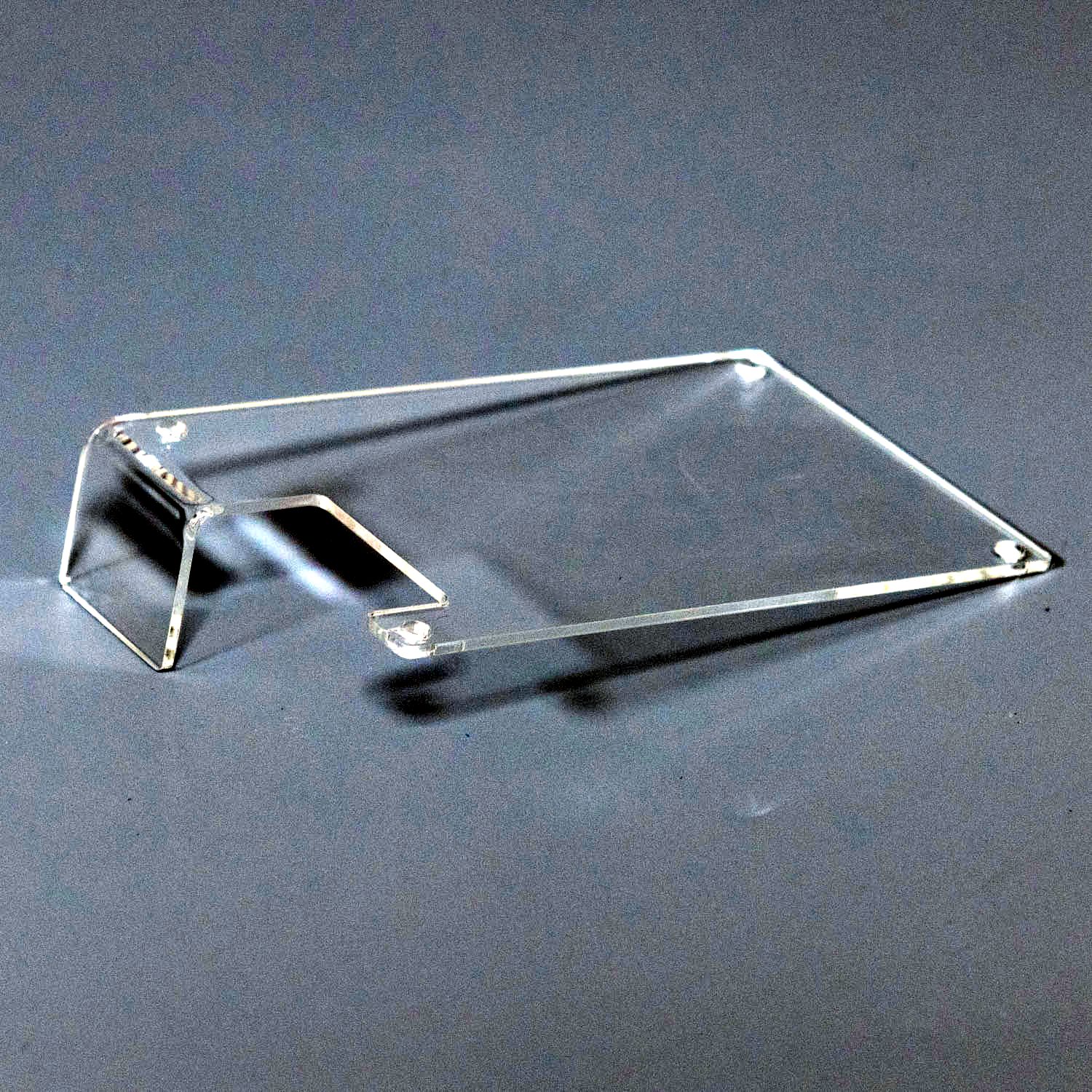
Display stand
Formed from clear sheet
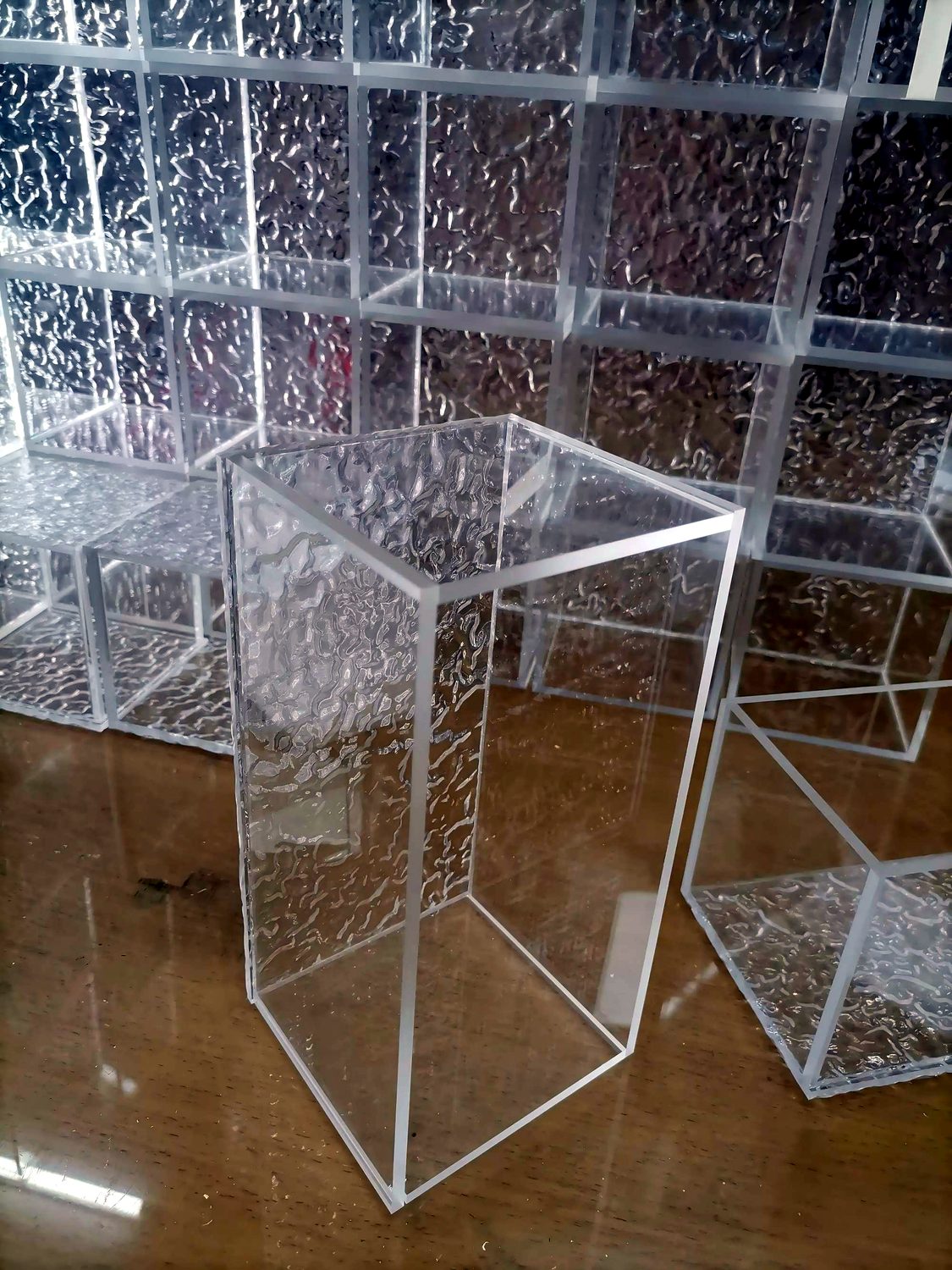
Bonded boxes
Joint quality depends on fit and sheet

Polished block
Edge finish decides how clear it looks
How to write it on a drawing or order
PMMA, cast, to ISO 7823-1 · clear · 6 mm · finished size 600 × 400 mm · exposed edges polished
Write “PMMA” or “acrylic”, say whether it is cast or extruded (ISO 7823-1 covers cast sheet and ISO 7823-2 extruded), then give the grade, colour and thickness. Name a brand only if you need that producer. AcrylicFabWorks, the acrylic division of SinoPlastix, supplies Calypto cast acrylic sheet by default, and Mitsubishi or Lucite optical-grade PMMA when a specification names them. The quotation states which one you are getting.
FAQ
Is plexiglass the same as acrylic?
Yes. Plexiglass is a trade name that became the everyday US word for acrylic (PMMA) sheet. Differences between two sheets come from cast or extruded production, grade and thickness, not from the name.
Is Lucite the same as acrylic?
Yes. Lucite is a trade name for PMMA, widely used for furniture and display pieces. A Lucite item and an acrylic item differ only in sheet grade, thickness, edge finish and bonding.
What is the difference between 1/8 inch plexiglass and 3 mm acrylic?
About 0.175 mm: 1/8 inch is 3.175 mm. It rarely matters in a frame, but it can in a slot. Give the thickness in millimetres with a tolerance when the fit matters.
Is polycarbonate a type of acrylic?
No. Polycarbonate is a different plastic with much higher impact strength and lower scratch resistance. Lexan and Makrolon are polycarbonate trade names, not acrylic.
Not sure which sheet your drawing calls for?
Send the drawing or the name your supplier used. We reply within 12 hours and tell you which grade we would quote, and why.
Or email [email protected]