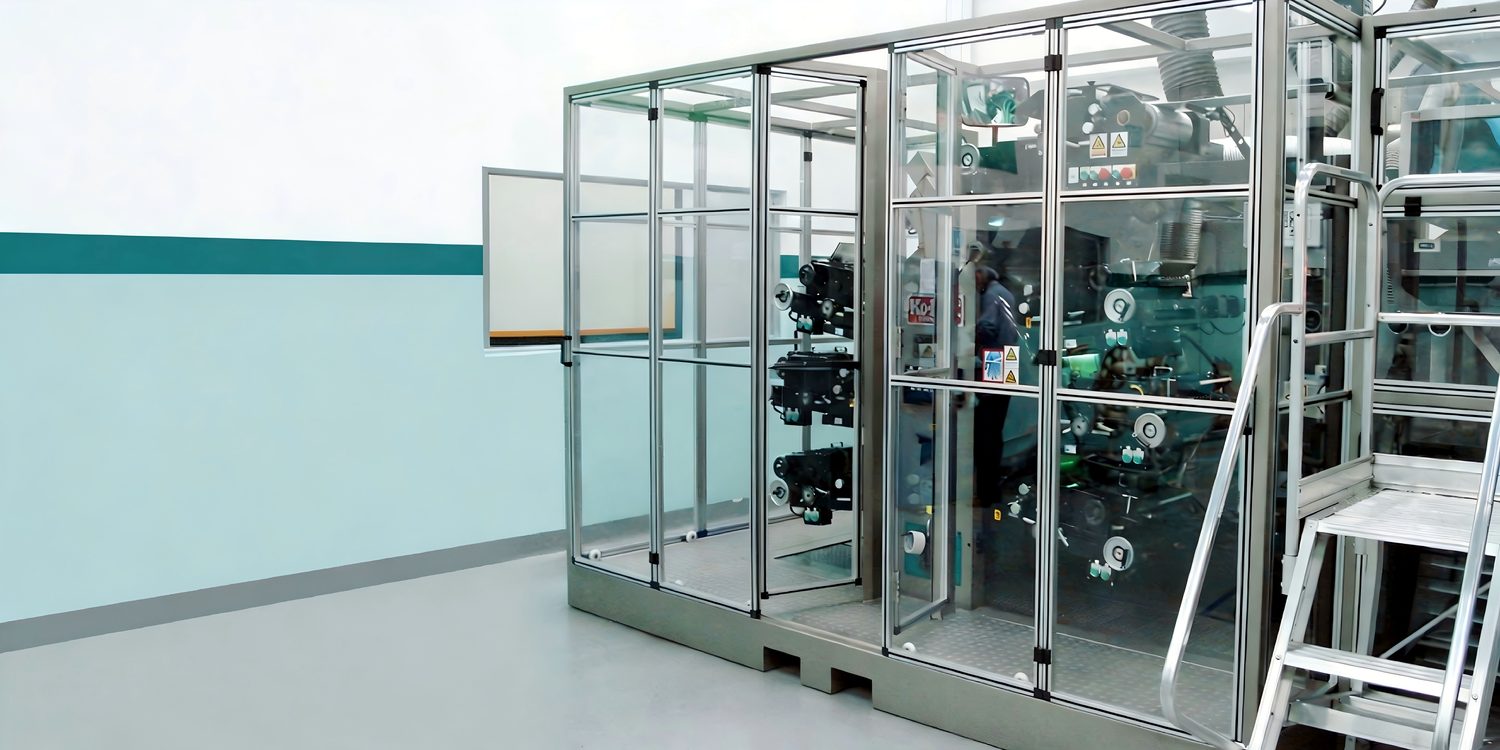
Robot-cell guarding
10 mm acrylic · interlock cutouts

Transparent safety barriers CNC-machined and thermoformed from 6–25 mm PMMA to your drawing — clear, scratch-resistant and cost-effective guarding.
Reply within 12 hours · free DFM feedback

Acrylic machine guards are transparent plastic safety barriers CNC-machined or thermoformed from 6–25 mm PMMA sheet. Compared with polycarbonate, acrylic can provide high optical clarity and better surface scratch resistance for low-impact duties such as splash shields, enclosure panels and barrier guards. Actual transmission, material cost and suitability depend on the selected sheet grade, thickness, coating, geometry and quantity.
10 mm acrylic · interlock cutouts
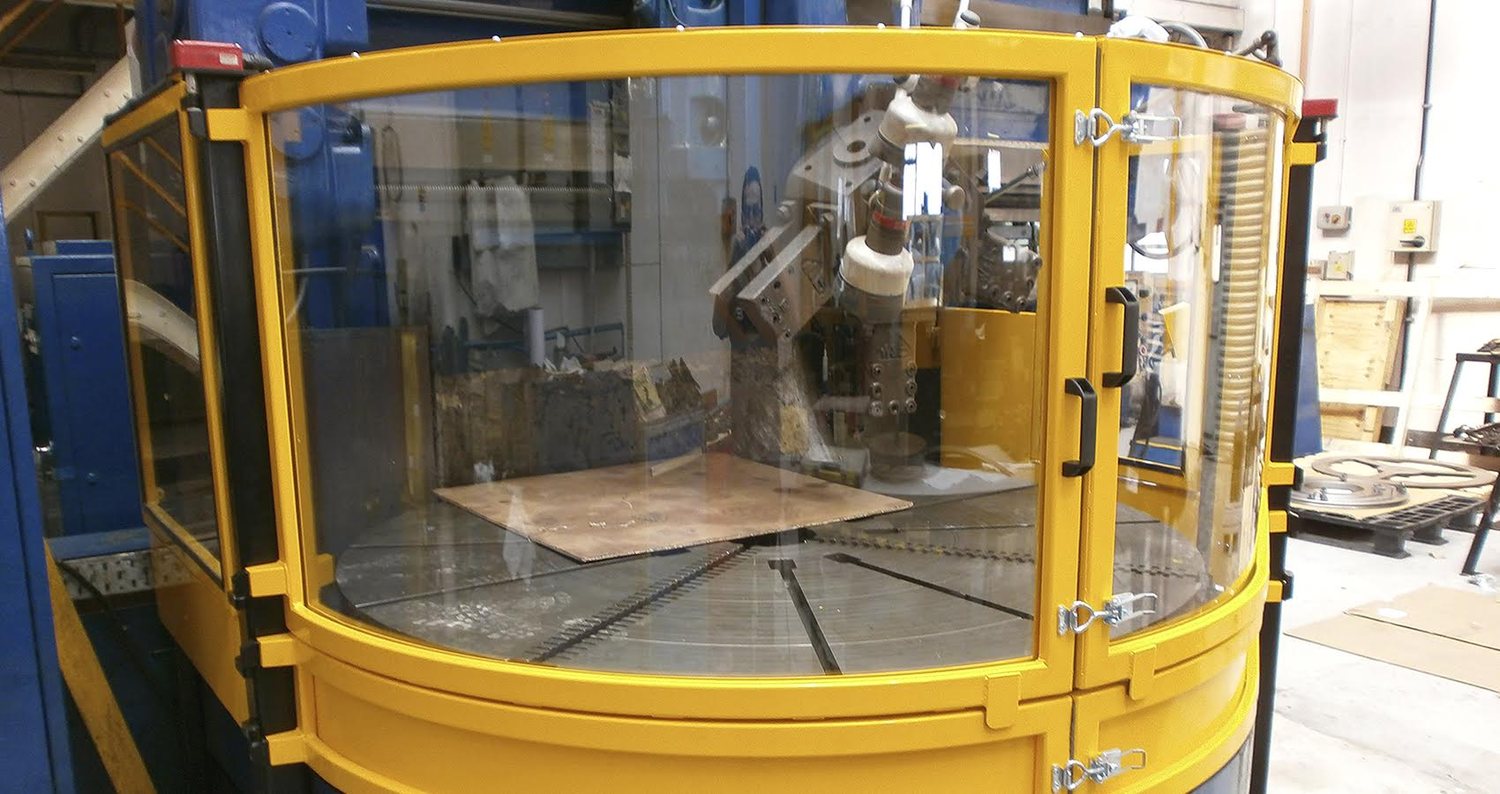
Thermoformed wrap · polished edges

Framed clear panels · controlled access
Acrylic vs polycarbonate for guarding
| Factor | Acrylic | Polycarbonate |
|---|---|---|
| Impact strength | Moderate | ~30× higher |
| Optical clarity | 92%, stays clear | 88%, scratches & yellows uncoated |
| Scratch resistance | Good | Poor without hard coat |
| Cost | Project-dependent: grade, thickness, machining and quantity | Project-dependent: grade, coating, thickness and quantity |
| Best for | Splash shields, barriers, low-impact | Flying-debris & impact zones |
Rule of thumb: if the guard keeps hands, coolant or dust out — acrylic. If it stops ejected parts or tooling — polycarbonate. Many machines use both. Full comparison in our acrylic vs polycarbonate guards guide.
| Thickness | 6–25 mm typical for guarding |
| Max panel size | 3000 × 2000 mm |
| Tolerance on mounting holes | ±0.1 mm |
| Forming | Line bending up to 3000 mm, thermoforming for wrap guards |
| Edges | Machined + polished — no sharp edges to the operator |
| Marking | Laser-engraved safety text and part numbers |
Standards and responsibility. We fabricate the guard components to the approved drawing and the hazard, access and impact criteria supplied by the customer. OSHA 1910.212, ANSI B11.19, EN ISO 14120 and EN ISO 13857 can inform that design review, but a fabricated panel by itself does not establish installed-machine compliance. The machine owner or integrator remains responsible for the risk assessment, safety functions, installation and validation. Available material documentation and agreed inspection records can be supplied for the project file.
For a useful design-for-manufacture review, send the hazard and impact duty, panel dimensions and unsupported span, frame and mounting details, required access, interlock or opening constraints, coolant or chemical exposure, quantity, and the drawings or safety-file documents the order must reference.
We review material choice, hole and edge geometry, forming, hardware and assembly against the approved drawing. Machined-feature tolerances are confirmed by size range during drawing review; inspection requirements and required material documentation should be stated before quotation. This manufacturing review supports the customer’s safeguarding design but does not replace the installed-machine risk assessment.
Use our OSHA machine-guard material guide, acrylic guard thickness guide and machine-guard mounting guide to prepare the hazard, span and fixing details.
Splash and chip shields typically use 6–10 mm; barrier panels 8–15 mm; large unsupported spans 15–25 mm. Thickness should come from your risk assessment — we quote per drawing and advise typical practice for similar machines.
Yes. Ship us the worn guard (or send detailed photos with measurements) and we reverse-engineer a manufacturing drawing for your approval before machining.
Yes — hinges, handles, latches and gaskets are fitted in-factory so guards arrive ready to bolt on.
Our factory specializes in acrylic. For hybrid guarding we fabricate the acrylic panels; for pure high-impact PC guarding we’ll tell you honestly that polycarbonate is right for the strike zone.
We fabricate guards to your drawing and risk assessment so the finished guarding can meet OSHA 1910.212, ANSI B11.19 and EN ISO 14120, with openings within EN ISO 13857 reach distances. Compliance of the installed machine remains your risk assessment; we provide material datasheets and certificates of conformity for your safety file.
Typical guard hoods up to 1.5 m run 6–10 mm, with larger panels using thicker sheet and edge stiffening; the final thickness is confirmed against the frame design and hazard review at quoting.
Acrylic suits visibility and appearance when impact exposure is moderate; polycarbonate is the honest answer for strike zones, and we quote whichever material the hazard requires.
No: fabrication capability does not equal final system safety certification; the buyer’s engineer validates the completed guard against the applicable standard.
Guard hole positions run to General tolerances per GB/T 1804-2000 / ISO 2768 by size span at ±0.1 mm typical, and drawing-flagged critical dimensions are confirmed at ±0.05 mm via first-article inspection.
Edges are flame or diamond polished, and appearance described as clear / glass-clear / optically clear is judged against the approved master sample per the appearance acceptance standard.
Acrylic suits visibility, appearance and cost-driven guarding; polycarbonate is the honest answer for strike zones and high-impact exposure. We quote whichever material the hazard requires, and guard panels are machined to the frame dimensions with polished edges and drilled mounting holes.
Fabrication capability does not equal final system safety certification. The buyer’s engineer validates the guard design and material against the applicable machine-guard standard, including strike-zone decisions; acrylic has moderate impact resistance and repeated heavy impacts need polycarbonate or a validated alternative.
Guard hole positions follow general tolerances per GB/T 1804-2000 / ISO 2768 by size span; ±0.1 mm covers drilled and machined features, and ±0.05 mm applies only to drawing-called critical dimensions verified at first article. Mounting patterns are confirmed against the frame drawing before production.
CNC-cut, edge-finished and polished in our own plastic & acrylic fabrication plant. Related: equipment enclosures, counter & hygiene screens.
Send your guard drawing — an engineer replies within 12 hours.
Technical details

Acrylic machine guarding along an automated production line
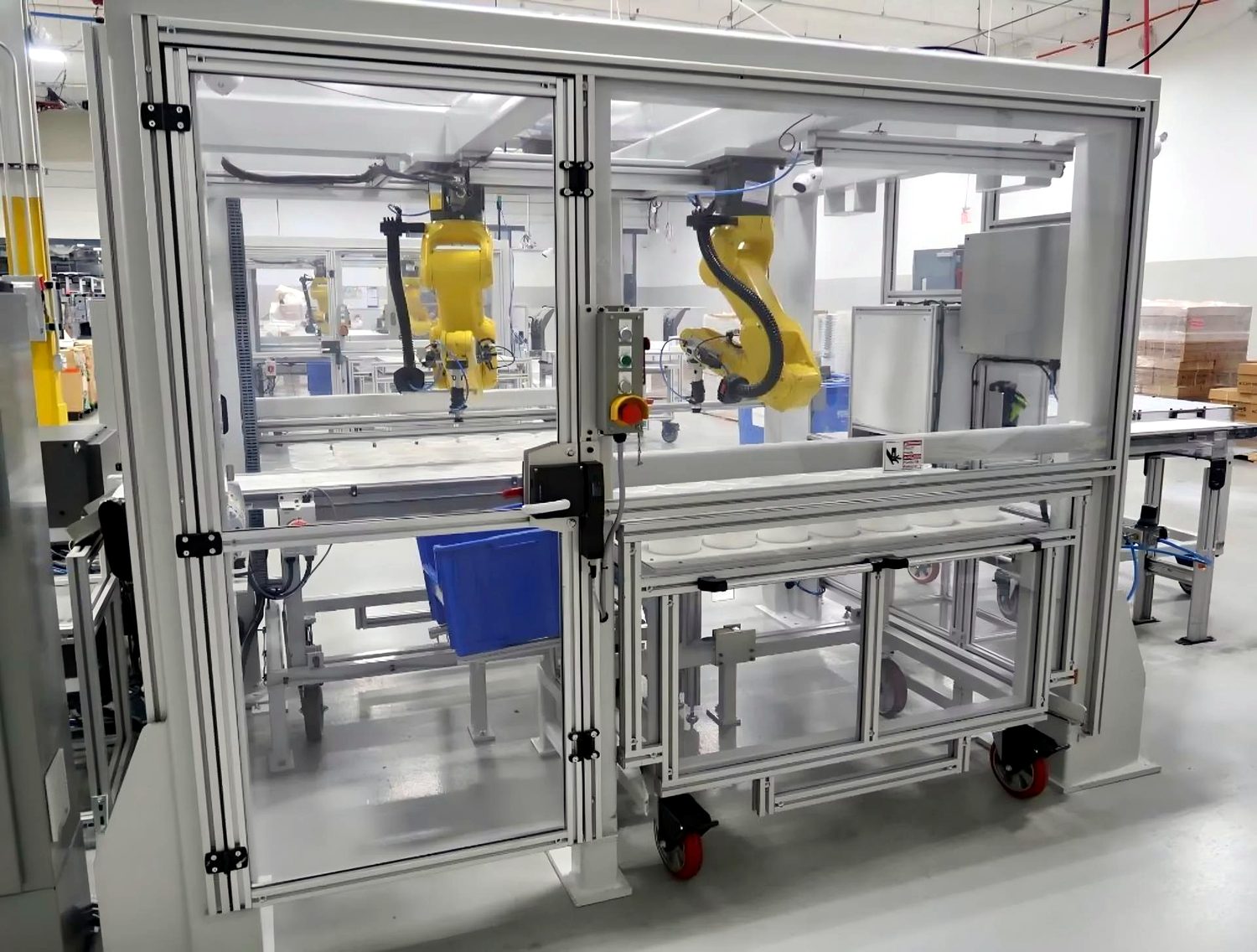
Aluminium-framed acrylic machine guards around a robot cell
Calypto cast acrylic sheet, cast in our own Suzhou facility, is the sourcing statement behind the clear guard grades we quote; Mitsubishi or Lucite optical-grade PMMA is supplied when the order specifies a branded material.
Technical details
For guard panels, Engineering review and quote within 12 hours on working days, then Sample in 48 hours, production runs in 7 days with hardware fitted and crating arranged.
Technical details
Company-declared
Acrylic suits visibility, appearance and cost-driven guarding; polycarbonate is the honest answer for strike zones and high-impact exposure, and we quote whichever material the hazard requires.
Cast acrylic recommended for machining-heavy parts, extruded for flat sheet: guard panels with many holes and bonded frames are quoted in cast, simple flat windows in extruded.
Fabricated acrylic thickness range 3–100 mm sets the envelope; typical guard hoods up to 1.5 m run 6–10 mm and larger panels use thicker sheet with edge stiffening, confirmed against the frame design.
Guard hole positions follow General tolerances per GB/T 1804-2000 / ISO 2768 by size span; Machined features to ±0.1 mm (holes and machined features) are typical, and Critical dimensions on the 5-axis CNC to ±0.05 mm are confirmed per drawing plus first-article.
View faces follow Appearance described as clear / glass-clear / optically clear against the approved master sample, with A and B faces named on the drawing.
Machined parts annealed with the cast-acrylic industry–standard schedule, and guard panels are stress-relieved with this cycle around holes and edges; soak temperature and dwell time are confirmed per grade and not published. Annealing reduces but does not eliminate cracking risk under impact, fastener or thermal load.
Large-format panels up to 3000 × 2000 mm cover oversized guard windows and full-height panels.
| Choose this when | Do not choose this when | Option | Claim IDs |
|---|---|---|---|
| The guard needs optical clarity and cost-effective protection from dust, chips or splash | The guard faces repeated heavy impacts | Acrylic (PMMA) panel | AF-C18 |
| The guard is in a strike zone with high impact risk | Visibility and appearance dominate | Polycarbonate panel, quoted per application | AF-C18 |
| The panel is flat and large | The panel carries many holes and a bonded frame | Extruded acrylic sheet | AF-C15 |
| The panel needs precision holes, slots and bonded corners | The panel is a simple window | Cast acrylic, machined and bonded | AF-C15 |
| Property | Value | Unit | Product grade | Thickness specimen | Test method / standard | Evidence status | Qualification | Claim IDs |
|---|---|---|---|---|---|---|---|---|
| Panel thickness | 6–10 mm typical for hoods up to 1.5 m; up to 100 mm capability | mm | Cast and extruded acrylic | Per panel | Per drawing and hazard review | company-declared | Confirmed per frame design | AF-C05 |
| Max panel size | 3000 × 2000 | mm | Cast acrylic sheet | Sheet dependent | Per order | company-declared | Transport and crating limits per order | AF-C04 |
| Hole and feature tolerance | ±0.1 mm typical; ±0.05 mm drawing-flagged critical | mm | Fabricated panels | Per order | GB/T 1804-2000 / ISO 2768 plus first-article | company-declared | Per drawing, never a whole-part band | AF-C01, AF-C02, AF-C03 |
| Edge finish | Flame or diamond polished | n/a | Fabricated panels | Per order | Appearance acceptance standard | company-declared | A/B faces per master sample | AF-C16 |
| Hardware | Hinges, latches, stays, gaskets fitted in-factory | n/a | Fabricated panels | Per order | Per drawing | company-declared | Mounting pattern per frame | |
| Safety scope | Panel fabrication only; system certification by buyer’s engineer | n/a | Guard assemblies | n/a | Applicable machine-guard standard | company-declared | Material machining does not equal certification | AF-C18 |
| Lead time | Quote 12 h, sample 48 h, production 7 days | hours / days | Typical guard panels | Per order | Working hours Mon–Sat 09:00–18:00 GMT+8 | company-declared | Volume orders evaluated separately | AF-C09, AF-C13 |