Vetting a custom acrylic fabrication factory in China comes down to five verifiable items: a real equipment list (CNC centers, laser cutters, bending and polishing stations — not just “we can do it”), a stated machining tolerance with inspection reports to back it (±0.1 mm standard, ±0.05 mm precision is credible; tighter claims deserve scrutiny), ISO 9001 certification you can check, a paid-sample workflow of 48 hours for typical parts after drawing approval, and standard export terms — 30% T/T deposit, FOB/CIF/DDP options. A factory that answers all five in writing within one business day is usually a factory you can build on.

Sourcing acrylic parts from China cuts landed cost dramatically versus domestic fabrication — commonly 30–60% on machined and bonded parts even after freight and duty. The savings are real; so are the horror stories. The difference is almost never luck. It is whether the buyer ran a one-hour due-diligence process before sending a deposit. This is the checklist we would use on ourselves.
The Five Checks That Matter
1. Equipment list, in writing, with counts
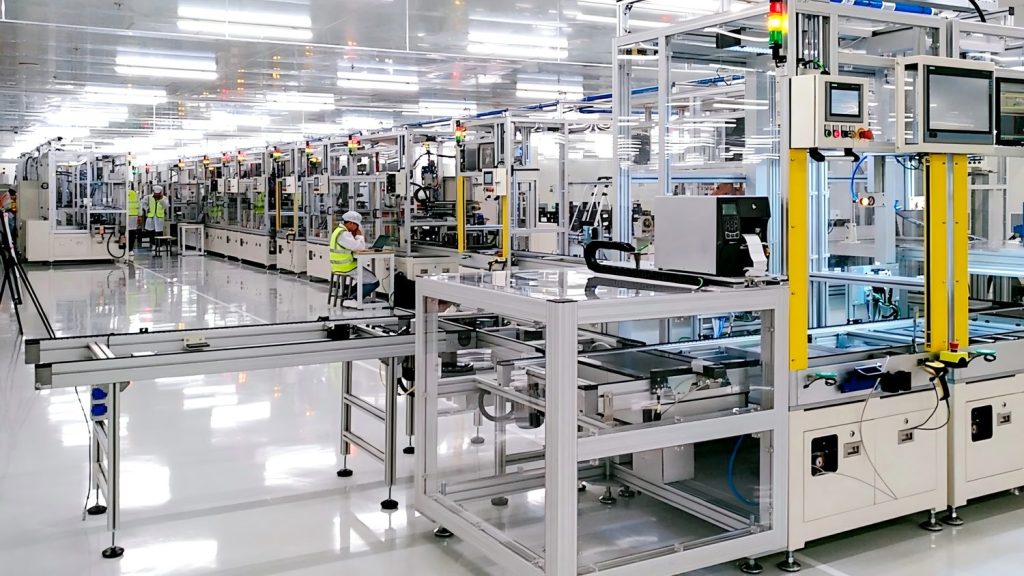
“Custom acrylic fabrication” is claimed by everyone from 15,000 m² factories to two-person workshops that subcontract everything. Ask for the machine list with quantities. A credible fabricator answers specifically — ours, for reference: 8 three-axis CNC machining centers, one 5-axis center, 5 laser cutters, 3 heat-bending lines, 4 cold-bending stations, 2 polishing machines, 2 thermoforming ovens. Vague answers (“we have many machines”) usually mean the work is brokered out, which you will discover only when tolerances drift between batches.
2. Tolerances with evidence, not adjectives
Ask two questions: “What machining tolerance do you hold as standard?” and “Can you send a dimensional inspection report from a recent job?” Credible answers are ±0.1 mm standard / ±0.05 mm on precision features, with a report template ready to send. Be skeptical of anyone promising ±0.01 mm on acrylic — the material itself limits what is achievable, and a factory that overpromises on tolerance will overpromise on dates.
3. Certifications you can verify
ISO 9001 is the baseline for process discipline; ask for the certificate number and issuing body, then check it on the issuer’s registry — takes five minutes. For food-contact, optical, or cleanroom applications, ask specifically what material certificates (manufacturer’s datasheet, RoHS/REACH) ship with the parts. Details on our own quality system are on the quality page.
4. The sample loop is the real interview
A paid sample tells you more than any audit: quote turnaround (12 working hours is our standard), DFM feedback quality (did they flag your tight corner radius, or silently quote it?), sample lead time (48 hours for typical parts after drawing approval is standard for machined acrylic), and how dimensional issues get handled. If the sample loop is slow or evasive, production will be worse — walk away before the deposit, not after.
5. Terms that match industry norms
| Term | Industry-standard range | Red flag |
|---|---|---|
| Payment | 30% T/T deposit, balance before shipment (or against B/L copy) | 100% upfront; personal (non-corporate) bank accounts |
| Incoterms | FOB / CIF / DDP offered, seller explains the difference | EXW-only from a “factory” (often a trader) |
| Sample lead time | 48 hours for typical parts after drawing approval machined; 10–14 with tooling | “Tomorrow” on complex bonded parts |
| Production lead time | 7 days for typical runs after drawing approval typical batch | Quotes that never state a date |
| Packing for export | Protective-film, foam interleave, wooden crate on request — stated in the quote | Packing never mentioned (where most transit damage starts) |
Questions That Expose a Weak Factory in One Email
- “What tolerance will you hold on these three dimensions, and will the inspection report show actuals?” — separates machinists from resellers.
- “Cast or extruded acrylic for this part, and why?” — anyone fabricating seriously has a firm answer (here is ours).
- “How will you anneal and pack a bonded assembly this size?” — process words cost nothing to a real factory and are impossible for a broker to fake convincingly.
- “Who is my engineering contact if a dimension comes in wrong?” — a named person beats a sales inbox.
What the Timeline Should Look Like
Realistic first-order cadence with a competent China acrylic fabricator: drawings out Monday → quote with DFM notes within 12 working hours → sample cut in 48 hours for typical parts after drawing approval → sample approved → 7-day typical production run after drawing approval → FOB or DDP shipment with inspection report in the crate. Anything dramatically faster deserves questions; anything dramatically slower usually signals brokering. Our own process, step by step, is documented on the how-to-order page.
We publish our numbers — equipment, tolerances, lead times, terms — because a buyer who checks five factories against this list is exactly the buyer we want to quote for. Learn more about our Suzhou facility, or put us through the checklist directly. Commercial basics — MOQ, payment terms, sample lead times — are covered in our acrylic fabrication FAQ.
FAQ
Q: Is it safe to buy custom acrylic parts from a China factory? A: Yes, with one hour of due diligence: verify the equipment list, ask for tolerance inspection reports, check the ISO 9001 certificate number, run a paid sample before production, and pay by corporate T/T with a standard 30% deposit. The failure stories almost always skipped these steps.
Q: How much cheaper is acrylic fabrication in China? A: Machined and bonded acrylic parts commonly land 30–60% below domestic fabrication cost after freight and duty, with the biggest gaps on labor-heavy work: bonding, polishing and multi-step assemblies.
Q: What tolerance can a Chinese acrylic factory realistically hold? A: The same physics as anywhere: ±0.1 mm standard on CNC-machined acrylic, ±0.05 mm on precision features with proper fixturing. Treat tighter blanket promises as a red flag rather than a bargain.
Q: What is a normal payment term for custom acrylic orders from China? A: 30% T/T deposit with the balance before shipment is the standard for new relationships, moving to more favorable terms as volume builds. Corporate bank accounts only.
Run us through your checklist
Send drawings and your three hardest questions — equipment list, tolerance evidence and a quote back within 12 hours.