
Acrylic mirrors for gyms, dance studios, children’s areas and other spaces where broken glass is the risk. How thick to go, how to mount them so the reflection stays true, and where glass is still the better choice.
Reply within 12 hours · production from 20 pieces per design
Acrylic mirror suits gyms and studios where the main worry is a mirror breaking. It weighs roughly half as much as glass mirror and does not break into shards. It needs more care than glass in two ways. First, acrylic is flexible, so a large panel only reflects true if it is bonded over its whole area to a flat, rigid backing or held in a frame. Mounted on an uneven wall or screwed down hard, it distorts. Second, the surface is softer, so it scratches and must be cleaned without ammonia or abrasives. Where a mirror wall will be scrubbed daily or must meet a glass-specific building code, use glass.
Acrylic or glass mirror for a gym?
| Question | Acrylic mirror | Glass mirror |
| What happens on impact | Cracks without shards | Breaks into shards unless safety-backed |
| Weight | Roughly half of glass at the same size | Heavier; needs stronger fixing |
| Reflection quality | True only on a flat, rigid backing | Stays flat by itself |
| Scratches | Softer surface; no abrasive cleaning | Hard surface; can be scrubbed |
| Curves and cut-outs | Can be cut, drilled and cold-bent | Limited, and slow to process |
Fire classification for wall linings in public buildings is set by local code. Acrylic is combustible, so check what the code requires before you specify any plastic mirror for an escape route or a public area.
Why acrylic mirrors distort, and how to stop it
- An uneven wall. Acrylic follows whatever it is bonded to. Check the backing with a 2 m straightedge before fitting. Bond to a flat board (for example MDF or aluminium composite panel), not directly to plaster or block.
- Patchy adhesive. Blobs of adhesive show as dents in the reflection. Use an adhesive the maker approves for acrylic mirror backings, applied in an even pattern. Solvent-based adhesives can attack the coating.
- Overtightened screws. A screw pulled tight bends the panel around it. Where panels are screwed, use oversized holes and do not clamp hard.
- No room to move. Acrylic expands about ten times more than steel. A 2000 mm panel grows about 2 mm for a 15 °C rise, using a typical coefficient for cast acrylic of 7 × 10⁻⁵ per °C. Leave that gap at the edges and inside frames.
- Too thin for the size. Mirror grades are typically 2–6 mm. For large wall panels choose the thicker end, and split the wall into modules rather than one sheet.
How to specify a gym mirror wall
| Item | Example |
| Wall elevation and module split | 6 panels of 1000 × 2000 mm, vertical joints |
| Thickness and finish | Silver mirror, thicker end of the 2–6 mm range |
| Mounting | Full-surface bond to flat board, or edge-captured frame |
| Edges | Polished where exposed; saw-cut inside a frame |
| Holes and cut-outs | Sockets, switches, fixing points from the elevation |
| Movement gap | Stated at panel edges and inside channels |
| Quantity per size | Production from 20 pieces per design |
Keep the bottom of the mirror above where bars, dumbbells and benches are racked, or protect it with a kick rail. That is where most scratches and impacts happen. Hand the cleaning rules to the cleaning contractor: mild soap and water, a soft microfibre cloth, no ammonia-based glass cleaner, no paper towels.
What we supply
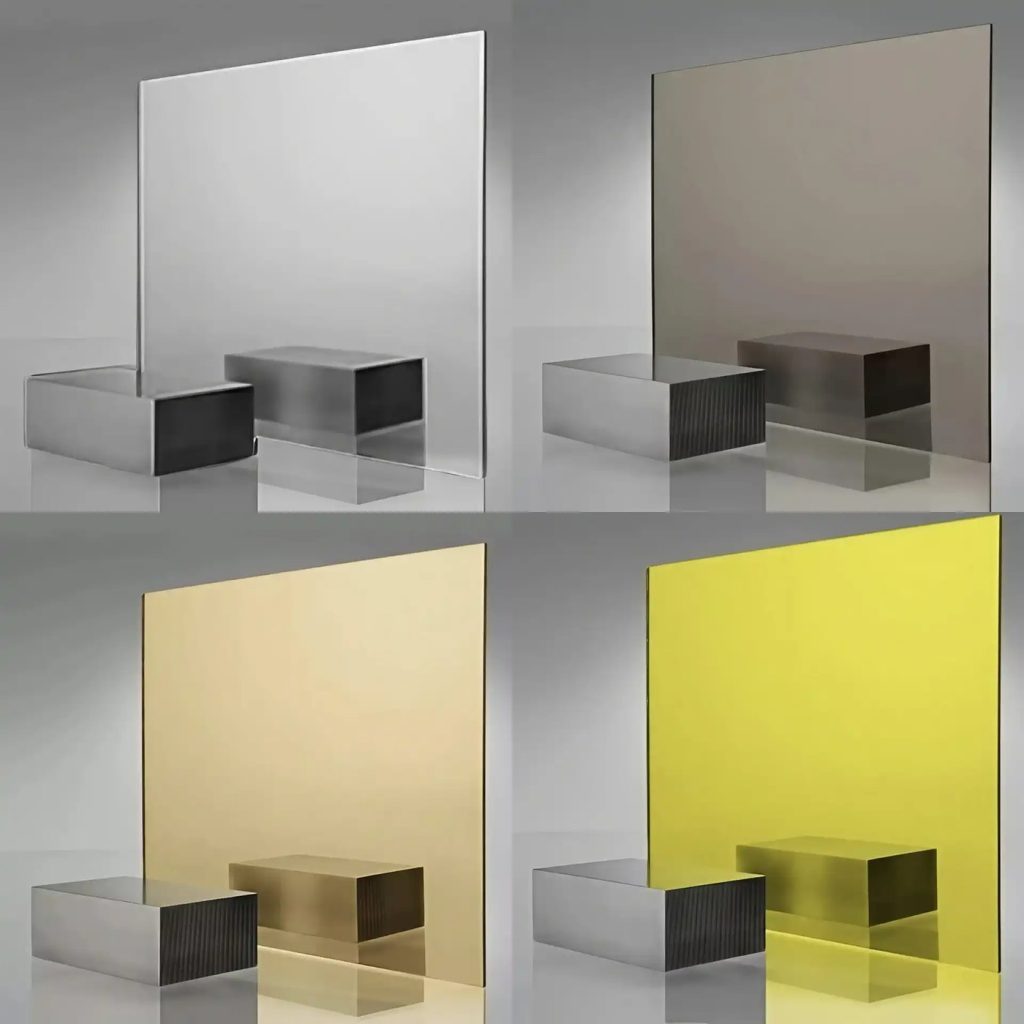
AcrylicFabWorks, the acrylic division of SinoPlastix, cuts acrylic mirror in silver, gold, bronze, tinted and one-way finishes. Panels go up to 3000 × 2000 mm in one piece, are CNC-routed or laser-cut from your DXF, and ship with film on both faces, crated in installation order. Samples take 48 hours and production 7 days from drawing approval. We supply panels; your fit-out contractor installs them. For cutting details and finishes, see acrylic mirror sheet.
FAQ
Are acrylic mirrors good for gyms?
Yes, where safety from breakage matters most. They weigh about half as much as glass and do not shard. They must be bonded to a flat, rigid backing to reflect true, and cleaned without abrasives or ammonia.
Why does my acrylic mirror look wavy?
Usually because the wall or backing is not flat, the adhesive was applied in blobs, screws were overtightened, or the panel had no room to expand. Acrylic follows the surface it is fixed to.
How thick should an acrylic gym mirror be?
Mirror grades are typically 2–6 mm. Use the thicker end for large wall panels, bond them to a flat board, and split long walls into modules.
How do you clean an acrylic mirror?
With mild soap, water and a soft microfibre cloth. Avoid ammonia-based glass cleaners, alcohol, solvents and paper towels, which scratch or craze the surface.
Planning a mirror wall?
Send the wall elevation and how the panels will be mounted. We reply within 12 hours with a panel split and price.
Or email [email protected]