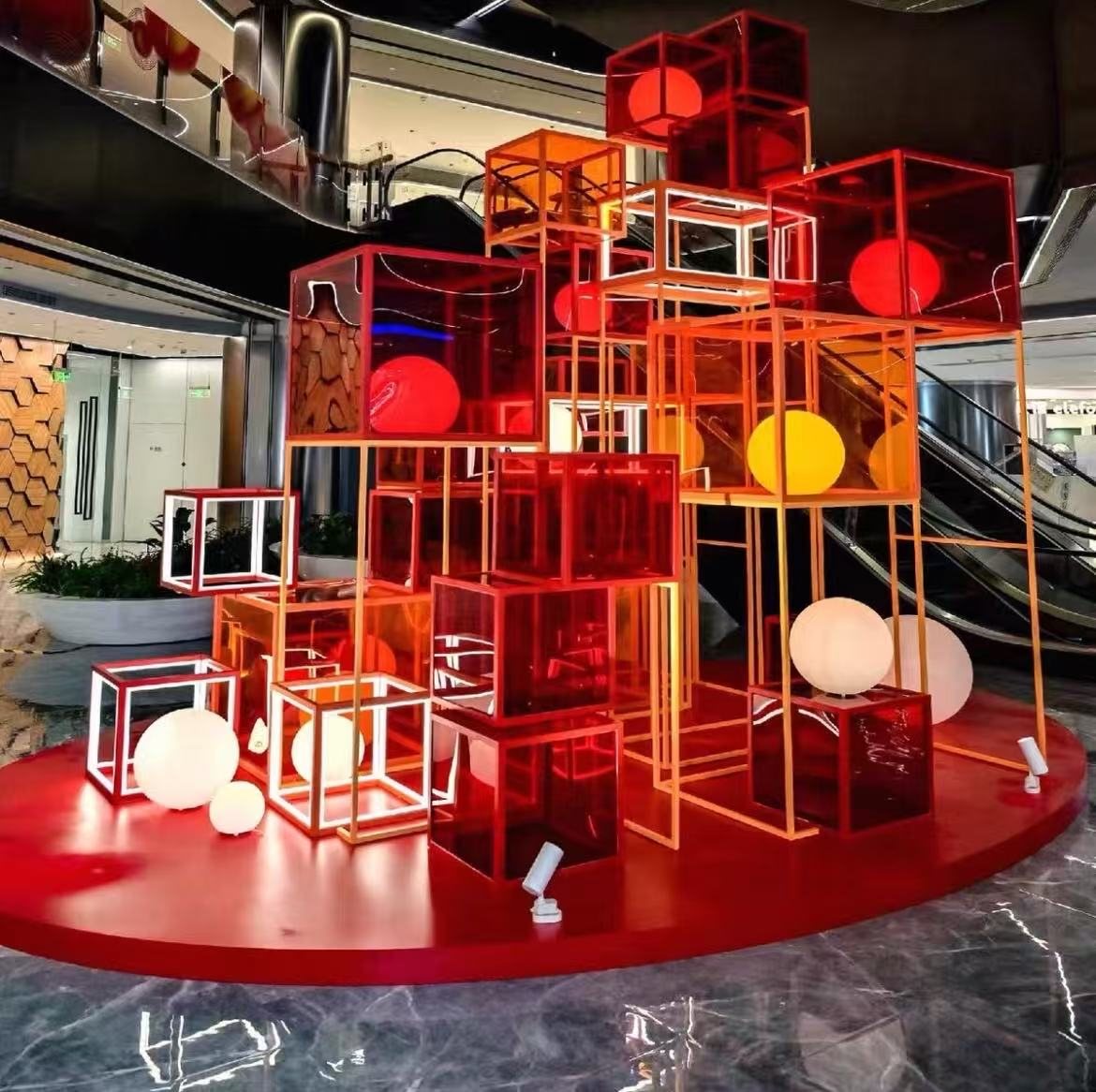
Red and orange acrylic cube light installation
Red and orange acrylic cube light installation

This page answers which acrylic grade and thickness suit lighting and display elements such as diffusers and edge-lit panels, and what to confirm about optics.
Reply within 12 hours · free DFM feedback
Optical values are confirmed against the grade data sheet per order; brightness and uniformity depend on the LED system.
Company-declared
Lighting and display acrylic covers light diffusers, edge-lit panels, backlit signage faces, display stands and decorative light boxes, fabricated from PMMA sheet with CNC, polishing, bonding and printing support.
Cast acrylic recommended for machining-heavy parts, extruded for flat sheet: diffuser and display panels with cutouts or edge-lit machining run in cast, while simple flat diffusers can run in extruded sheet.
Red and orange acrylic cube light installation
Fabricated acrylic thickness range 3–100 mm sets the envelope; diffuser panels typically run 2–6 mm from standard sheet stock and edge-lit display faces 3–8 mm, confirmed per application.
Display cutouts use General tolerances per GB/T 1804-2000 / ISO 2768 depending on size span; Machined features to ±0.1 mm (holes and machined features) apply to openings and LED holes, and Critical dimensions on the 5-axis CNC to ±0.05 mm are verified at first article per drawing.
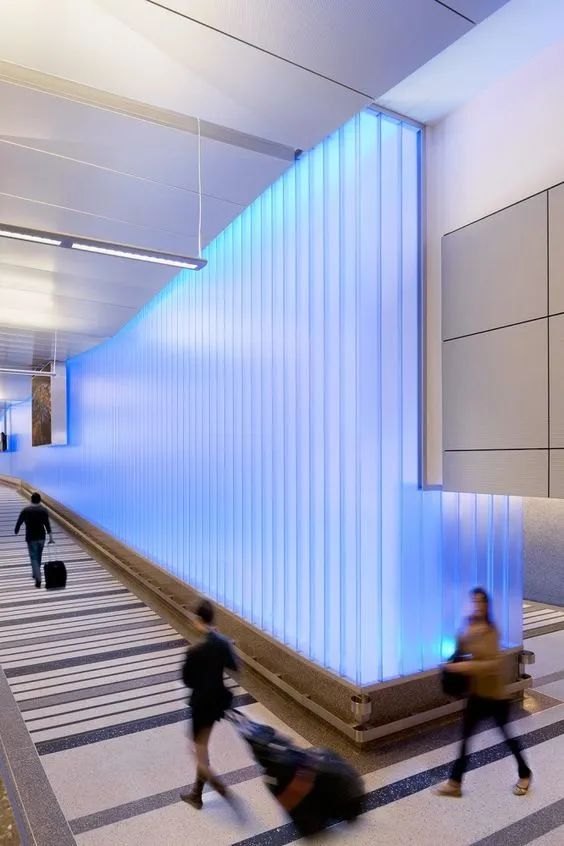
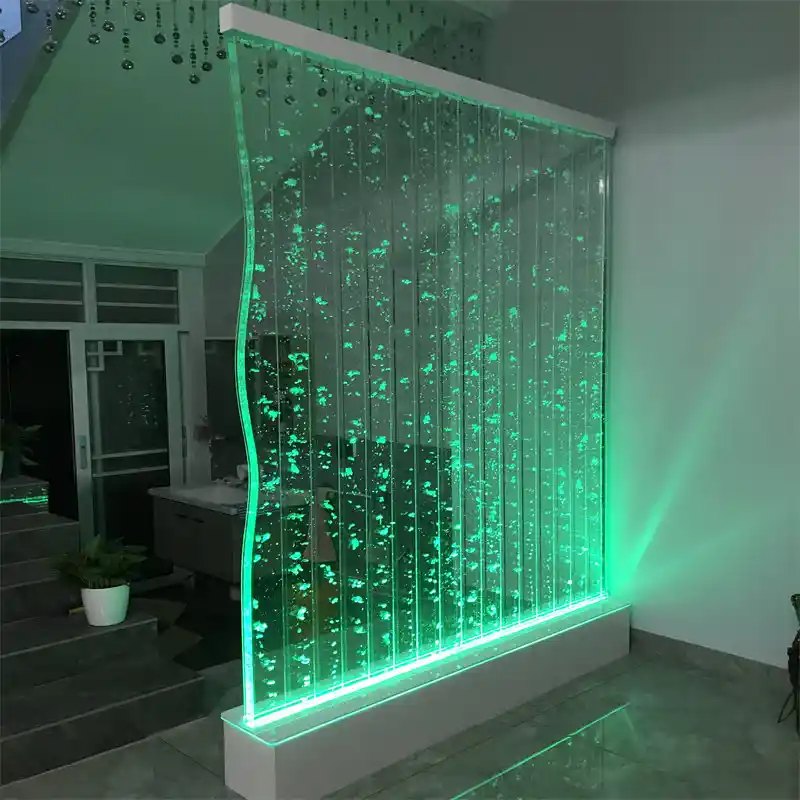
Acrylic light diffuser wall
Display faces follow Appearance described as clear / glass-clear / optically clear against the approved master sample, with polished edges on visible faces.
Machined parts annealed with the cast-acrylic industry–standard schedule; diffuser and light-guide panels follow this stress-relief cycle before bonding or printing, and temperature and soak parameters are grade-specific and are not published. Annealing reduces but does not eliminate crazing near LED heat sinks, fasteners or solvents.
Display batches follow Engineering review and quote within 12 hours on working days; Sample in 48 hours, production runs in 7 days for typical runs.
Bonded joints described as near-invisible seams apply where display panels are stacked, framed or edge-lit.
Calypto cast acrylic sheet, cast in our own Suzhou facility, covers the clear grades quoted for display panels and diffusers; Mitsubishi or Lucite optical-grade PMMA is supplied when the order specifies a branded material.
Standard acrylic sheet stock range 1–30 mm is where most diffuser thicknesses normally fall, with availability per grade and colour.
| Choose this when | Do not choose this when | Option | Claim IDs |
|---|---|---|---|
| The element must spread LED light evenly | The element is a clear window | Diffuser grade and thickness confirmed per application | AF-C15 |
| The panel is edge-lit with machined light guides | The panel is backlit through a plain sheet | Cast acrylic, machined and polished | AF-C15 |
| The element is a large flat display face | The element has tight machined features | Extruded acrylic sheet | AF-C15 |
| Transmission or haze must hit a target | Visual clarity is enough | Measured per agreed method; targets in the acceptance standard |
| Property | Value | Unit | Product grade | Thickness specimen | Test method / standard | Evidence status | Qualification | Claim IDs |
|---|---|---|---|---|---|---|---|---|
| Sheet thickness | 2–6 mm diffusers from stock; 3–100 mm capability | mm | Cast and extruded acrylic | Per panel | Per drawing | company-declared | Availability per grade and colour | AF-C05, AF-C27 |
| Machined tolerance | ±0.1 mm cutouts and holes; ±0.05 mm drawing-flagged critical | mm | Fabricated panels | Per order | GB/T 1804-2000 / ISO 2768 plus first-article | company-declared | Per drawing, never a whole-part band | AF-C01, AF-C02, AF-C03 |
| Optics | Transmission and haze targets confirmed per order | n/a | Order-specified grade | Specified specimen | Agreed measurement method | order-specific | No numeric value published without measurement evidence | |
| Appearance | A/B faces against approved master sample | n/a | Fabricated panels | Per order | Appearance acceptance standard | company-declared | Polished edges on visible faces | AF-C16 |
| Bonding | Solvent and UV bonding for frames and stacked panels | n/a | Bonded assemblies | Per order | Seam per master sample | company-declared | Near-invisible seams on polished edges | AF-C17 |
| Lead time | Quote 12 h, sample 48 h, production 7 days | hours / days | Typical display batches | Per order | Working hours Mon–Sat 09:00–18:00 GMT+8 | company-declared | Volume orders evaluated separately | AF-C09, AF-C13 |
Diffuser panels typically run 2–6 mm from sheet stock, and the grade is confirmed per application against LED spacing and optical targets.
No: transmission and haze targets are confirmed per order against the grade data sheet and measured by an agreed method when the application needs them.
Yes: edge-lit panels are machined and polished from cast acrylic, and uniformity is evaluated per application against LED spacing and thickness.
Display cutouts follow General tolerances per GB/T 1804-2000 / ISO 2768 depending on size span; openings and LED holes run ±0.1 mm, and drawing-flagged critical dimensions are confirmed at ±0.05 mm by first-article inspection.
Visible edges are polished and Appearance described as clear / glass-clear / optically clear is judged against the approved master sample per the appearance acceptance standard.
Diffuser and display panels with cutouts or edge-lit machining run in cast acrylic; simple flat diffusers can run in extruded. Diffuser panels typically run 2-6 mm from standard sheet stock and edge-lit display faces 3-8 mm, confirmed per application and LED layout.
Brightness, uniformity and diffusion depend on the LED system, grade, thickness and spacing; they are evaluated per application rather than guaranteed. Transmission and haze targets are confirmed per order and measured by an agreed method when the application needs them; no numeric values are published without measurement evidence.
Display cutouts use general tolerances per GB/T 1804-2000 / ISO 2768 depending on size span; ±0.1 mm applies to openings and LED holes, and ±0.05 mm only to drawing-called critical dimensions verified at first article. Visible edges are finished per the drawing against the approved master sample.
Send your drawing — an engineer replies within 12 hours.