
Equipment Enclosures
Dust covers, clear housings and viewing windows for machinery and automation.

Industries
Equipment enclosures, machine guards, control panels, architectural and hospitality projects — organised by application, because each drives different grades, tolerances and finishes.
Industrial buyers use custom acrylic in four main areas: machine safety and enclosures (guards, covers, housings), equipment interfaces (control and instrument panels), architecture (cladding, partitions, balustrades) and hospitality interiors (desks, lighting, décor). Each application drives different material grades, tolerances and finishes — which is why experienced fabricators organise capability by industry, not just by machine.
Dust covers, clear housings and viewing windows for machinery and automation.

Safety panels and formed guards, machined to frame dimensions.
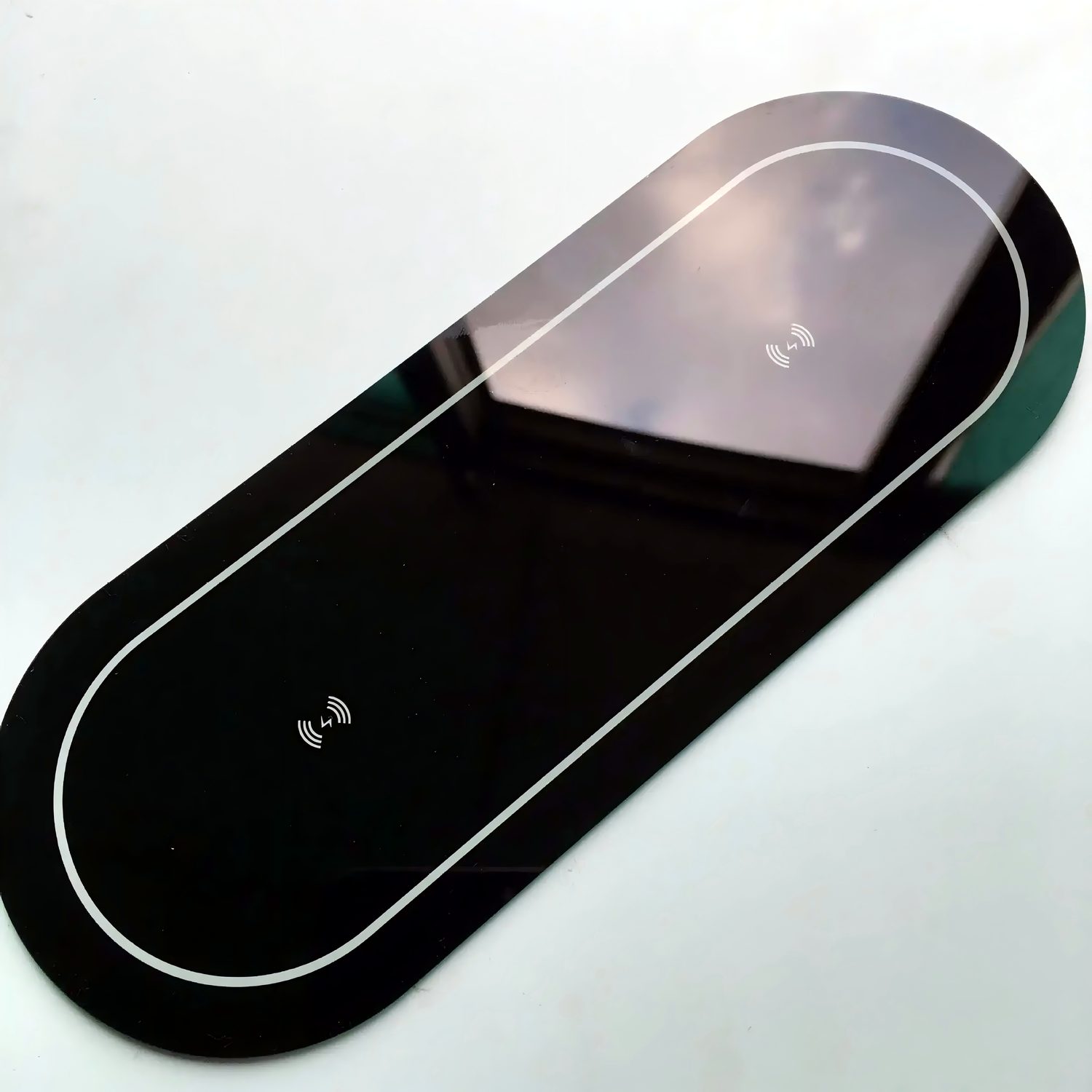
Fascias with precision cutouts, engraving and backlighting.

Cladding, partitions, balustrade infills and curved feature panels.

Reception desks, lighting diffusers, dividers and décor packages.
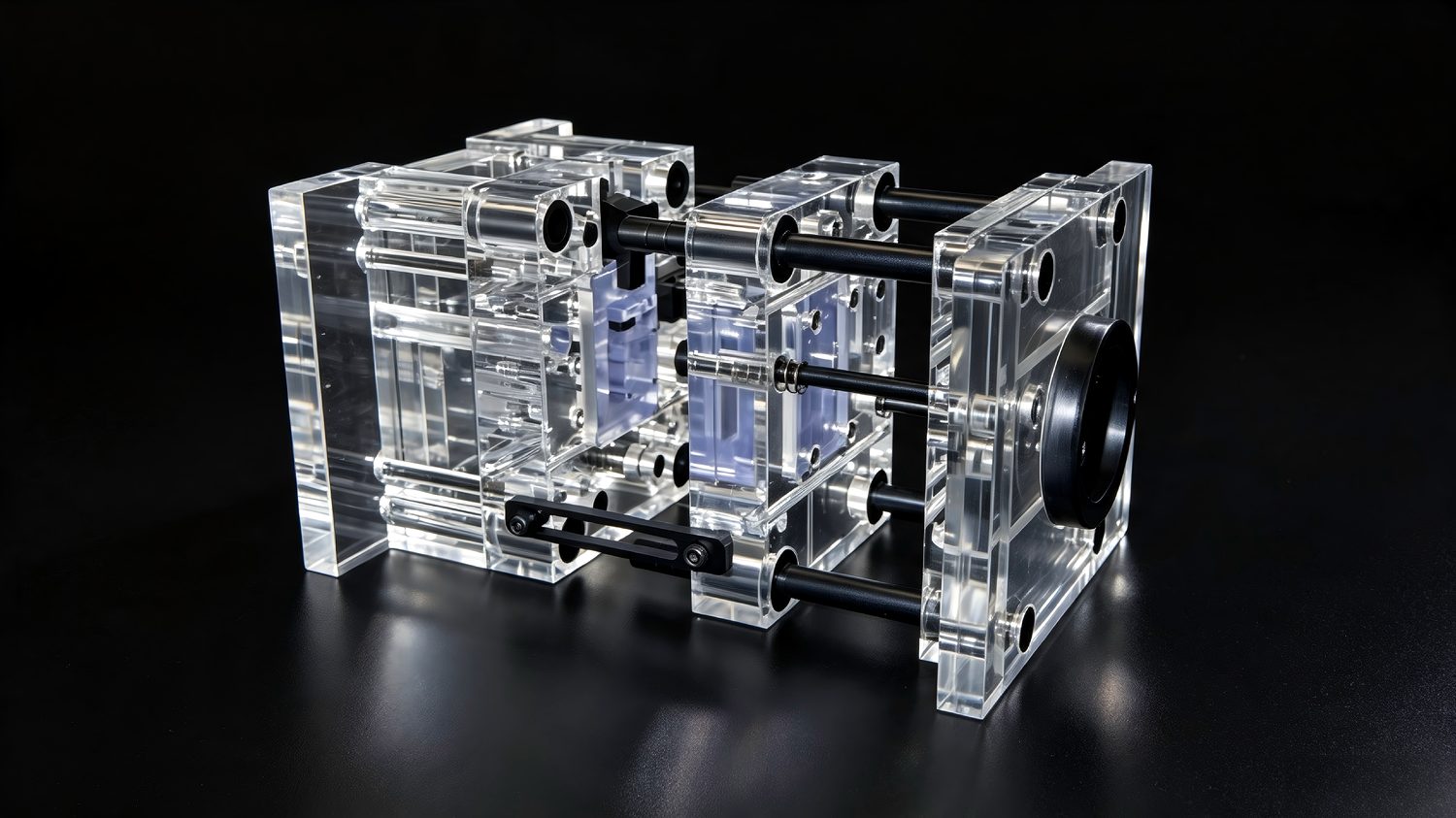
Jigs, fixtures, sight glasses, manifolds and machined parts.
One factory across all of them
Don’t see your application? If it’s custom acrylic, we’ve likely made something close. Describe your project and an engineer replies within 12 hours.
Tell us the application and an engineer will reply within 12 hours with a quote or questions.
Technical details
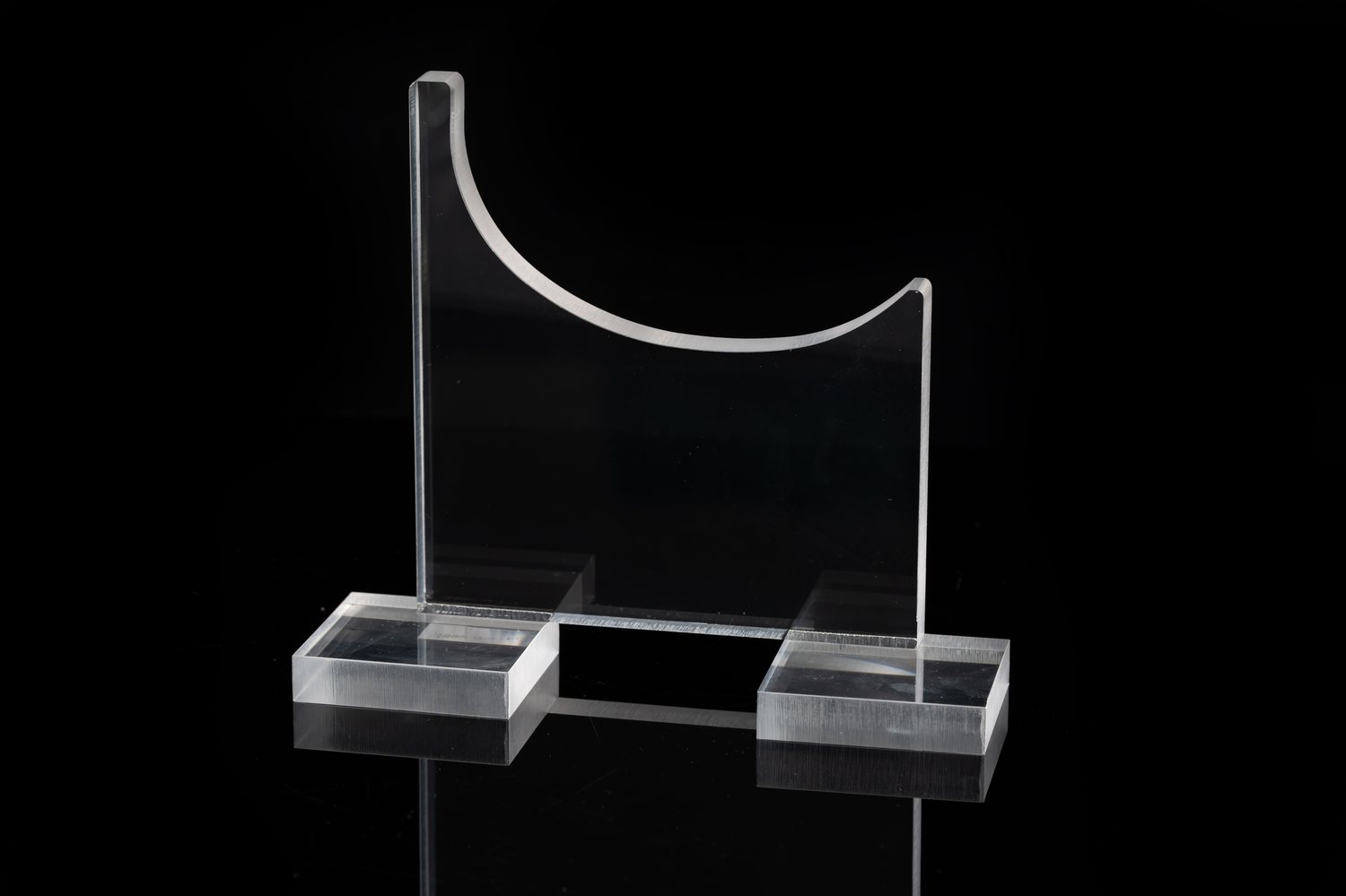
Clear acrylic sight glass and fixture assembly
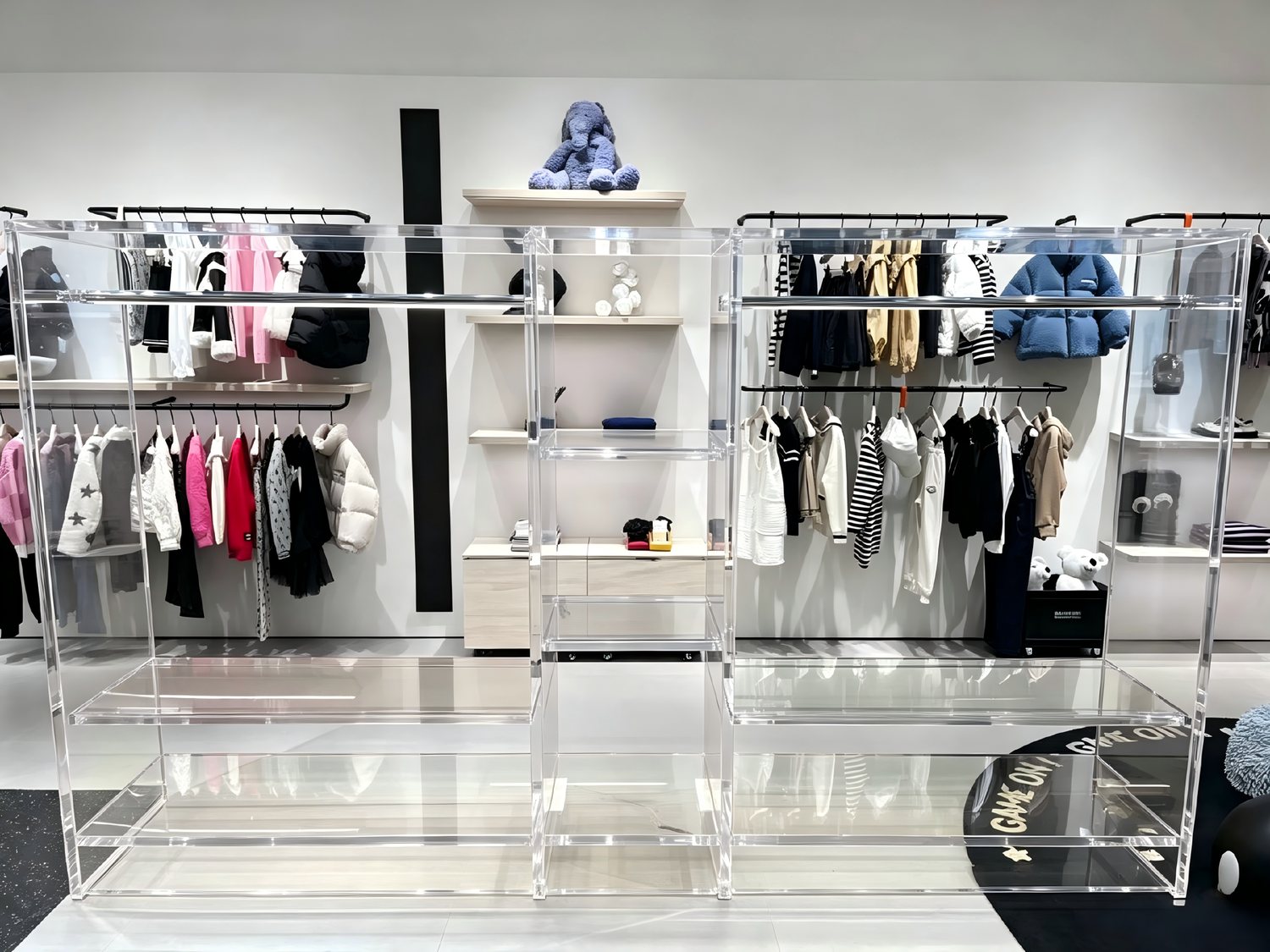
Clear acrylic retail display fixtures and shelving
Calypto cast acrylic sheet, cast in our own Suzhou facility, is the sourcing statement for the clear grades referenced across this hub; Mitsubishi or Lucite optical-grade PMMA is supplied when the order specifies a branded material.
Technical details
Engineering review and quote within 12 hours applies on working days; Sample in 48 hours, production runs in 7 days from drawing approval for typical CNC parts, with First-article data retained; reorders run on the same CNC programs, and material locked to the part number for reorders.
Technical details
Cast acrylic recommended for machining-heavy parts, extruded for flat sheet: this selection guidance is applied consistently across every application page, and the quote states which form was assumed.
Selection guidance
Fabricated acrylic thickness range 3–100 mm and large-format panels up to 3000 × 2000 mm set the fabrication envelope, and each application page below quotes its typical thickness band inside that envelope.
Tolerance classes on this hub follow the national standard: General tolerances per GB/T 1804-2000 / ISO 2768 shift with the size span, Machined features to ±0.1 mm (holes and machined features) are the standard working band, and Critical dimensions on the 5-axis CNC to ±0.05 mm are confirmed per drawing plus first-article inspection.
The site-wide process note: machined parts annealed with the cast-acrylic industry–standard schedule, and stress relief after machining follows this schedule on every application page; temperature and soak parameters are confirmed per grade at quoting and are not published. Annealing reduces but does not eliminate crazing or stress-cracking risk, and honest material advice includes when polycarbonate is the better answer.
Appearance described as clear / glass-clear / optically clear is judged against the approved master sample, with A and B faces named on the drawing.
Machine guards and observation windows application: guard panels and windows are fabricated to your dimensions, while final system safety certification remains the buyer’s engineering responsibility.
Bonded joints described as near-invisible seams are the standard for visible joinery across the application pages.
| Choose this when | Do not choose this when | Option | Claim IDs |
|---|---|---|---|
| The part is a transparent housing or cover for machinery, automation or lab equipment | The part is a safety-critical guard panel | Equipment enclosures page | AF-C18 |
| The part guards people from machine hazards | The part only needs dust or splash protection | Machine guards page | AF-C18 |
| The part is a fascia, overlay, window or engraved panel on a control panel | The part is a full structural housing | Control panels page | |
| The part is a jig, fixture, sight glass, ring, tube or machined component | The part is a large flat panel | Industrial components page | |
| The part is interior décor, lighting, displays or furniture | The part is exterior architectural cladding | Hospitality page | |
| The part is architectural cladding, partition, balustrade infill or a curved feature panel | The part is a small machined component | Architectural page |
| Property | Value | Unit | Product grade | Thickness specimen | Test method / standard | Evidence status | Qualification | Claim IDs |
|---|---|---|---|---|---|---|---|---|
| Fabricated thickness envelope | 3–100 mm | mm | Cast and extruded acrylic | Per order | Per drawing | company-declared | Availability per grade and source | AF-C05 |
| Large-format capacity | 3000 × 2000 | mm | Cast acrylic sheet | Sheet dependent | Per order | company-declared | Flatness and transport limits per order | AF-C04 |
| General tolerance | GB/T 1804-2000 / ISO 2768 by size span | n/a | Fabricated parts | Per order | Dimensional inspection | company-declared | Class varies with size span | AF-C03 |
| Holes and machined features | ±0.1 mm typical | mm | Fabricated parts | Per order | Dimensional inspection | company-declared | Per drawing plus first-article | AF-C01 |
| Drawing-flagged critical dimensions | ±0.05 mm on the 5-axis center | mm | Fabricated parts | Per order | First-article inspection | company-declared | Confirmed per drawing, never a whole-part band | AF-C02 |
| Lead time | Quote 12 h, sample 48 h, production 7 days | hours / days | Typical CNC parts | Per order | Working hours Mon–Sat 09:00–18:00 GMT+8 | company-declared | Complex and volume orders evaluated separately | AF-C09, AF-C13 |
| Appearance acceptance | A/B faces against approved master sample | n/a | Fabricated parts | Per order | Appearance acceptance standard | company-declared | Written into the quote per order | AF-C16 |
We cover equipment enclosures, machine guards, control panels, industrial components, hospitality interiors and architectural panels, each with its own material, tolerance and appearance guidance.
Fabricated acrylic thickness range 3–100 mm applies to machined, formed and finished parts; standard acrylic sheet stock range 1–30 mm covers common sheet orders, and availability depends on the grade and colour.
Tolerance quotes follow the national standard: General tolerances per GB/T 1804-2000 / ISO 2768 change with size span, Machined features to ±0.1 mm (holes and machined features) are standard, and Critical dimensions on the 5-axis CNC to ±0.05 mm are confirmed per drawing plus first-article.
Engineering review and quote within 12 hours on working days, samples in 48 hours and production runs in 7 days for typical CNC parts; complex or volume orders are evaluated separately.
Appearance described as clear / glass-clear / optically clear is judged against the approved master sample with A and B faces named on the drawing, per the published appearance acceptance standard.
Start from the application area: machine safety and enclosures, equipment interfaces, architecture and hospitality interiors. Each application page below quotes its typical material, thickness band, tolerance class and finish, and all fit inside the fabrication envelope of 3-100 mm thickness and 3000 × 2000 mm panels.
Tolerance classes follow the national standard: general tolerances per GB/T 1804-2000 / ISO 2768 shift with the size span, ±0.1 mm is the standard working band for holes and machined features, and ±0.05 mm applies only to drawing-called critical dimensions confirmed by first-article inspection. Lead times are quoted per order.
Yes. An order can combine machined, formed, bonded and polished parts across applications, with cast acrylic recommended for machining-heavy parts and extruded for flat sheet. Capability figures are company-declared and do not equal end-use certification; safety-rated applications are validated by the buyer’s engineer.