
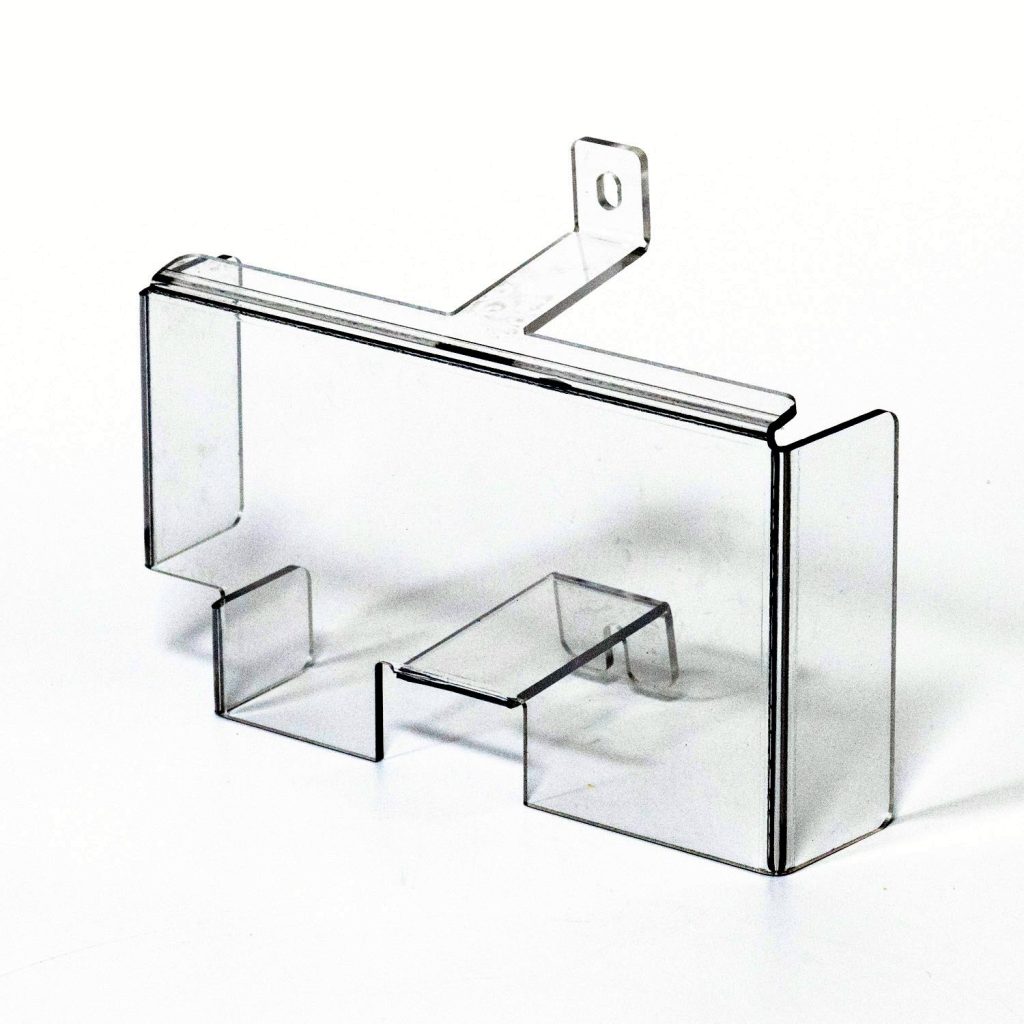
Three ways to bend acrylic sheet: cold bending, line bending and thermoforming. When to use each, the radius each one can reach, and the mistakes that leave cracks or crazing weeks after the part leaves the shop.
3 line benders · 4 cold-bending stations · 2 thermoforming ovens
Acrylic can be bent three ways. Cold bending curves a flat panel into a frame or channel without heat, down to a radius of roughly 300 times the sheet thickness, so about 1.8 m for 6 mm sheet. Line bending heats a narrow strip along the bend line until it softens, then folds it to a sharp angle, which is how brackets, stands and display risers are made. Thermoforming heats the whole sheet in an oven and shapes it over a mold for tight curves and domes. Cracks come from bending too cold, bending too close to holes or edges that are not finished, and solvents meeting the stress left in the bend. Heat the bend fully, keep features away from it, and anneal parts that will be bonded or cleaned with solvents.
Which bending method to use
| Method | How it works | Use it for | Limits |
| Cold bending | Panel is flexed into a curved frame or channel at room temperature | Gentle curves: curved partitions, handrails, signage faces | Radius about 300 × thickness or larger; the panel stays under stress |
| Line bending | A heater softens a narrow strip; the sheet is folded along it | Sharp folds: brackets, stands, risers, covers, boxes | Straight bend lines; bend length up to 3000 mm on our benders |
| Thermoforming | The whole sheet is heated in an oven and formed over a mold | Tight radii, compound curves, domes, curved covers | Needs a mold or former; some thinning at the curve |
Acrylic becomes formable at roughly 150–180 °C for typical cast sheet. Extruded sheet softens at a lower temperature and folds more easily, while cast sheet needs more heat and gives a cleaner bend on thick material. See acrylic temperature limits for the full temperature range.
Why bent acrylic cracks, and how to prevent it
| Problem | Cause | Prevention |
| Crack along the bend while folding | Strip not heated through, especially on thick sheet | Heat from both sides on thick sheet; fold only when the full thickness is soft |
| Whitening on the outside of the bend | Folded too cold or too fast | More heat, slower fold |
| Crack starting at a hole or notch | Feature too close to the bend line, or a rough edge | Keep holes well clear of the bend; finish edges before bending |
| Bubbles in the bend | Overheating, or moisture in the sheet | Control heater temperature and time; dry sheet that has been stored damp |
| Fine cracks days or weeks later | Stress in the bend meets solvent cement or cleaner | Anneal bent parts before bonding; use mild soap, not solvents |
| Cold-bent panel crazes at fixings | Panel held under bending stress and pinched at holes | Respect the minimum radius; slotted holes; no solvent cleaners |
Annealing, a controlled heat treatment after forming and machining, relieves stress before the part meets solvents. See annealing acrylic after machining and drilling acrylic without cracks.
Designing a bent acrylic part
- Dimension to the outside of the bend and state which side is the outside. The inside radius changes with thickness.
- Allow a bend tolerance. Formed dimensions vary more than machined ones. Call out only the angles and lengths that matter for fit.
- Cut and finish edges before bending. Profiles and holes are easier to cut flat. Holes near a bend can move or distort slightly.
- Choose cast or extruded on purpose. Extruded bends easily and costs less. Cast is better if the part will also be machined, polished or solvent-bonded.
- Mark visible faces. Heater contact can mark the surface, so say which faces are on show.

Line bending
Sharp fold, polished edges
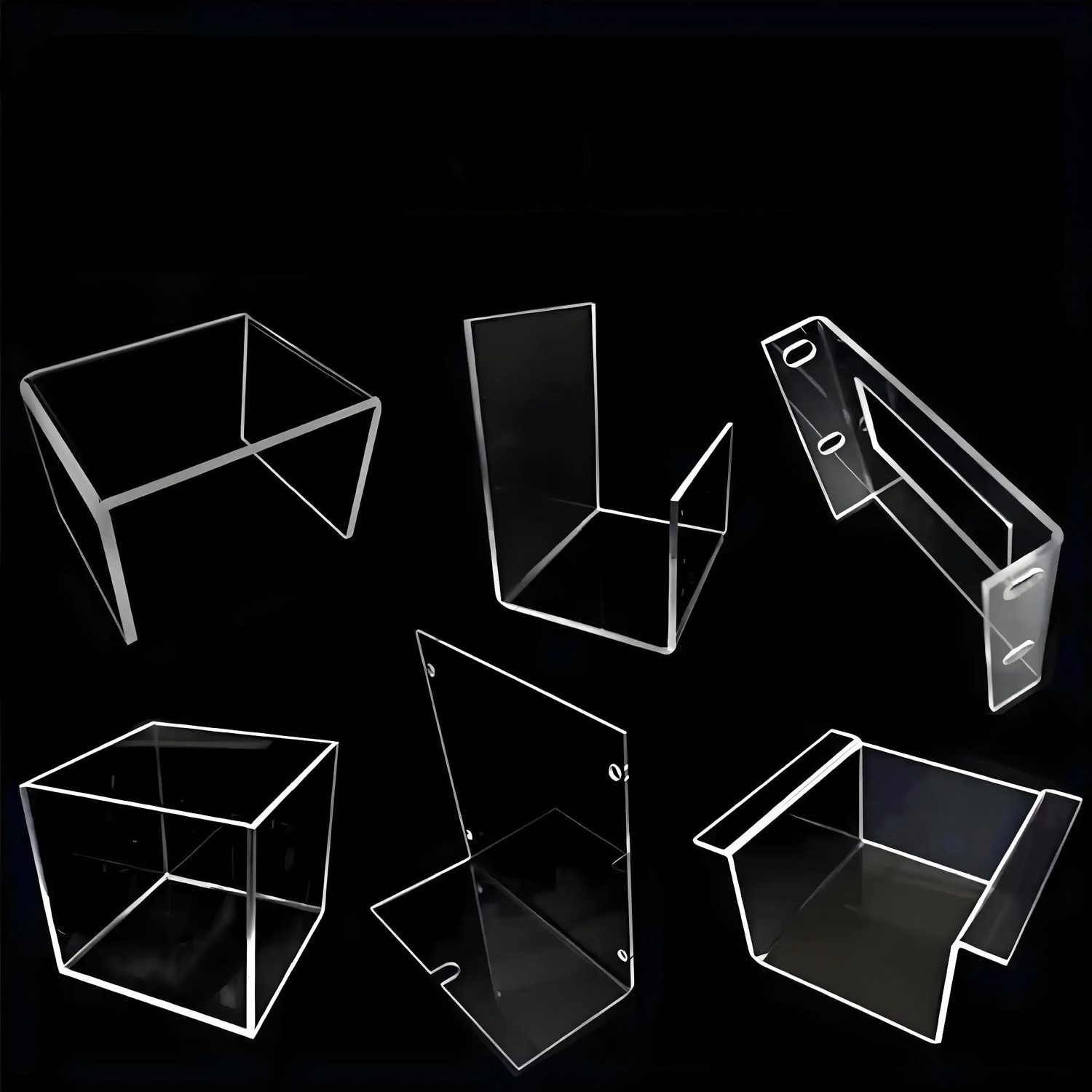
Stands and holders
Repeat folds from one setup
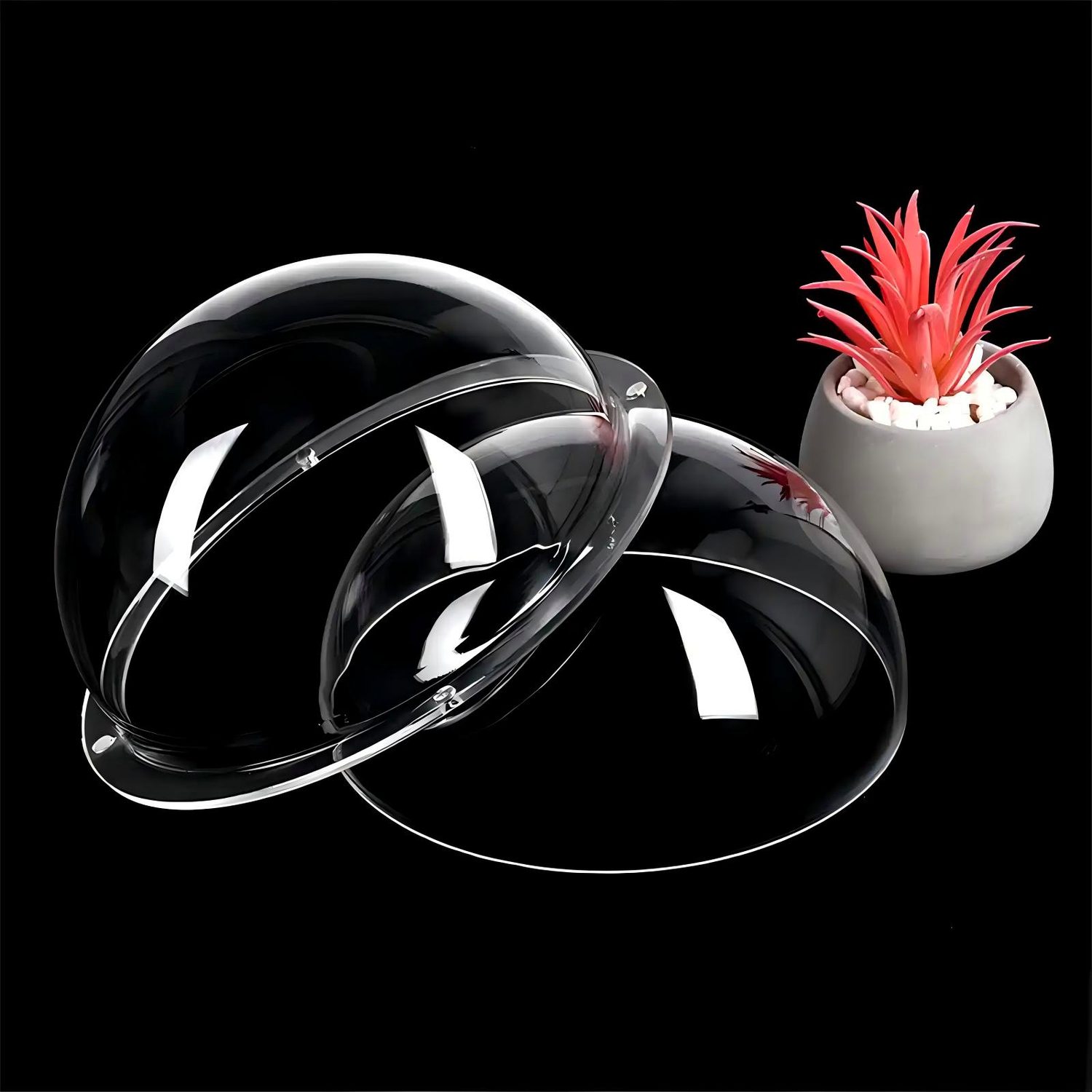
Thermoforming
Tight and compound curves
Bending at AcrylicFabWorks
AcrylicFabWorks, the acrylic division of SinoPlastix, bends acrylic on 3 line-bending machines, 4 cold-bending stations and 2 thermoforming ovens, alongside CNC machining, laser cutting and polishing in one plant in Suzhou, China. Parts are made from Calypto cast acrylic sheet, cast on the same site, or from branded PMMA when your specification names one. Samples take 48 hours and production 7 days from drawing approval. Production starts at 20 pieces per design.
FAQ
How do you bend acrylic sheet without cracking it?
Heat the full thickness along the bend before folding, fold slowly, keep holes and rough edges away from the bend, and anneal the part before it meets solvent cement or cleaners.
Can acrylic be bent without heat?
Yes, into gentle curves. Cold bending works down to a radius of roughly 300 times the sheet thickness, with the panel held in a frame or channel.
What temperature is used to bend acrylic?
Typical cast acrylic becomes formable at roughly 150–180 °C. Extruded acrylic softens at a lower temperature. Check the data sheet for the exact grade.
Is cast or extruded acrylic better for bending?
Extruded bends more easily and costs less. Cast gives a cleaner bend on thick sheet and is better if the part is also machined, polished or bonded.
Need bent acrylic parts?
Send the drawing with bend angles and the visible faces marked. We reply within 12 hours.
Or email [email protected]