

An acrylic diffuser that looks fine on a desk can show LED dots once it is in the fixture. What to test before you approve a sample, and how to make sure production panels match it.
Samples in 48 hours from drawing approval · production from 20 pieces
Approve an acrylic light diffuser panel in the real fixture, not on a light table. Before signing off, check six things. Uniformity and hotspots: view the panel at the production LED pitch, cavity depth and viewing distance, and photograph it with fixed camera settings. Transmission and haze: compare against the grade’s data sheet values measured to ASTM D1003, and do not judge them by eye. Colour of the transmitted light against a retained sample. Dimensions, bow and clip fit. Surface and edge defects under a defined light. And a labelled master sample for every reorder. A sample approval only holds for the grade, thickness and LED layout it was tested with.
The six checks, and what each one proves
| Check | How | Pass means |
| Uniformity and hotspots | Panel fitted in the production luminaire with the production LED board and driver current, viewed at the design distance and angle; photographed with locked exposure | No visible LED dots or bright edges at that distance, matched by the photo record |
| Transmission and haze | Grade data sheet values measured to ASTM D1003 (or ISO 13468-1 and ISO 14782); a lab measurement if light output is a contract value | The grade meets the optical target on paper before you look at it by eye |
| Colour of transmitted light | Side by side with the retained sample on the same LED board | No visible shift in tint or warmth |
| Dimensions and fit | Profile, cut-outs and clip positions against the drawing; bow checked on a flat surface; fitted into the housing | Fits without forcing; a panel that is forced in shows stress at the clips |
| Surface and edges | Inspected backlit, at a fixed distance, against an agreed list of defects (specks, scratches, chips) | Defects within the agreed limits for a visible face |
| Retained sample | One approved panel labelled with grade, thickness, lot and drawing revision, kept by both sides | Reorders can be checked against something physical |
ASTM D1003 is the usual method for haze and luminous transmittance of transparent plastics. ISO 13468-1 (transmittance) and ISO 14782 (haze) are the ISO equivalents. Ask which method the data sheet uses before you compare two grades.
What a sample cannot prove
- A different LED layout. If the LED pitch, beam angle or cavity depth changes after approval, the approval no longer applies. Re-test.
- A different grade or thickness. Two opal grades at the same thickness can diffuse very differently. Write the approved grade on the purchase order, not just “opal 3 mm”.
- Long-term yellowing. A new panel says nothing about colour after years of use. Rely on the grade’s data sheet and weathering information, and keep the panel within its service temperature (about 80 °C continuous for typical cast acrylic).
- Light output targets. Lumens out of the luminaire depend on the whole fixture. Measure them on the assembled luminaire if they are part of the contract.
Keeping production panels the same as the sample
Most complaints about diffusers arrive on the second or third order, when a different sheet lot or a substitute grade shows a slightly different tint or diffusion. Three controls catch it:
- Grade and lot on the order. The approved grade, thickness and supplier are fixed on the purchase order, and the lot number goes on the packing list.
- Side-by-side check. Production panels from a new lot are compared with the retained sample on the same LED board before packing.
- Sampling plan. For larger runs, agree a sampling plan for incoming inspection, for example under ISO 2859-1, and the defect list it checks against.

Panel inspection
Checked against a defined light and distance

Staged for checking
Panels laid out before packing
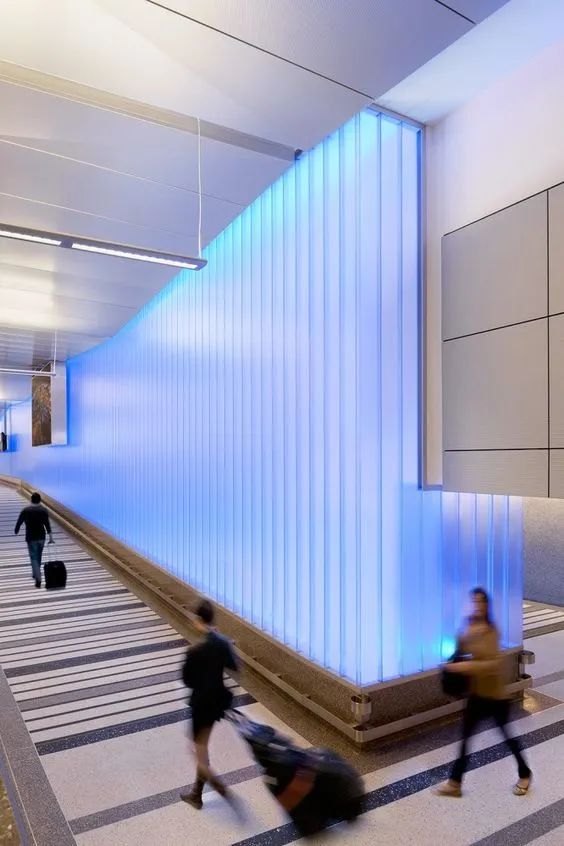
Backlit application
Illustrative rendering, not a test result
What to send for a diffuser sample
Send the panel drawing, the LED board layout and pitch, the LED model or beam angle, the cavity depth from LED to panel, the viewing distance, whether the panel is backlit or edge-lit, and the clip or channel detail. If you already have a grade in mind, name it. If you want options, ask for two or three sample grades cut to the same drawing so you can compare them in your own fixture. For help choosing between opal, frosted and light-guide sheet, see light diffuser materials for LED applications and frosted vs translucent vs opal acrylic.
To record the approval, use two blank templates: a backlit diffuser trial record (LED model, pitch, cavity, viewing conditions, decision) and an appearance sample approval sheet (viewing distance, lighting, defects to record). Both are CSV files with column headings only. They contain no test results.
AcrylicFabWorks, the acrylic division of SinoPlastix, cuts and finishes diffuser panels in Suzhou, China. We use Calypto cast acrylic sheet, or Mitsubishi or Lucite optical-grade PMMA when you name a brand. Samples take 48 hours and production 7 days from drawing approval, and production starts at 20 pieces per design. We do not publish our own optical test results. Transmission and haze come from the data sheet for the selected grade.
FAQ
What should I test before approving an acrylic light diffuser panel?
Uniformity in the real fixture at the production LED layout and viewing distance, transmission and haze against the data sheet (ASTM D1003), colour against a retained sample, dimensions and fit, surface and edge defects under defined light, and a labelled master sample for reorders.
How are haze and light transmission of acrylic measured?
Usually with a haze meter to ASTM D1003, or to ISO 13468-1 for transmittance and ISO 14782 for haze. Compare grades only when their data sheets use the same method and thickness.
Why do production diffusers look different from the approved sample?
Usually because the sheet lot or grade changed, or because the LED layout or cavity changed after approval. Fix the grade on the order and compare each new lot with the retained sample on the same LED board.
Can I get several diffuser grades to compare?
Yes. Ask for two or three grades cut to the same drawing and compare them in your own fixture. Samples are quoted separately from production.
Test grades in your own fixture
Send the panel drawing and LED layout. We reply within 12 hours with the sample options.
Or email [email protected]