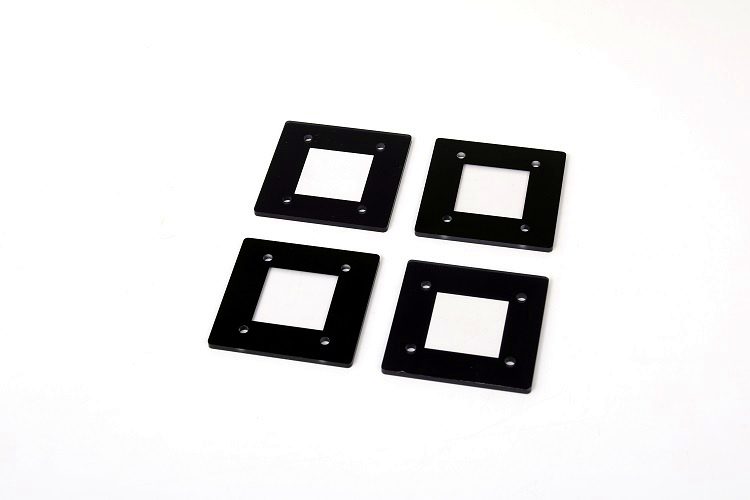
Laser-cut black acrylic gaskets with clean square apertures
Laser-cut black acrylic gaskets with clean square apertures

This matrix summarises what each fabrication process can do, so you can see which route fits your part before an RFQ.
Reply within 12 hours · free DFM feedback
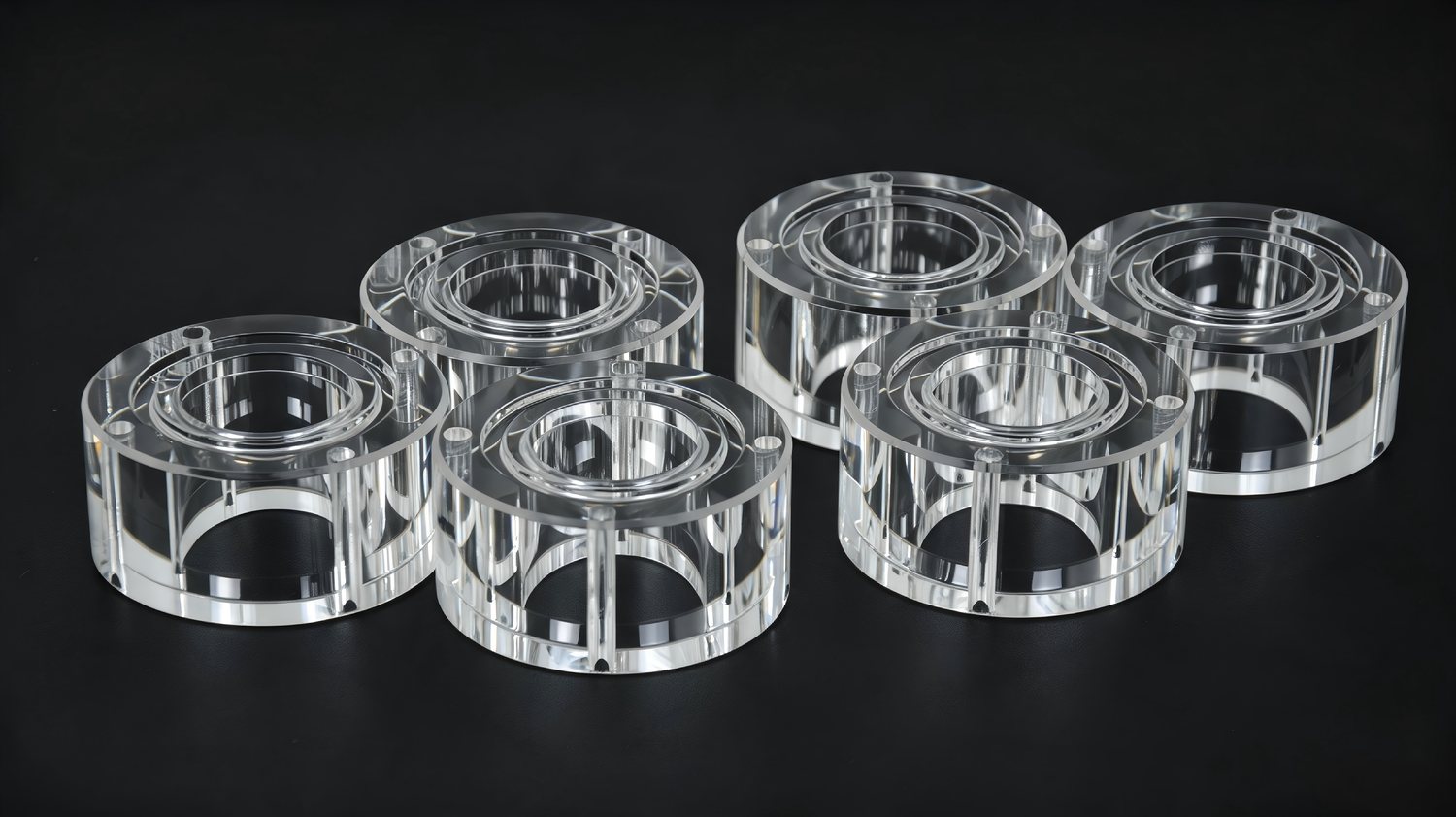
Every cell is confirmed per order; the matrix is company-declared guidance and the quote states what applies to your drawing.
Company-declared
This matrix condenses the process pages into one comparison: maximum sheet size, minimum feature, applicable thickness, typical tolerance, surface result and the main limits of each process.
Large-format panels up to 3000 × 2000 mm are handled in large-format fabrication; fabricated acrylic thickness range 3–100 mm and standard acrylic sheet stock range 1–30 mm apply, with availability depending on grade, colour and source.
Laser-cut black acrylic gaskets with clean square apertures
Laser cutting tolerance ±0.2 mm applies to laser profiles, machined features to ±0.1 mm (holes and machined features) to CNC, critical dimensions on the 5-axis CNC to ±0.05 mm per drawing, and formed part tolerance ±0.5 mm on formed dimensions; each band is confirmed per order.
Machined parts annealed with the cast-acrylic industry-standard schedule is standard after machining to reduce residual stress; annealing reduces but does not eliminate cracking risk.
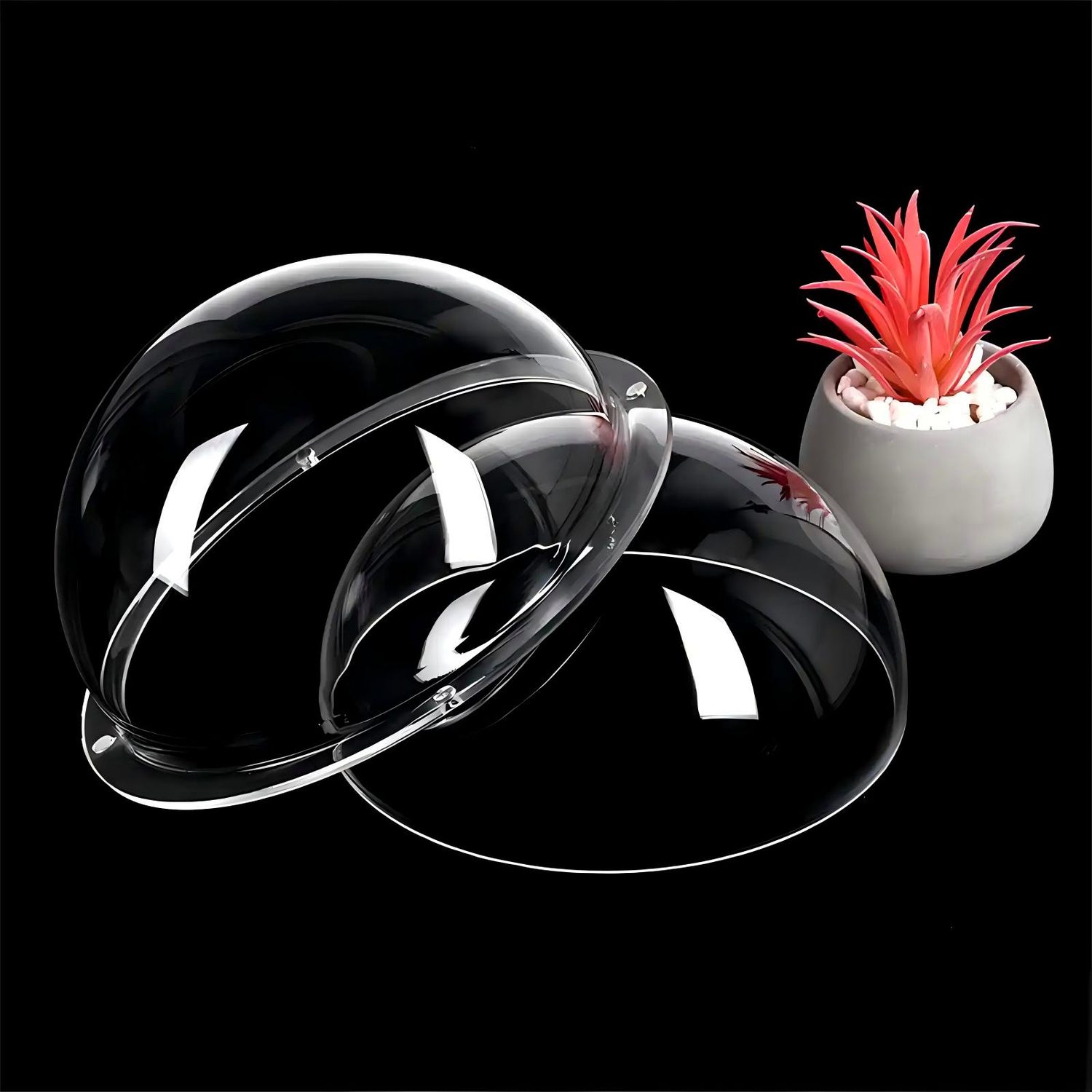
Thermoformed clear acrylic domes
The achievable combination of size, tolerance and thickness depends on the drawing: deep pockets, thin walls, long spans and large formed areas are reviewed in DFM, and the quote states what applies per feature.
Appearance described as clear / glass-clear / optically clear is the surface result we quote for polished edges, judged against the master sample per order; bonded joints described as near-invisible seams are achievable on polished edges, with bond type and strength confirmed separately per order.
| Choose this when | Do not choose this when | Option | Claim IDs |
|---|---|---|---|
| Precision holes, pockets, threads or mating faces are required | Simple flat profiles in volume are enough | CNC machining; 3-axis standard, 5-axis for critical dimensions | AF-C01, AF-C02 |
| Fast, economical profiles in flat sheet are required | Critical machined tolerance or polished edge is required | Laser cutting at ±0.2 mm | AF-C24 |
| Curved or formed panels from flat sheet are required | Tight dimensional tolerance on formed areas is required | Bending and thermoforming; formed dimensions at ±0.5 mm | AF-C26 |
| Panels exceed standard machine travel | A small, high-tolerance machined part is required | Large-format fabrication up to 3000 × 2000 mm | AF-C04 |
| Assemblies with joined parts or seams are required | One-piece monobloc geometry is required | Bonding and assembly; seams per master sample | AF-C17 |
| Property | Value | Unit | Product grade | Thickness specimen | Test method / standard | Evidence status | Qualification | Claim IDs |
|---|---|---|---|---|---|---|---|---|
| CNC machining (3-axis) | Holes and machined features to ±0.1 mm | mm | Cast acrylic preferred | 3–100 mm fabricated range | Drawing plus first-article inspection | company-declared | Minimum feature depends on geometry; DFM review per order | AF-C01, AF-C05 |
| CNC machining (5-axis) | Critical dimensions to ±0.05 mm on drawing-called features | mm | Cast acrylic | Per drawing | Drawing plus first-article inspection | company-declared | Not a full-part band; confirmed per drawing | AF-C02 |
| Laser cutting | Profiles to ±0.2 mm in flat sheet | mm | Cast and extruded sheet | 1–30 mm typical sheet | Company statement | company-declared | Scope pending: thickness, cut geometry, edge finish | AF-C24, AF-C27 |
| Bending and thermoforming | Formed dimensions to ±0.5 mm | mm | Cast acrylic | 3–100 mm range | Company statement | company-declared | Scope pending: forming method, thickness, geometry | AF-C26, AF-C05 |
| Bonding and assembly | Seams near-invisible on polished edges | n/a | Cast and extruded acrylic | Order-specified | Master sample per order | company-declared | Bond type, strength and scope confirmed per order | AF-C17 |
| Polishing | Optical clarity on cut and machined edges | n/a | Cast acrylic preferred | Order-specified | Master sample per order | company-declared | Appearance acceptance per order | AF-C16 |
| Large-format fabrication | Panels up to 3000 × 2000 mm | mm | Cast acrylic sheet | Sheet thickness per order | Company statement | company-declared | Flatness, transport and crating limits per order | AF-C04 |
| Annealing after machining | Cast-acrylic industry-standard schedule | n/a | All machined acrylic parts | Order-specified | Company process statement | company-declared | Reduces but does not eliminate cracking risk | AF-C10 |
Large-format panels up to 3000 × 2000 mm are handled in large-format fabrication; the actual limit depends on sheet type, thickness and transport, confirmed per order.
Minimum feature size depends on geometry, thickness and material: deep pockets, thin walls and long spans are reviewed in DFM, and the quote states what applies per feature.
Machined features to ±0.1 mm (holes and machined features), critical dimensions on the 5-axis CNC to ±0.05 mm per drawing plus first-article inspection, laser cutting tolerance ±0.2 mm, and formed part tolerance ±0.5 mm on formed dimensions, each confirmed per order.
Yes: machining, laser cutting, forming, bonding and polishing are combined on one part, and the capability matrix row for each operation is confirmed against the drawing.
Yes: the matrix is company-declared guidance, not a standing promise; achievable values are confirmed per order against the drawing, and limits such as thin walls or transport are stated on the quote.
Laser-cut profiles run to ±0.2 mm, holes and machined features to ±0.1 mm, drawing-called critical dimensions on the 5-axis center to ±0.05 mm, and formed dimensions to ±0.5 mm; general tolerances follow GB/T 1804-2000 / ISO 2768 by size span. Each band is confirmed per order against the drawing and first article.
Large-format panels up to 3000 × 2000 mm are handled in large-format fabrication; fabricated parts run 3-100 mm thick and standard sheet stock 1-30 mm. Maximum and minimum values are not all simultaneously achievable: a large part with tight critical tolerances is reviewed per order, and the quote states what applies.
The matrix is company-declared guidance: the achievable size, tolerance and surface for your part are confirmed per order against the drawing in DFM review. It condenses the process pages into one comparison but does not approve engineering or replace an order-specific inspection plan.
Send your drawing — an engineer replies within 12 hours.