
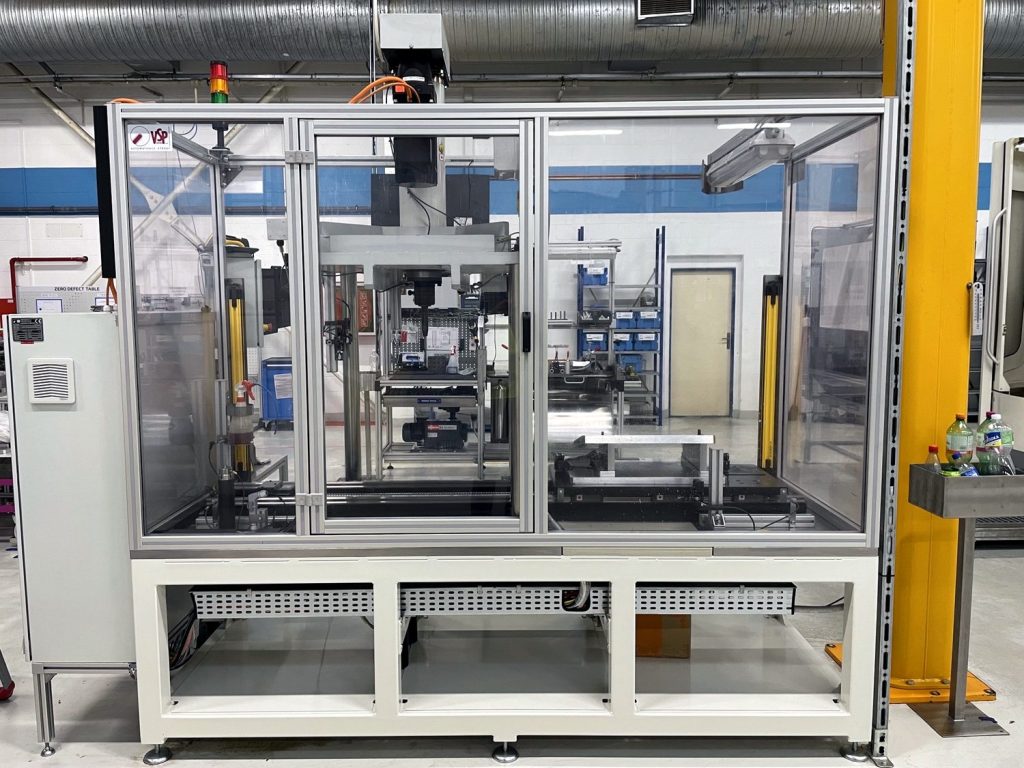
Acrylic machine guard thickness is driven by unsupported span, not by impact rating: as working practice, panels up to 300 mm of unsupported span use 6 mm sheet, 300–600 mm use 8–10 mm, 600–1,000 mm use 12–15 mm, and spans above 1,000 mm use 15–25 mm or intermediate framing. Impact-rated guarding is a polycarbonate decision — acrylic guards are specified for containment and visibility, and sized for stiffness.
“How thick?” is the single most common question on guard RFQs. The honest answer is a stiffness calculation, but the table below covers the large majority of real guards, and the rest of this article explains when to leave the table.
The Span Table (Working Practice)
| Max unsupported span | Recommended thickness | Typical duty |
|---|---|---|
| ≤ 300 mm | 6 mm | Chip/splash shields, sight windows |
| 300–600 mm | 8–10 mm | Barrier panels, small enclosure faces |
| 600–1,000 mm | 12–15 mm | Perimeter guarding, large enclosure panels |
| 1,000–1,500 mm | 15–20 mm | Full-height barriers (frame advised) |
| > 1,500 mm | 20–25 mm + framing | Walk-along guarding — frame it instead |
Assumptions: panel supported on two or more edges, normal workshop loads (lean, wipe-down, coolant spray — not impact), vibration moderate. These are working-practice values for quoting, not a substitute for the machine builder’s risk assessment.
Read “span” as the shortest unsupported dimension. A 1,500 × 400 mm panel held along both long edges is a 400 mm span → 8–10 mm, not 20 mm. This one clarification saves buyers real money on long narrow guards.
Why Stiffness, Not Strength, Sizes Acrylic Guards
Plate deflection scales with the cube of thickness: going from 6 mm to 12 mm makes a panel 8× stiffer. Meanwhile acrylic’s flexural strength (~100 MPa) is rarely the limit — a guard that feels unacceptably flexible is still far from breaking. So the practical failure mode of an undersized acrylic guard isn’t fracture; it’s a wobbly, drummy panel that rattles against its fasteners, wears its holes oval, and eventually cracks at the fixings. Sizing for stiffness prevents all of it.
Corollary: if your concern is genuine impact (ejected parts, tooling), thickness is the wrong lever — switch material. → <a href=”/blog/acrylic-vs-polycarbonate-machine-guards/”>acrylic vs polycarbonate machine guards</a>
Adjustments to the Table
Vibration-heavy machines (presses, granulators, vibratory feeders): go one thickness step up, use rubber-isolated fasteners, and oversize holes 0.5 mm with shoulder washers. Vibration is the top killer of guard panels in service.
Full edge support in a frame or channel: you can often step down one band — a framed 800 mm panel works at 10 mm where an edge-bolted one wants 12–15.
Point fastening (bolts through the sheet, no frame): stay in band and respect fastening rules: holes ≥ 2× diameter from any edge, oversized 0.5 mm, torque to snug + rubber washer — acrylic must never carry bolt preload directly.
Doors and frequently handled panels: one step up. Handling loads exceed service loads for anything opened daily.
Elevated temperature (near motors, ovens): above ~60 °C ambient, stiffness drops noticeably; step up and check the 80 °C service ceiling. → hot zones: hybrid build advice in <a href=”/blog/acrylic-equipment-enclosure-design-checklist/”>enclosure design checklist</a>
Worked Examples
| Guard | Geometry | Table answer |
|---|---|---|
| Lathe splash shield | 350 × 250 mm, bracket-held | 6 mm |
| CNC router enclosure side | 900 × 700 mm, framed edges | 10–12 mm |
| Robot cell barrier | 2,000 × 1,200 mm panels | 15 mm in posts at ≤ 1,200 mm centers |
| Sliding guard door | 600 × 500 mm, daily use | 10 mm (door rule: +1 step) |
What to Put on the RFQ
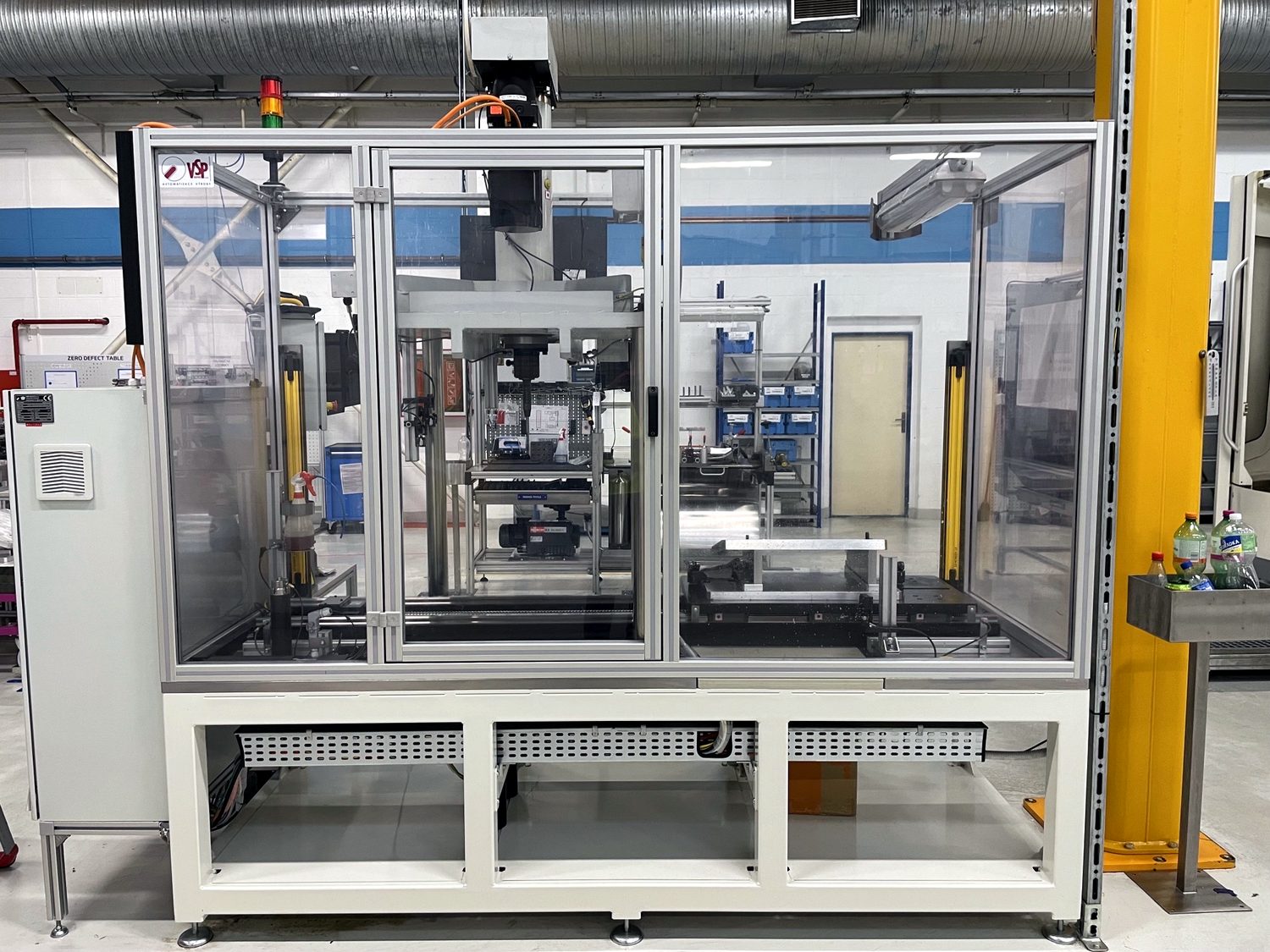
Thickness (or “advise per table”), panel dimensions with which edges are supported, fastening method, machine type/vibration, and quantity. With those five items we quote in one pass — and we’ll flag any panel where a cheaper thickness plus a stiffening return bend beats brute sheet thickness. Bent-flange guards are often 30% lighter and cheaper than the flat-panel equivalent. → bending & thermoforming
Fabrication specs we hold for guarding work — thickness range 6–25 mm, max panel 3000 × 2000 mm, mounting-hole tolerance ±0.1 mm — full table on → machine guard specifications.
FAQ
Q: How thick should an acrylic machine guard be? A: Size by unsupported span: ≤300 mm → 6 mm; 300–600 → 8–10 mm; 600–1,000 → 12–15 mm; above that, 15–25 mm or add framing. Step up one band for vibration, doors, or heat.
Q: Does doubling thickness double the strength? A: It does much better than that for what matters — stiffness rises with the cube of thickness, so 2× thickness ≈ 8× stiffness. That’s why one thickness step usually fixes a “flimsy” guard.
Q: Is 4 mm or 5 mm acrylic ever acceptable for guarding? A: Only for very small shields (≲200 mm span) away from vibration. Below 6 mm, fastening becomes the weak point regardless of span; the material saving isn’t worth the service calls.
Q: Can you just tell me the thickness from my machine photos? A: Usually yes — photos plus overall dimensions and how the guard mounts are enough for us to recommend thickness and quote it.
Sizing guards for a machine right now? Send dimensions or drawings — thickness recommendation and quote within 12 hours.
Have a drawing or a question?
Send whatever you have — drawing, STEP file or sketch — and get a quote or DFM feedback within 12 hours.