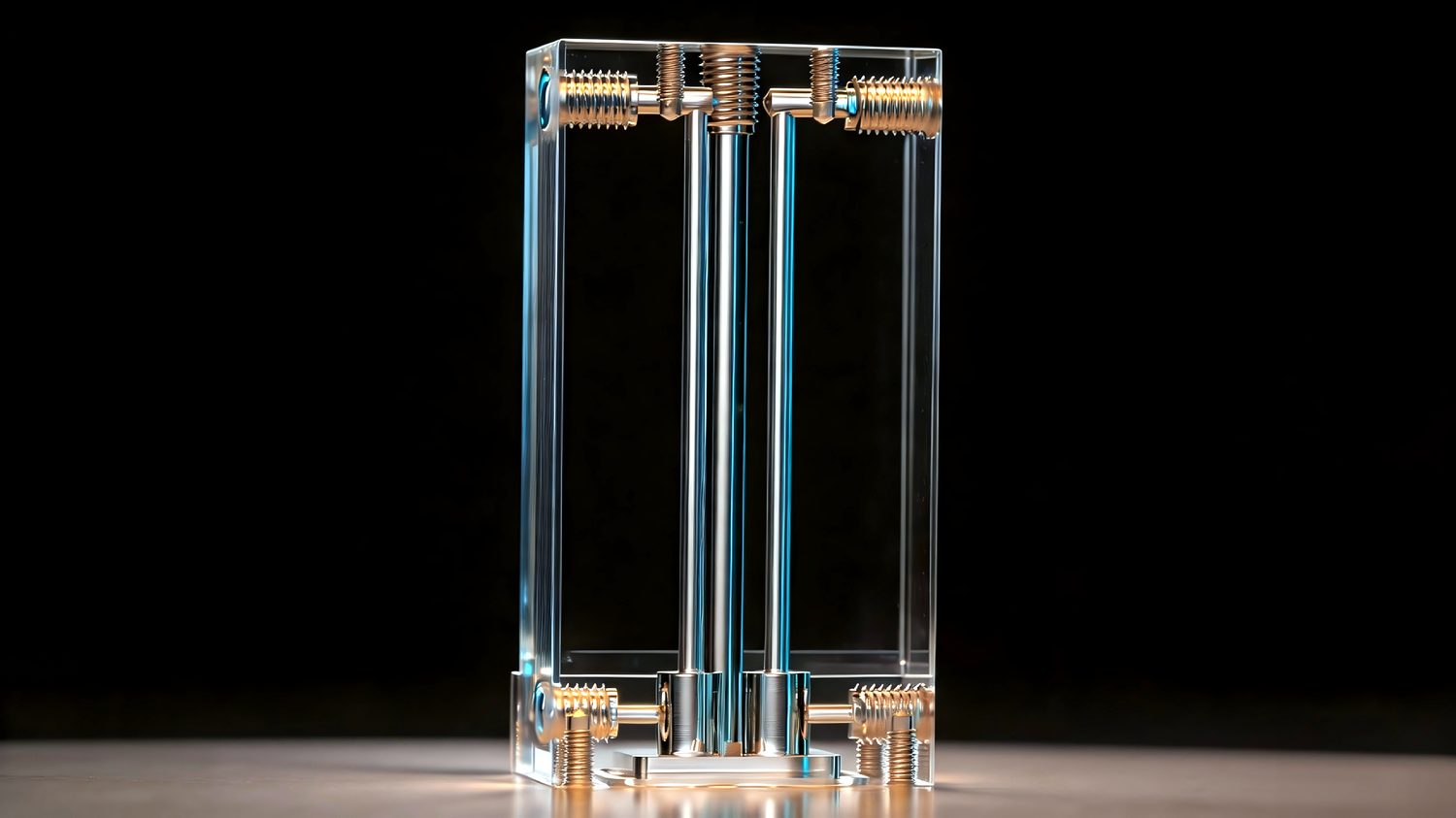
Bonded assembly
Seamless joints · backlit

Solvent welding, UV bonding and full assembly — near-invisible seams for enclosures, desks and displays, with hardware fitted in-factory.
Reply within 12 hours · free DFM feedback
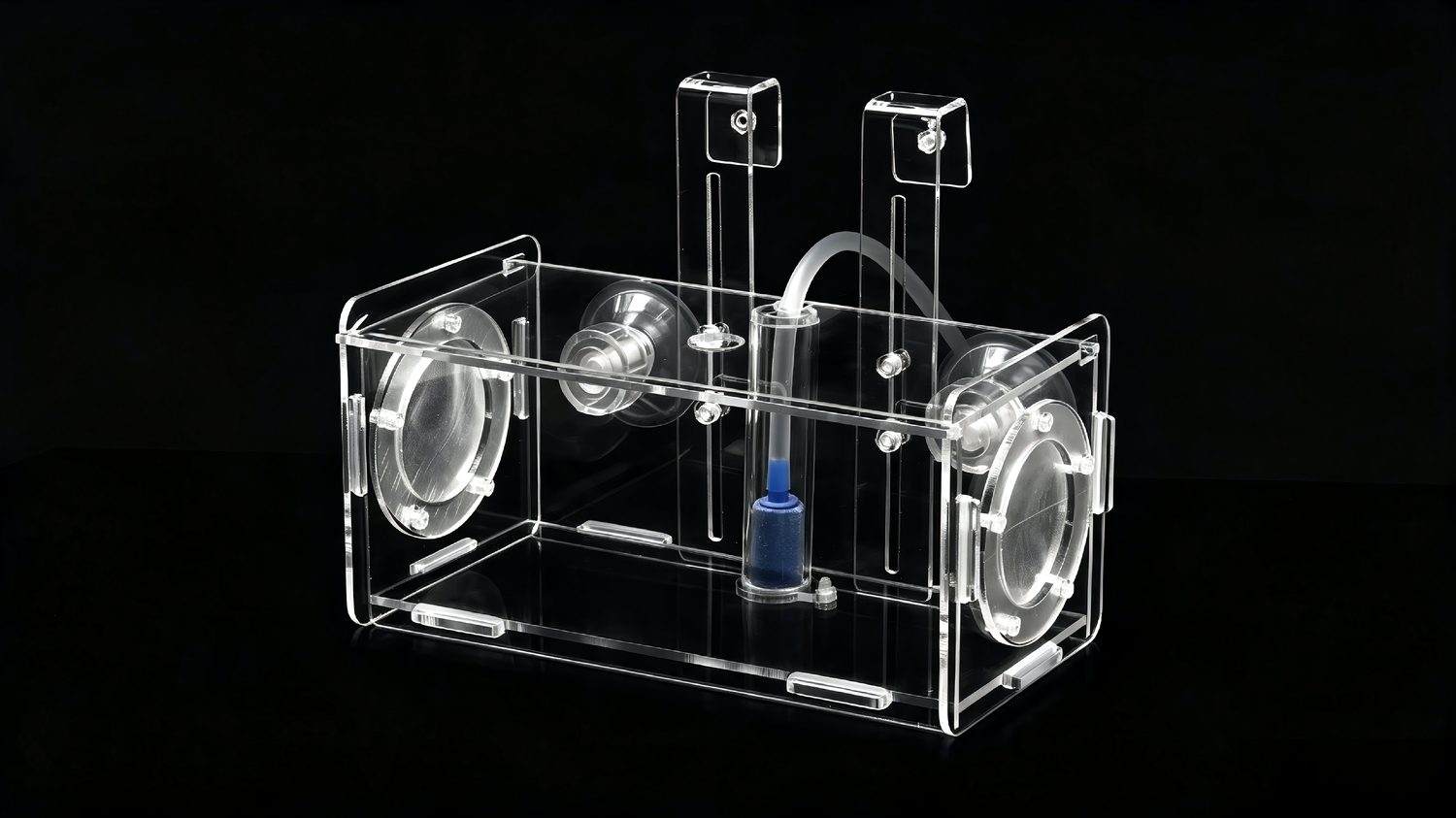
Acrylic bonding joins PMMA parts by solvent welding — the solvent briefly dissolves both surfaces, which then fuse into a single piece with a near-invisible seam approaching parent-material strength. Combined with UV-cured adhesives for gap-filling joints and mechanical fasteners for serviceable panels, it turns flat parts into finished enclosures, desks and displays.
| Method | Seam appearance | Strength | Best for |
|---|---|---|---|
| Capillary solvent weld | Near-invisible | ~80–90% parent | Enclosures, displays, desks |
| Polymerizable cement | Invisible after polish | ~100% parent | Load-bearing, thick sections |
| UV-cured adhesive | Clear, thin line | High | Dissimilar fits, fast cure |
| Mechanical (inserts/screws) | Visible hardware | Serviceable | Removable panels, site assembly |
Seamless joints · backlit
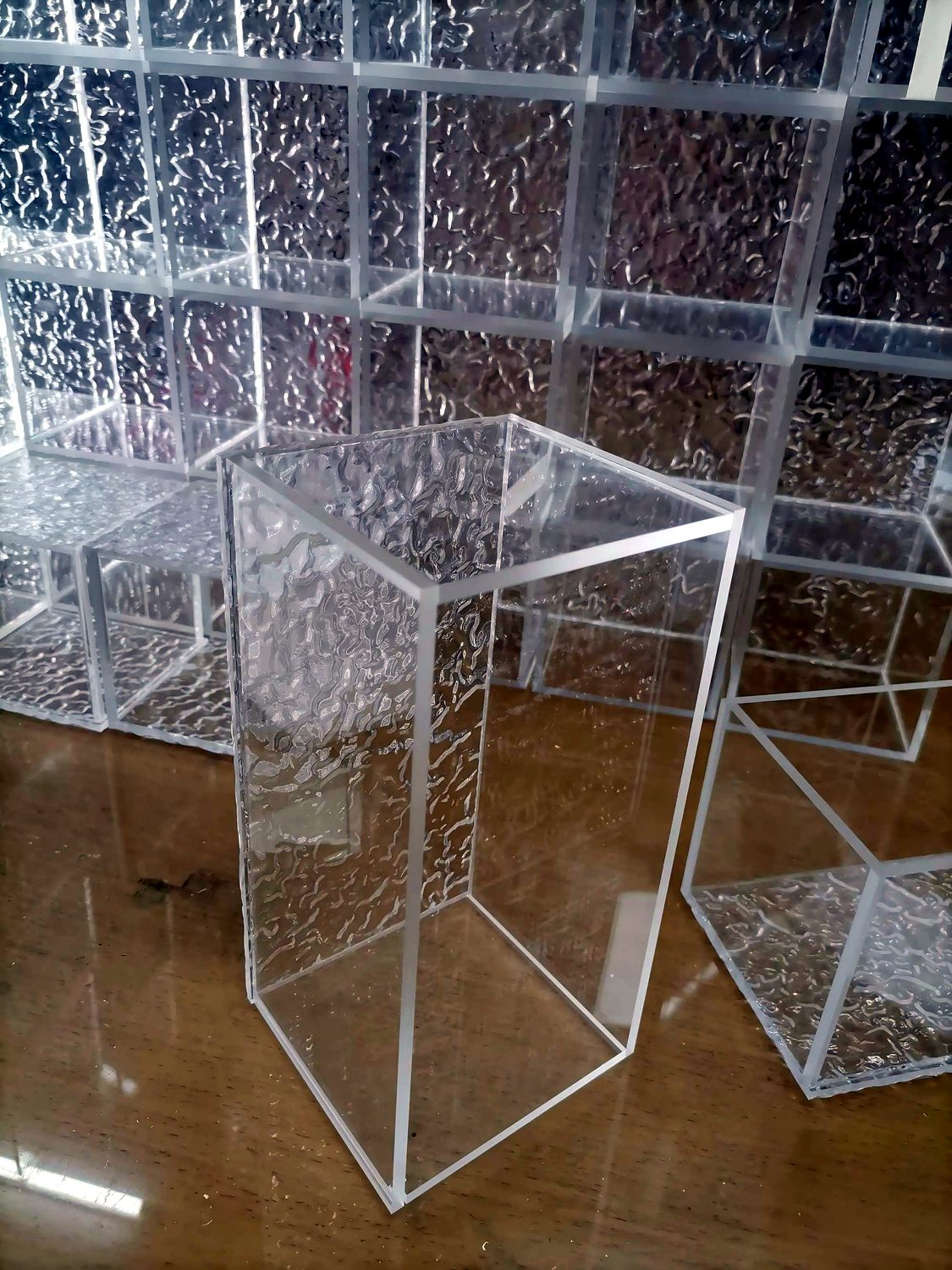
Hardware fitted · hinged

Invisible seam · polished
Why our seams don’t craze
Solvent attacking a stressed part causes crazing — the #1 quality failure in bonded acrylic bought from inexperienced shops. Our rule: every machined edge is annealed before it is bonded. Slower, but the seam stays glass-clear for years instead of clouding in months.
Capillary welds reach roughly 80–90% of parent material strength; two-part polymerizable cements reach effectively 100%. For structural joints we specify the cement method and can add bonded gussets.
On polished, square-machined edges a capillary weld reads as a faint line only at certain angles; polymerizable cement joints polished after cure are effectively invisible. We ship a bonded corner sample on request.
Yes — bonded acrylic is robust once annealed and cured. We crate assemblies with foam-lined bracing; for very large units we design flat-pack mechanical joints instead.
Yes — hinges, locks, casters, LED strips, fans and filters supplied by you or sourced by us, fitted and tested before packing.
Send assembly drawings — a 12-hour engineer reply.